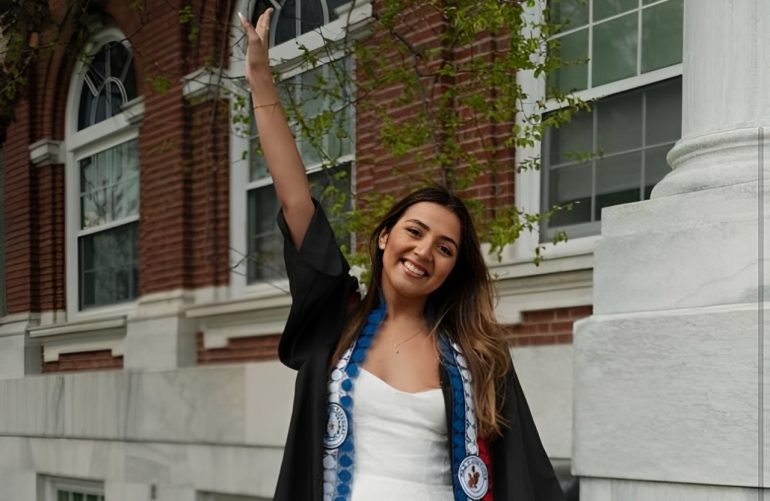

Sol Brizuela Báez (22) turned an adolescent dream into reality: studying engineering in the United States through a university scholarship. Behind this achievement lies years of effort, adaptation, and a constant decision to keep moving forward even in the presence of fear.
A passion that began with curiosity
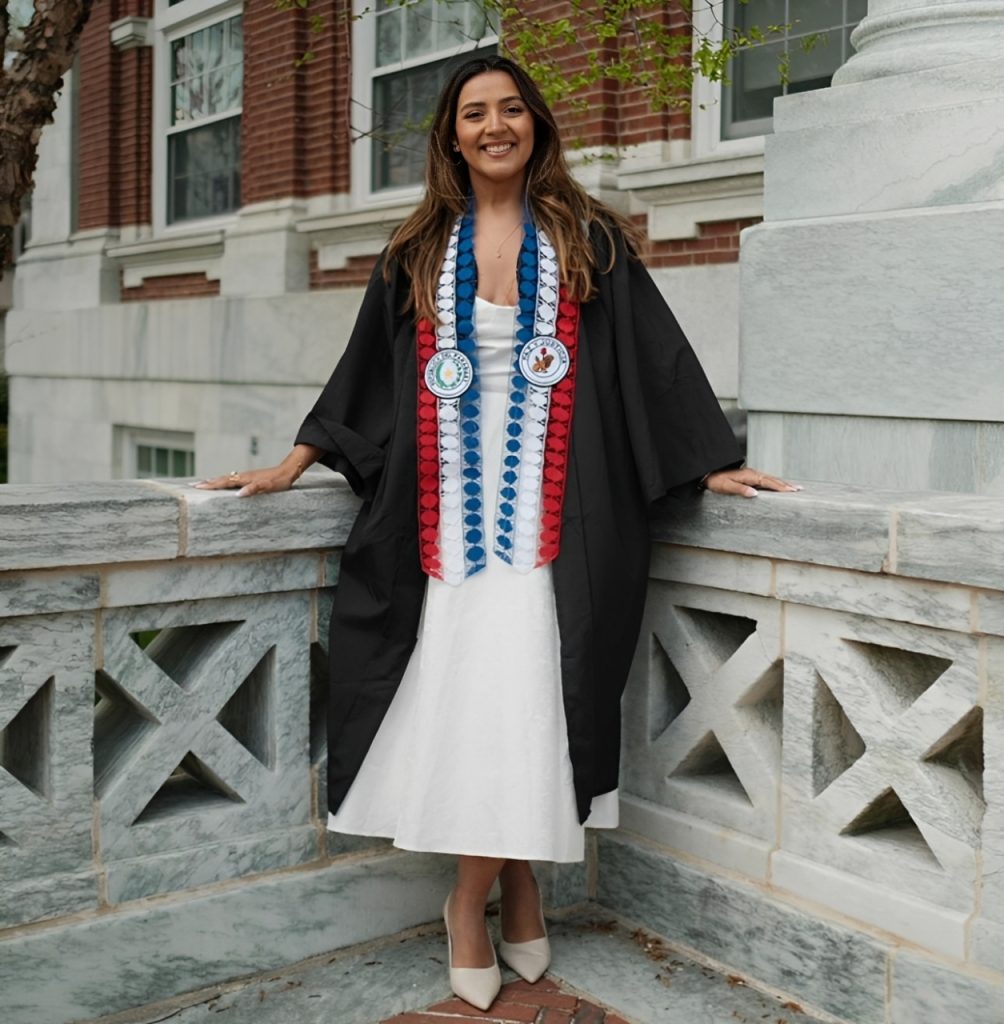
From an early age, Sol Brizuela Báez felt curious about how things worked. She enjoyed mathematics, physics, computer science, and, above all, repairing computers and household objects.
“I have always been very interested in building things and also programming them,” she says to The Asunción Times.
“Over time, I began to explore different branches of engineering until I found a degree that combined everything I was passionate about: mechatronics.” The confirmation came during her secondary school years, when she was introduced to LEGO robotics. “That was when I said: this is definitely for me”.
For her, mechatronics represented the perfect balance between hands-on work and conceptual development. However, although her interest was clear, the path to reach it was not.
A dream that began at 15 years old
The idea of studying abroad began when she was only 15 years old. “I was always aware that it was going to be difficult to get to where I am today. I worked extremely hard and gave everything of myself”.
Before considering the United States, Sol also evaluated academic options within Paraguay. Mechatronics is offered at institutions such as the National University of Asunción, but moving from Ciudad del Este to Asunción would have involved high costs. This economic reality was one of the reasons that pushed her to explore opportunities abroad.
The opportunity appeared thanks to an online post. She investigated universities, spoke with people, searched for Paraguayans studying abroad, and even wrote to them on LinkedIn to ask for advice.
Learning alone and building discipline
Although she studied English from a young age in private lessons and later in language institutes, much of her learning came from constant exposure: songs, series, conversations, and even teaching English herself.
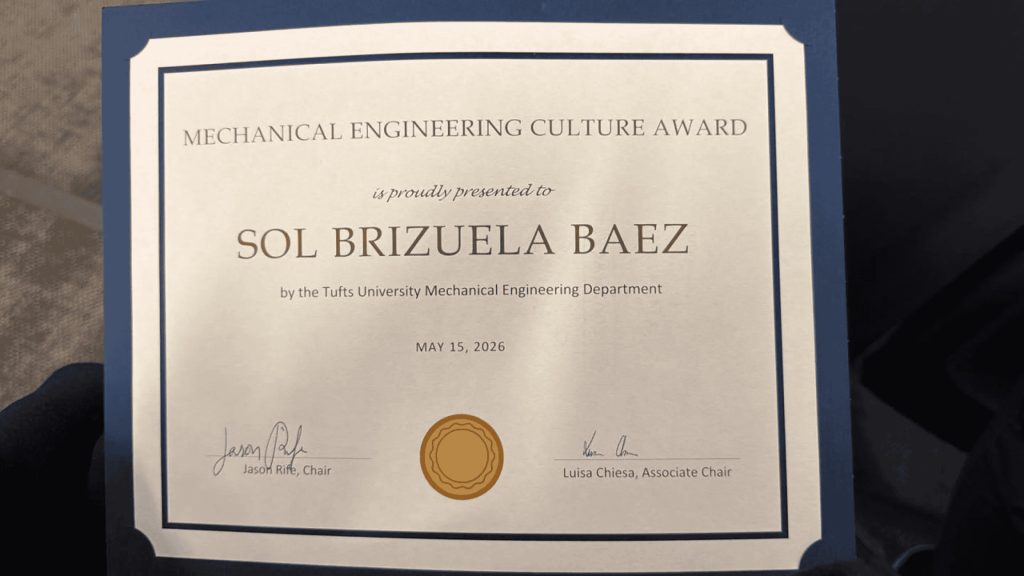
When it was time to prepare for university entrance exams in the United States, she studied almost entirely on her own. This experience taught her something that would later become essential for surviving academically in the United States: discipline.
At the same time, she maintained a demanding university routine. She worked between 15 and 20 hours per week while studying engineering. She worked as a receptionist assistant in the English department, a teaching assistant for Spanish, and also in areas related to physics, mechanics, and electronics.
In addition, she spent years working at the university’s Latino centre, a space that eventually became her “second home”. There, she led a team of nine people and found an important community during her university life.
Impostor syndrome and learning to ask for help
One of the most difficult challenges was facing impostor syndrome, especially at the beginning of her degree. “The introductory classes, which were supposed to be easy, were very difficult for me”.
Over time, she understood that many of her classmates had different academic opportunities and advantages. That did not mean she was any less capable. She also learned something she considers essential within the United States university system: losing the fear of asking for help. “There are many resources when you do not understand something. You have to learn to use them even with embarrassment”.
Although engineering is often seen as a male-dominated field, Sol highlights that her university made real efforts to balance participation within the degree. “We were practically 50 and 50%. Yes, many times you indeed have to work much harder as a woman, but everything has its reward and its results”.
Carrying Paraguay with her
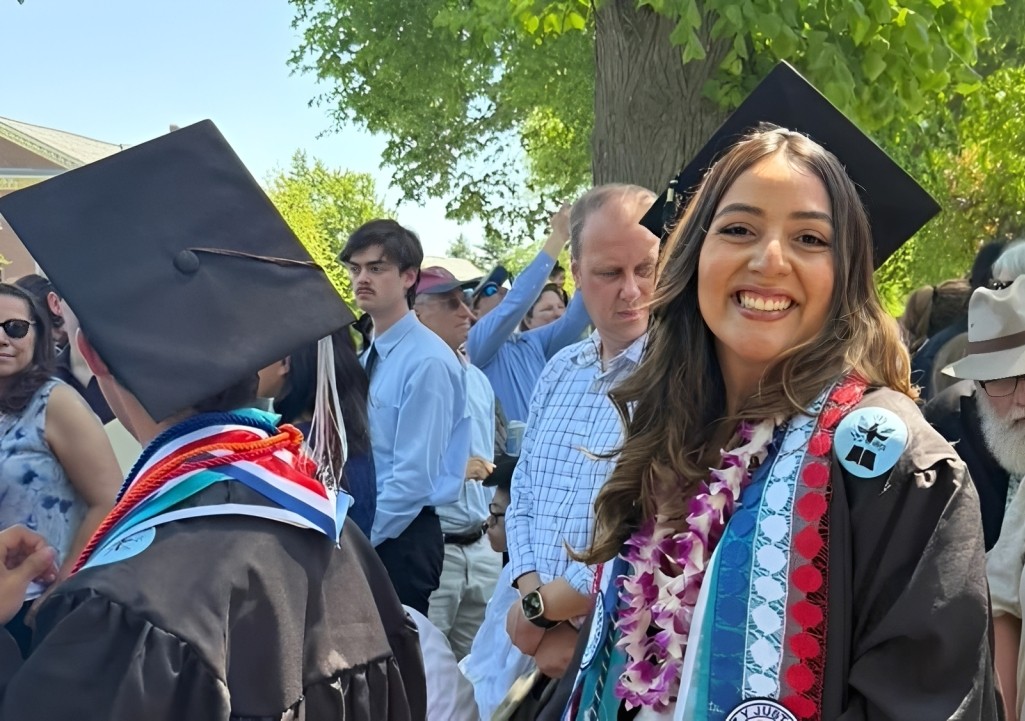
Her strongest cultural shock was the difference between Paraguayan and American culture. “Paraguay is very communal. In the United States, I felt that everyone was in their own world”.
This difference led her to find ways to stay connected to her roots. She hung a Paraguayan flag in her room, organised events to make chipa and mbeju, taught Guaraní to her friends, shared tereré, and constantly spoke about Paraguay with her peers.
“My way of feeling close to home was to carry Paraguay with me wherever I went”. This connection to her roots was also present in her graduation speech, where Sol chose to greet the audience in Guaraní with “Mba’eichapa” (How are you).
The future and opportunities for Paraguay
Now, while she searches for work and considers pursuing a master’s degree, Sol is clear about the field in which she wants to develop: automation applied to industry and the agricultural sector.
“I believe that Paraguay has a lot of potential, especially thanks to clean energy and the opportunities that may arise with the growth of artificial intelligence. There is a great future in areas such as automation and energy-related industries”.
A message to her 15-year-old self
“You are going to be fine, you are going to achieve it, and you are going to fulfil that dream. With fear or without fear, push forward and keep going”. And she reflects that “not everyone has the same access to opportunities, but if it is truly your dream and your heart longs for it, it is worth trying.”
For another story on Paraguayan students abroad, also read: Yumi Kikuchi: Paraguayan Who Led NASA Project Awarded Masters From US University