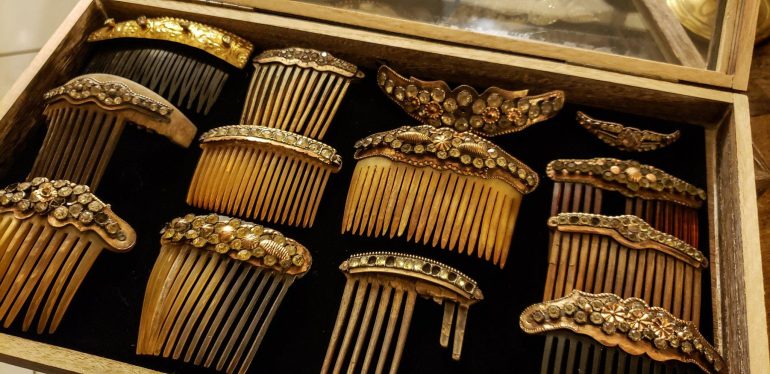

Among the most significant cultural symbols of Paraguay, the kygua vera holds a distinctive place. More than an ornamental accessory, this golden comb, or “shining comb”, according to its translation from Guaraní language, brings together elements of identity, social hierarchy, fashion, and the transformation of female roles in nineteenth-century Paraguayan society.
Origin and meaning of the kygua vera
The term kygua vera originates from Guaraní and literally means “shining comb”. This object formed part of the traditional female hairstyle, placed over large braided buns that structured women’s hair.
Although its origin is linked to European peinetón influences and other Latin American fashions, in Paraguay it developed its own distinctive characteristics in both design and social meaning. It was not merely an aesthetic object: it also functioned as a visible marker of status, elegance, and economic position.
Depending on socio-economic status, the kygua vera was made of gold, tortoiseshell, or simpler metals. This allowed its use across different social groups.
The kygua vera and women in nineteenth-century Paraguay
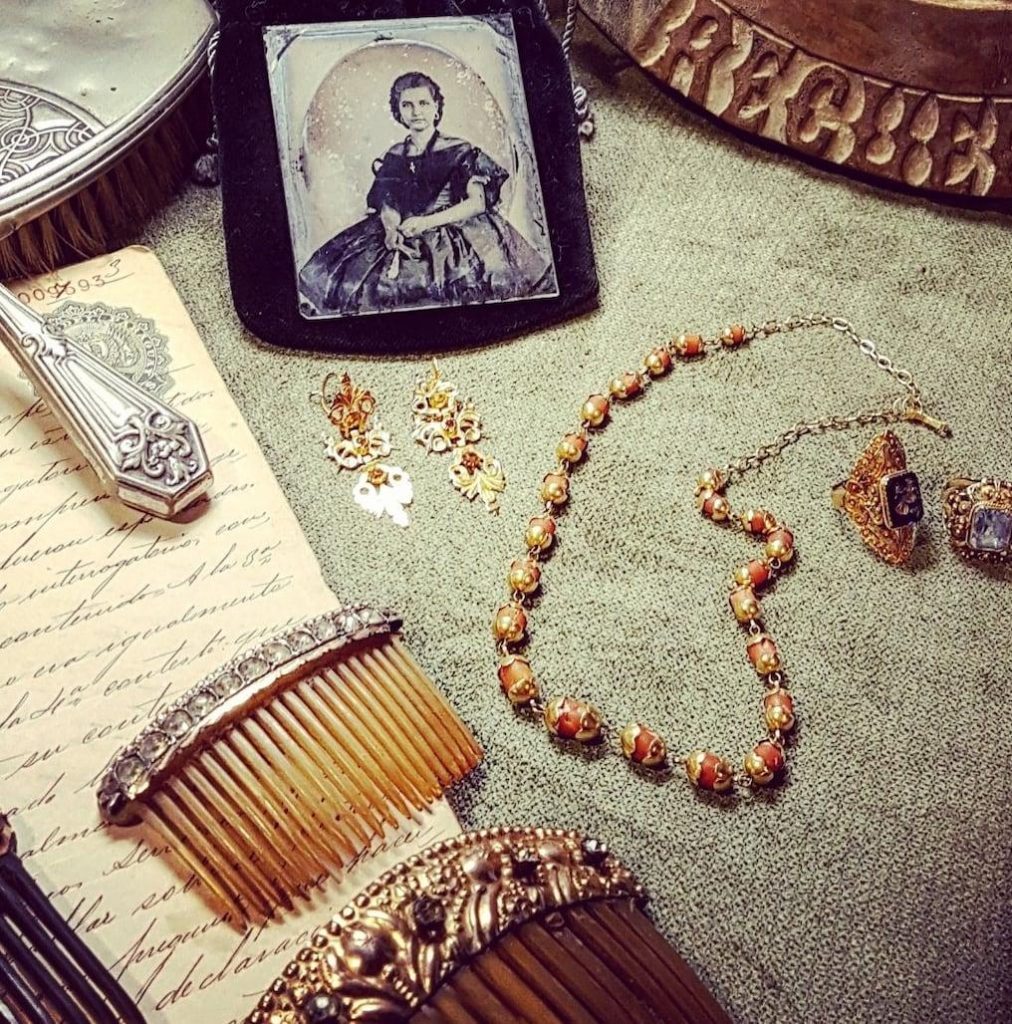
The kygua vera became established in urban Asunción during the nineteenth century, amid profound political and social change.
Its rise coincided with the years of the government of Francisco Solano López and the context before and after the War of the Triple Alliance, an event that profoundly transformed the social structure of the country.
During this period, women began to occupy more visible roles in urban economy, commerce, and social life. People recognised some women, particularly in Asunción, for their economic autonomy, reflected in their dress and ornamentation.
Historian Ana Barreto Valinotti interprets the kygua vera as a symbol of female visibility in public space. She associates it with women who actively participated in urban and economic life.
However, this interpretation requires nuance, as not all wearers belonged to economic elites. No single social category can define its use. The diversity of materials and styles shows that it was an object present across different sectors of society.
Women, independence and social tensions
Various interpretations suggest some women associated with the kygua vera had economic independence. This was particularly true of those involved in trade or urban activities. However, this is not a general rule nor a homogeneous category, but rather an interpretation derived from cultural and testimonial sources.
The kygua vera also generated symbolic tensions within society at the time. Some foreign travellers and conservatives described these women as excessively visible. Others saw them as deviating from traditional codes of female modesty.
These criticisms reflect a broader context of tension between traditional social norms and emerging forms of female presence in public space.
From social prestige to broader diffusion
Over time, the kygua vera ceased to be exclusively an elite symbol. Its production diversified, and more accessible versions made from less costly materials appeared, allowing its adoption by women from different social backgrounds.
In this sense, the object shifted from a strict marker of social distinction to a more widely disseminated cultural element within Paraguayan society.
Cultural representations and symbolic legacy
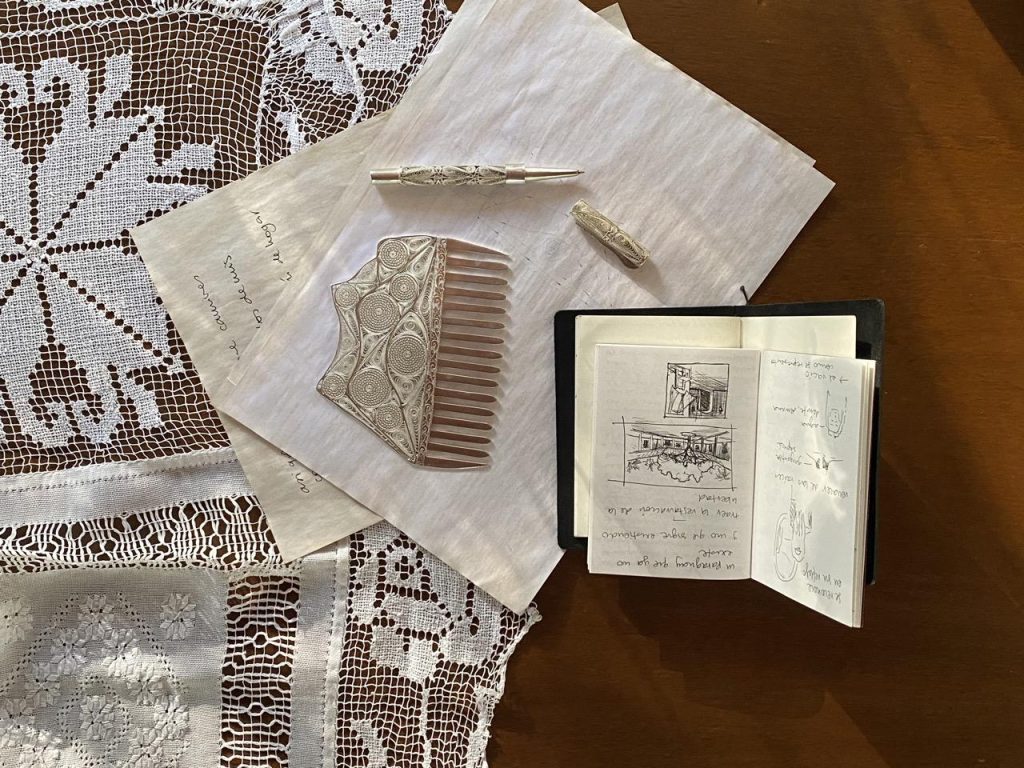
Although the kygua vera ceased to be part of everyday dress in the mid-twentieth century, its cultural presence has remained in the Paraguayan imagination.
One key symbolic space is the zarzuela Las alegres kygua vera, which portrayed these women as urban and lively. It helped establish them as socially visible figures within popular culture.
In addition, the kygua vera has been revisited in contemporary artistic expressions, cultural research, and discussions on Paraguayan female identity.
A symbol between fashion, history and identity
Beyond its aesthetic dimension, the kygua vera represents an intersection of fashion, social history, and identity construction in Paraguay. Its evolution reflects changes in the country’s social structure, as well as shifts in how women were perceived and how they represented themselves in public space.
Today, the golden comb remains a cultural symbol connecting past and present. It recalls a time when female ornamentation expressed social presence and distinction.
In contemporary culture, this symbol has reappeared in artistic and musical projects. In 2026, for example, the singer Sari Carri released the album Peineta de Oro, inspired by the history of the kygua vera and the symbolic strength of Paraguayan women, reinforcing its place within the contemporary cultural imagination.