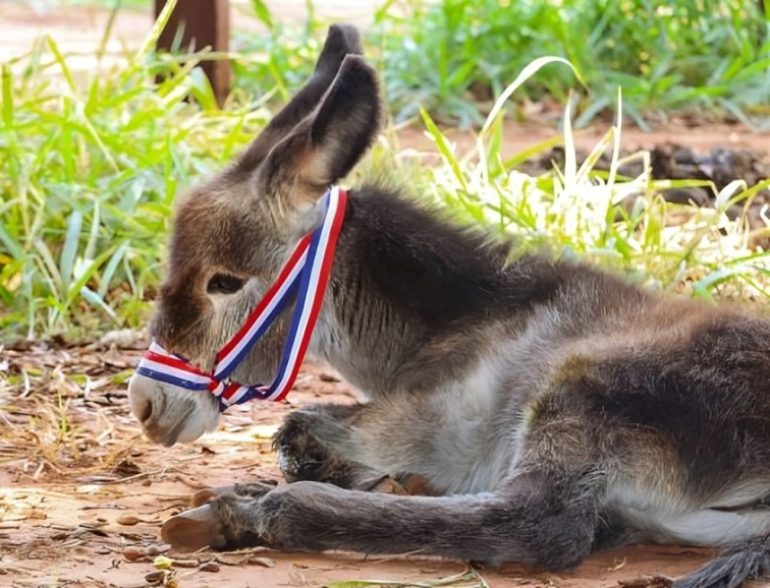

A newborn donkey foal named Solano is enhancing the practical education of future veterinarians at the Faculty of Veterinary Sciences of the National University of Asunción (FCV-UNA). The young donkey, who was recently born at the institution, has swiftly become a central figure within the educational community. Moreover, his arrival has generated considerable interest and enthusiasm among both students and academic staff.
The birth took place within the faculty’s Equine Livestock Division. Throughout the process, professionals and students closely monitored the gestation, the birth itself, and the critical initial care of the foal. Solano remains with his mother, Josefina, a she-donkey who was donated to the faculty for didactic purposes. Josefina is well-regarded for her docile and calm temperament, making her an ideal animal for educational interaction.
A hands-on learning experience
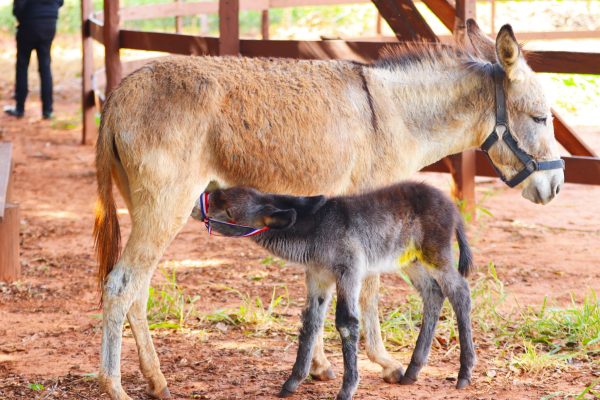
Dr Katia Miranda, head of the Equine Livestock Division, explained that overseeing the case has been an enriching experience for the practical training of veterinary students. She noted that health checks are typically performed throughout gestation to prevent the transmission of diseases to the offspring. However, in this instance, Josefina arrived at the faculty during her final trimester of pregnancy. Consequently, the team did not have precise data regarding the length of her gestation period.
Despite this lack of detailed history, Solano was born in good health and immediately received all the necessary post-partum care. This careful management provided students with an invaluable, real-world lesson in neonatal equine medicine.
Ensuring a healthy start in life
Among the crucial first steps, the veterinary team verified that Solano was able to stand within his first few hours of life. In addition, they ensured he consumed colostrum from his mother. This first milk is fundamental for providing passive immunity, as equines are born with a nearly non-existent immune defence system. The colostrum delivers essential antibodies that protect the foal from infections during its first weeks.
Furthermore, professionals carried out the disinfection of the umbilical cord, a critical procedure to prevent potentially life-threatening infections. They also monitored the expulsion of the meconium, which is the foal’s first faecal matter. A successful passage of meconium is a key indicator that the digestive system is functioning correctly. The team also continually assessed the foal’s general state of alertness and overall mood to gauge his wellbeing.
Pure joy
When asked to describe the foal’s impact, Dr Miranda stated that his arrival could be summarised in a single word: Joy. She highlighted that experiences of this nature allow future veterinarians to complement their theoretical knowledge with direct observation and practical skills, which are fundamental for professional practice.
Also read: Aguará Guasú Rescued And Released After Urban Sighting In Asunción.