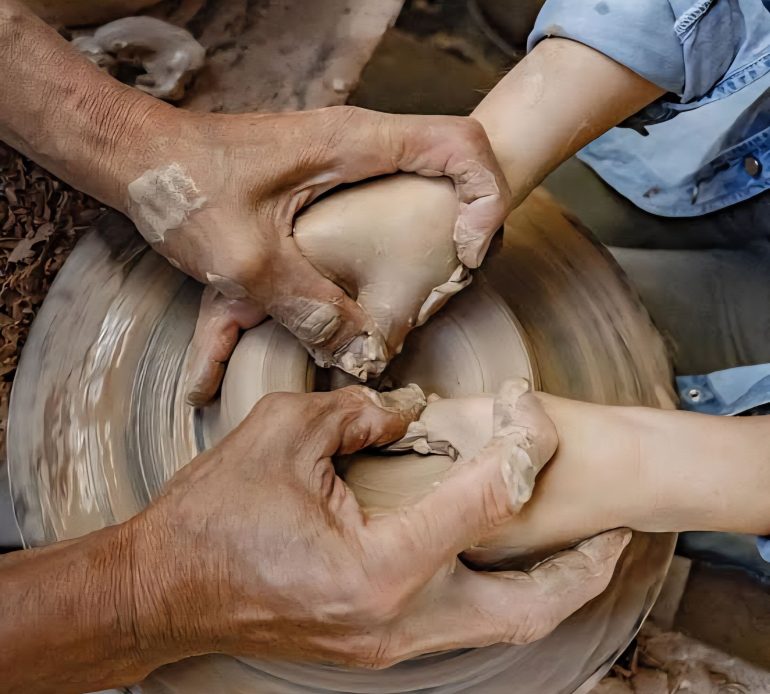

Every year on 28 May, Paraguay officially celebrates the Day of the Ceramist. Far from being a simple cultural celebration, this day recognises a living artistic tradition connecting pre-Columbian heritage with contemporary galleries. It is a tribute to the master artisans, historically and predominantly women who transform raw earth into vessels of cultural memory.
The crucible of mestizo art
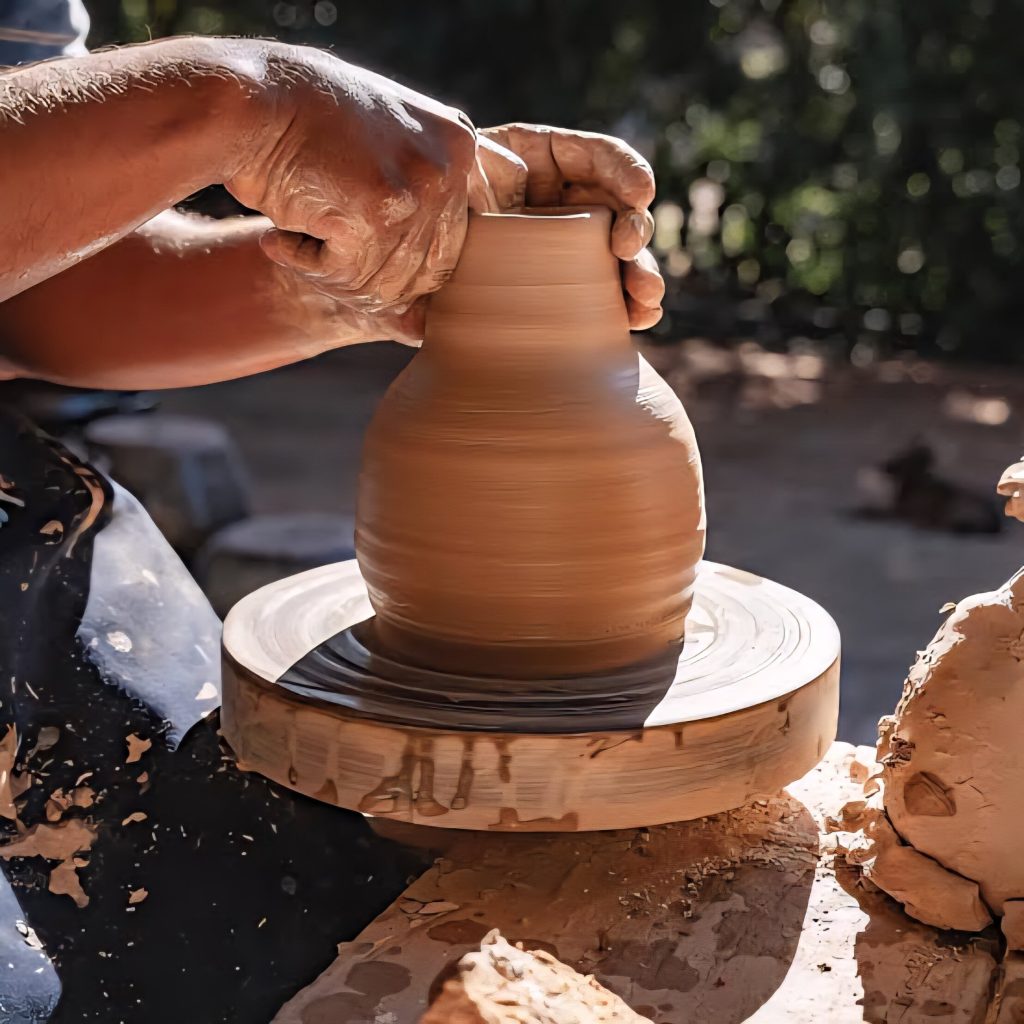
The roots of Paraguayan pottery run remarkably deep. Long before the arrival of Spanish conquistadors, indigenous Guaraní communities possessed a rich, functional, and ritualistic ceramic tradition. They crafted japepo (large pots and burial urns), potes (jars), and ña’ẽ (plates or dishes) entirely by hand.
With the onset of the colonial era, particularly through the establishment of Franciscan and Jesuit missions, a profound cultural hybridization occurred. Indigenous communities adapted their ceramist techniques to meet the demands of colonial life, creating a distinctive mestizo pottery tradition. Traditional forms blended with European utility as Indigenous artisans redesigned Spanish water jugs with wider, more stable bases.
Crucially, this artistic evolution occurred outside of official, state-sanctioned production lines. It survived in the margins, passed down through generations within families residing in the historic távas (indigenous towns). Today, this ancient tradition remains rooted in its geographical origins, especially in the pottery centres of Itá and Tobatí.
Ñai’ũpo: A living UNESCO treasure
The absolute pinnacle of this ancestral continuation is the practice of ñai’ũpo (a Guaraní word translating to “handcrafted mud” or “clay work”). In a monumental victory for Paraguayan heritage, UNESCO officially inscribed ñai’ũpo onto the “List of Intangible Cultural Heritage in Need of Urgent Safeguarding.”
Ñai’ũpo is a completely manual, low-temperature process that entirely bypasses the mechanical potter’s wheel. The technique relies on:
- The Colombín Method: Building the walls of a vessel by meticulously stacking long, hand-rolled coils or ropes of wild clay gathered from local wetlands.
- The Tacuara: A simple piece of bamboo used to smooth, press, and blend the clay coils together, a tool that symbolically gets passed down from master to apprentice.
- Natural Finishes: The application of itapytãnguý (an iron-oxide-rich red slip or engobe) to polish and waterproof the pieces, or the fumigado technique, which uses smoke from organic matter during open-air wood firing to give the clay a striking, deep black satin finish.
Matriarchs of the clay: From craft to contemporary Fine Art
Women have historically dominated Paraguayan pottery, while men mainly assisted with lifting raw materials. Transmitted orally through the Guaraní language from mothers to daughters, the craft has evolved from utilitarian domestic ware into high-concept contemporary sculpture.
Several iconic matriarchs have defined this movement:
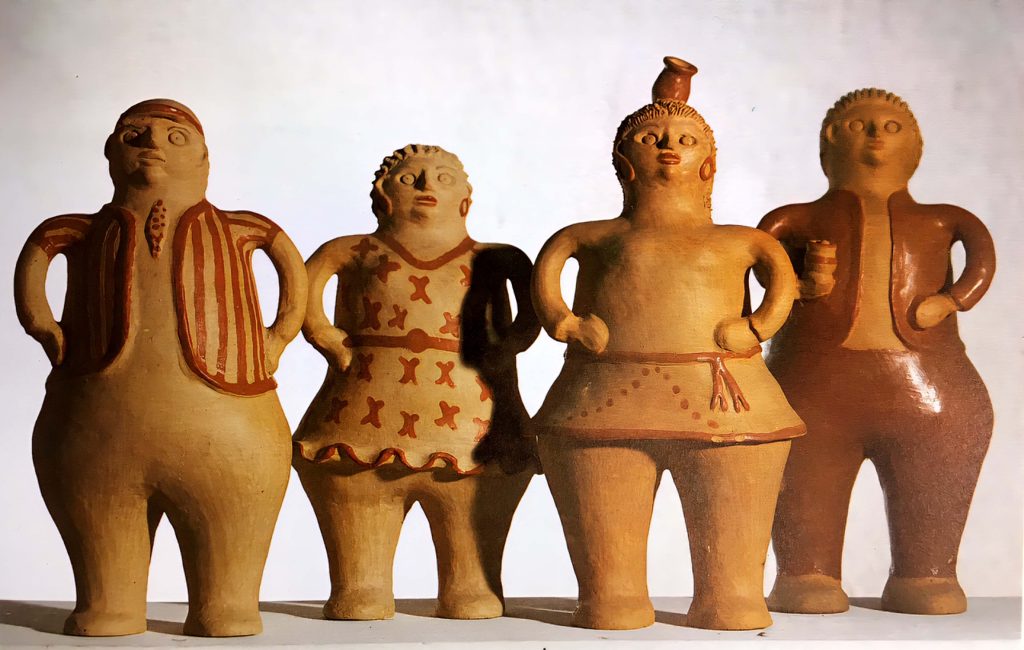
- Rosa Brítez (1941–2017): Known as the “Potter of the Americas,” was born in Itá. She broke societal taboos by moving beyond traditional plates and household pottery. Brítez created expressive clay figures inspired by village life and Paraguayan folklore. She also pioneered intensely raw erotic figurines now highly valued internationally.
- Juana Marta Rodas (1925–2013) & Julia Isídrez: This legendary mother-daughter duo from Itá pushed the medium into the international spotlight. Working on the ground without a wheel, Julia Isídrez sculpts surreal creatures inspired by her dreams. Her organic forms blend ancestral Guaraní mythology with a fiercely modern aesthetic. ARCO in Madrid and Documenta in Kassel have showcased her work internationally.
- Ediltrudis Noguera: Based in the red-soiled landscape of Tobatí, Ediltrudis is a master innovator. Using a simple slab of tajy wood, she manually rotates her large-scale pieces while shaping the clay. She creates powerful hollow bulls, horses and human figures that bridge craft and fine art.
Celebrate potter’s month: Calendar of activities
To commemorate Day of the Ceramist and this rich artistic legacy throughout May, a vibrant series of cultural events, workshops, and exhibitions are taking place across the country, showcasing both traditional techniques and contemporary ceramic expressions.
The Instituto Paraguayo de Artesanía (IPA) organises all exhibitions, activities and masterclasses for Potter’s Month. For schedules and registration details, readers can contact the IPA through its official website or social media channels.
Paraguayan pottery is more than an artistic tradition; it is a living archive of memory, resistance, and cultural identity. In everv hand-shaped vessel and everv smoke-fired sculpture survives a dialogue between Indigenous heritage, colonial history, and contemporary artistic innovation. The Day of the Ceramists honors not only the artisans themselves, but also the enduring spirit of Paraguay expressed through earth, fire, and human hands.
Also read: Exploring La Casita de Barro and the living ceramic traditions of Areguá, Paraguay.