

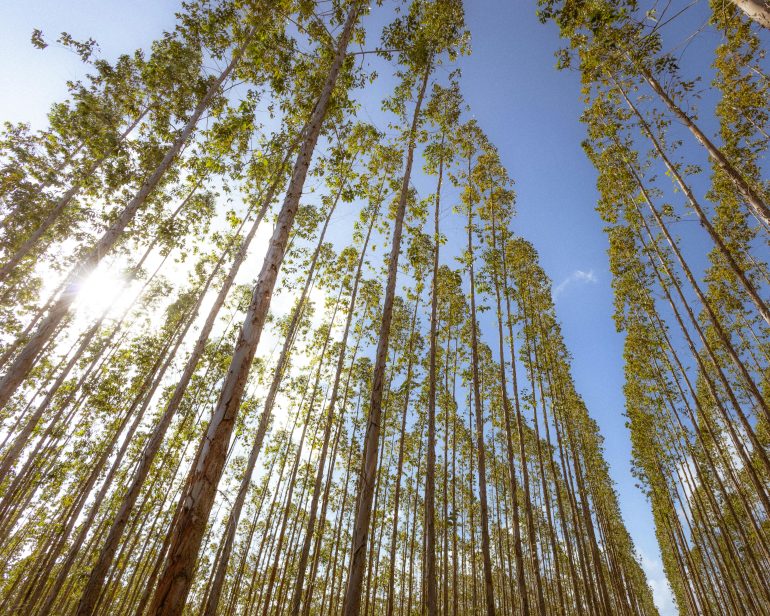

Paraguay has officially entered a new phase in its industrial development with the commencement of infrastructure construction for the country’s first pulp mill project. The endeavor is in part led by Paraguayan company Paracel in Paso Horqueta, Concepción Department. The initiative is backed by more than US$1.5 billion in investment.
As a result, it is regarded as the largest private investment in Paraguay’s history and a cornerstone for the country’s emerging forestry and industrial hub.
How a pulp mill turns trees into paper
A pulp mill is an industrial factory that turns wood into cellulose pulp. This pulp is the main raw material used to make paper, packaging, and other products made from plant fibres. The starts by cutting harvested timber into small wood chips. Then, the cellulose fibres are separated from the lignin, a glue-like substance holding the wood together. Without the lignin, the cellulose fibres are left as pulp. This project will use eucalyptus trees cultivated specifically for industrial fibre production.
Pulp production requires large volumes of timber, electricity, water, and transport capacity. Therefore, the mills require extensive infrastructure for the complex logistics systems that move raw materials and finished products efficiently.
Developing local infrastructure
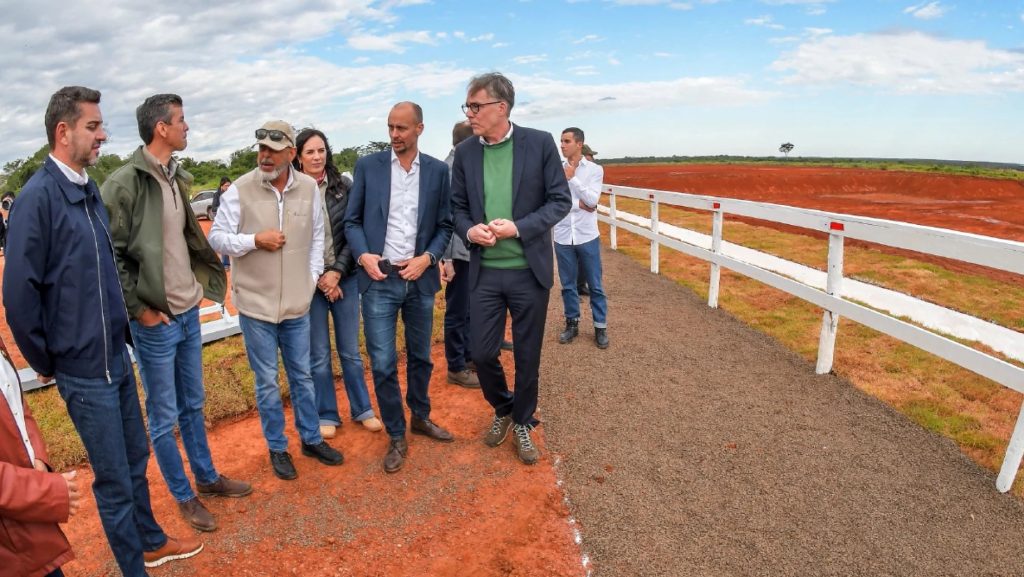
Consequently, construction now focuses primarily on the industrial backbone required to support and sustain large-scale pulp production. Building has begun on a river port, power transmission lines, access roads, and logistics infrastructure. This will eventually connect forestry operations, industrial processing, and export channels. According to Paracel CEO Flavio Deganutti, assembly of the plant itself begins in 2027. Operations for the first phase are expected to begin in 2028.
With the onset of production will be an increase in employment opportunities. According to Deganutti, “Today, Paracel directly employs more than 1,2000 people, 95% of whom are Paraguayan, and 70% of whom are from the Concepción Department.”
He anticipates the additional development of 2,000 jobs as a result of the Sudati investment and further development of the pulp mill’s infrastructure over the next five years.
Expansion of industrial pulp projects
Paracel’s forestry operations have expanded rapidly over the last seven years. The company now controls more than 203,000 hectares, with over 100,000 hectares already planted, representing approximately 110 million trees. The pulp mill process has been certified under the Forest Stewardship Council (FSC) standard, one of the world’s most recognised certification systems for sustainable forestry management.
While traditional logging operations rely on native forests, this industrial pulp mill project will use man-made tree farms cultivated intentionally for fibre production. Rotational harvesting cycles will be implemented to allow continuous replanting of trees. This will preserve a consistent wood supply for industrial processing.
Brazil investment expands industrial ecosystem
During the groundbreaking ceremony, Paracel announced a partnership with Brazil’s Sudati Group, the country’s largest plywood manufacturer and exporter. Sudati plans to invest more than US$200 million over the next five years as part of the industrial development hub surrounding the pulp mill project. Both companies plan to jointly plant an additional 30,000 hectares to later manufacture wood and forestry derivatives.
The companies will collaborate to minimise waste by making full use of the harvested timber, since the wood quality necessary to produce plywood and cellulose vary. The integrated plywood and pulp mill model is designed to ensure that nearly every part of each tree is used in production. This methodology ensures a large industrial operation that maximises efficiency.
Paraguay positions itself in global forestry markets
With this investment and infrastructure development, Paraguay takes another step towards becoming a major regional player in sustainable forestry and industrial cellulose production. Both sectors have expanded rapidly across South America as global demand grows for renewable fibre-based materials.
Read more about how Paraguay’s forestry sector excelled in 2025.

