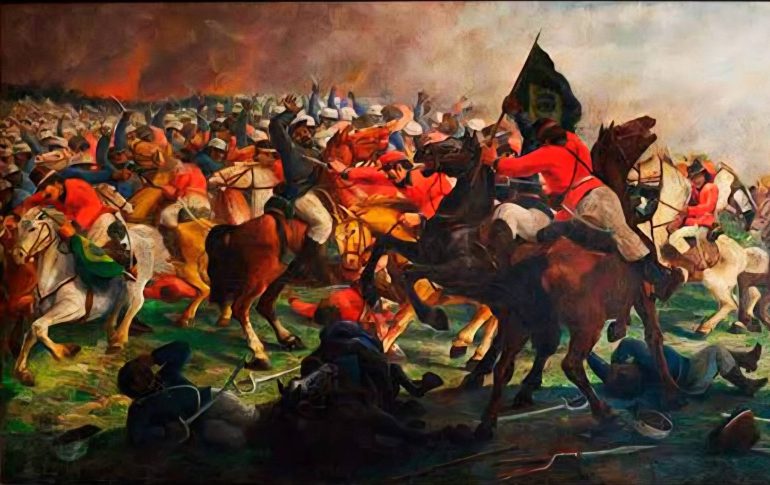

On the morning of the 24 of May 1866, a thick mist hung over the wetlands of southwestern Paraguay. In a dry pocket of land hemmed in by treacherous marshes, 35,000 soldiers belonging to the allied forces of Brazil, Argentina, and Uruguay were finishing their breakfast or resting in their tents. They believed the dense, unforgiving terrain of Tuyutí would protect them from a sudden assault, but they miscalculated catastrophically.
Out of the surrounding forests and across the murky bogs, 23,000 Paraguayan soldiers launched a massive, coordinated surprise attack. What followed over the next five hours would become the largest, most brutal, and bloodiest pitch battle ever fought on the South American continent.
It was an audacious gamble by the Paraguayan President, Marshal Francisco Solano López, designed to crush the allied army in one decisive stroke and force a negotiated peace. Instead, it became the graveyard of the finest regular units Paraguay would ever field.
The master plan that dissolved in the mud
The Triple Alliance War had been brewing for years, sparked by bitter territorial disputes, competing regional ambitions, and the complex geopolitical web connecting Paraguay to its larger neighbours. By May 1866, the allied army, under the overall command of Argentine President Bartolomé Mitre, had cautiously advanced into unknown, unmapped Paraguayan territory.
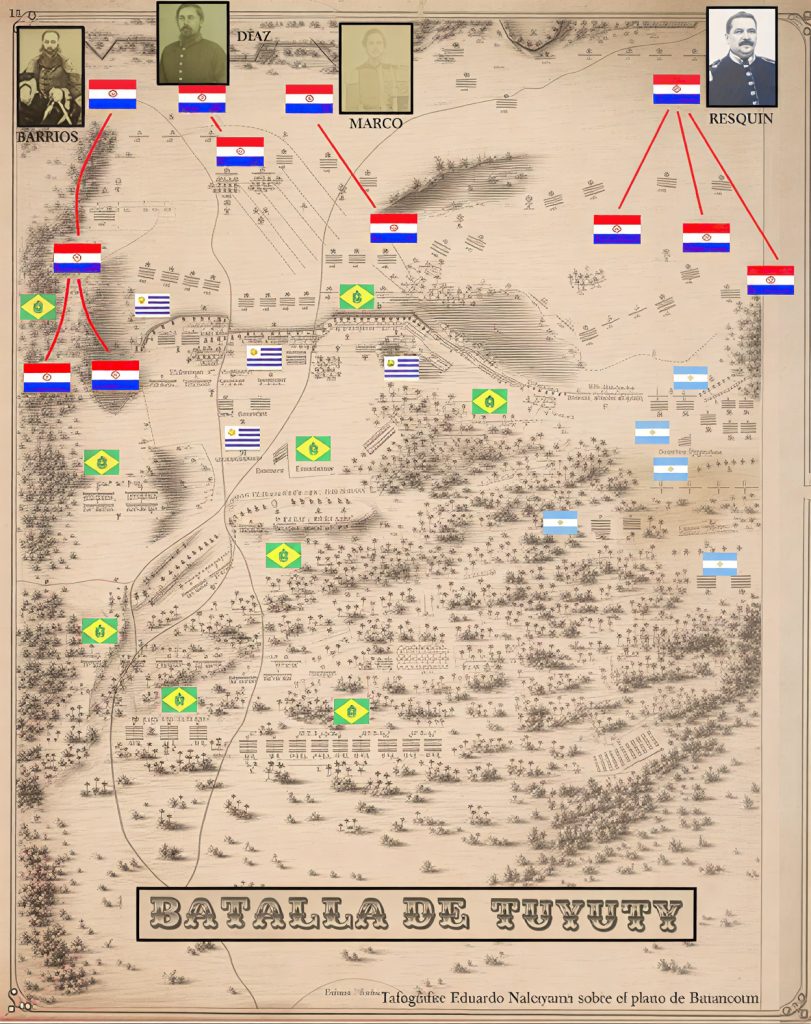
Marshal López saw an opportunity. He devised a sophisticated pincer movement involving three powerful columns.
- The right flank: Led by General Vicente Barrios, moved through the Sauce woods and Potrero Piris to strike the Allied rear.
- The left flank: Commanded by General Francisco Isidoro Resquín, advanced through the marshes to encircle the Allied left.
- The Centre: Guided by Colonels José Eduvigis Díaz and Hilario Marcó, this force would mount a devastating frontal assault.
To ensure total synchronisation, López ordered a sequence of acoustic signals: General Barrios would send a messenger to Colonel Díaz upon reaching his position; Díaz would fire a rocket; and upon hearing that rocket, the artillery commanded by Colonel José María Bruguez would fire a single cannon shot to trigger the all-out assault.
The plan was brilliant on paper, but it failed to account for the brutal reality of the Paraguayan geography.
Five hours of apocalypse
The complex choreography of the attack crumbled almost immediately as the infantry and cavalry struggled through the deep swamps. Colonel Díaz, favoured by slightly better ground, struck first, catching two Uruguayan battalions by surprise. However, Paraguayan forces quickly lost the element of surprise elsewhere.
In the centre, the Paraguayan cavalry under Marcó charged with immense bravery but ran directly into a hidden trap. The Brazilian commander, General Emílio Luís Mallet, had anticipated a mounted charge and ordered his men to dig a deep, hidden ditch directly in front of his artillery lines.
The Paraguayan horsemen, unable to see the trench in the tall grass, could get no closer than fifty metres. Imperial canister shot systematically decimated them. On the left, General Resquín’s eight cavalry regiments routed the initial Argentine squadrons. However, they were annihilated when they charged infantry formed into impenetrable defensive squares.
By midday, General Barrios and the right column emerged from the thick mud into Potrero Piris. The Brazilian commander, Manuel Luís Osório, had already rallied his reserves.
The battle dissolved into hand-to-hand combat of unparalleled savagery. For five hours, the swampy plains turned red as musketry, sabres, and artillery ripped through the ranks.
The true tragedy of Tuyutí lay not just in the sheer quantity of the dead, but in the quality of those who fell. The majority of the cavalrymen who perished in those fields were members of the educated, aristocratic elite of Asunción.
The aftermath and the legend of resistance
By half past four in the afternoon, the gunfire finally ceased. The shattered Paraguayan columns retreated into the forests, leaving behind a landscape of devastation and horror. Between twelve thousand and fifteen thousand men lay dead or wounded in the mud.
General Mitre claimed a technical victory, but Allied losses were so severe he refused to advance further. He remained unaware that the Paraguayan lines were temporarily left completely defenceless. Tuyutí fundamentally altered the trajectory of the war. Marshal López had lost his regular, highly trained army. By late June, he raised another twenty thousand troops using old men, boys and recovering wounded soldiers.
For the remainder of the conflict, Paraguay could no longer fight in the open field, turning instead to desperate, entrenched guerrilla warfare behind fortifications like Humaitá and Curupaytí.
Yet, the Battle of Tuyutí cemented itself in Paraguay’s national consciousness as the ultimate testament to Paraguayan valour. The finest men of Asunción were gone, buried in the sodden earth of Ñeembucú, but the memory of their ferocious bravery on that blood-soaked Sunday would echo through South American history for generations to come.