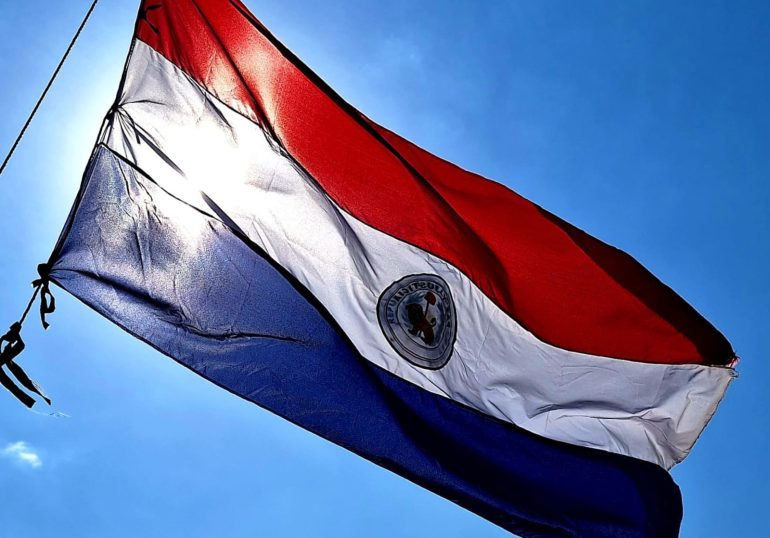

Paraguay’s Secretariat of Linguistic Policies (SPL) is promoting the use of the Guaraní language in public spaces across Paraguay with a full schedule of activities. The initiative, scheduled as a campaign from 24 to 28 August, 2026, is being held under the slogan “Rohayhu Che Ñe’e”, which translates to “I love my Language”.
“Guaraní is what makes us unique in the concert of nations, and it is an official language that should be on an equal footing with Spanish, but its use in the public sphere is a work in progress,” Alcibiades Brítez, Director General of Linguistic Planning for the SPL, explained to state media.
Twelfth annual language week
The “Rohayhu Che Ñe’e” week is expected to involve representatives from public institutions, media outlets, social organisations, and the general public. This marks the 12th time the event has been held, aiming to encourage the integration of Guaraní into government bodies as well as private and civil sectors.
Paraguay has two official languages, Guaraní and Spanish. The 1992 Constitution recognised Guaraní as an official language, granting it equal status to Spanish. Despite this, its use has often been more prevalent in informal and domestic settings rather than in official or public domains. The SPL works to bridge this gap, ensuring the language holds its constitutionally mandated position.
“Upon entering cities, welcome signs should be in Guaraní first and then in Spanish, in a condition of parity and to promote the language,” Brítez asserted.
Language as a national identity
Brítez emphasised the importance of promoting both official languages as mandated by the National Constitution. “Paraguay has linguistic diversity, but we must promote, above all, the two official languages,” he stated. He also noted the practical benefits of using the native language for communication and commerce.
“Guaraní opens the doors of communication with people, and many companies have already realised this. They use Guaraní because they realised that it suits them due to the positive effect it has on their objectives.”
The campaign also acknowledges recent trends that have helped boost the language’s profile. The popularity of musical groups and songs in Guaraní has spurred its use among parts of the population. However, Brítez concedes that encouraging its adoption by younger generations remains a significant challenge.
“If it is not present in the cities, if it is not seen on signs or heard, it is difficult. It also depends on its use by younger journalists,” he affirmed.
Progress and future plans
During the “Rohayhu Che Ñe’e” week, the progress made in the gradual incorporation of Guaraní into the public sphere will be presented. The main event is set to take place on Tuesday, 25 August, at the National Congress. “They will see how Guaraní is growing,” Brítez expressed. He was accompanied by Rossana Arias, Head of the Department of Protection and Diffusion of Linguistic Diversity.
The SPL recommends that government authorities begin their speeches with a greeting in Guaraní. The secretariat actively collaborates with various state institutions “so that Guaraní has the place it deserves, alongside Spanish, on websites, in training, and in speech,” he explained.
Furthermore, the SPL representative invited institutions, companies, and individuals to contact the General Directorate of Linguistic Planning for guidance on how to gradually incorporate Guaraní into their respective spaces.
Also read: How to learn Guaraní Language? Breaking Barriers to Unlock Paraguay’s Cultural Heart.