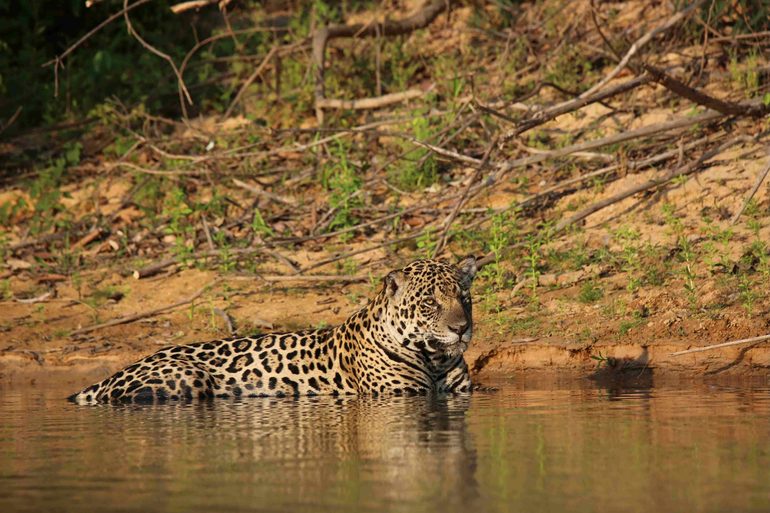

Paraguay is part of a regional effort to protect the jaguar. The Jaguar Rivers Initiative, recently presented in Buenos Aires, Argentina, brings together four conservation groups from Paraguay, Argentina, Bolivia, and Brazil. The project aims to reconnect rivers, wetlands and riverside forests across the Paraná basin. The Moisés Bertoni Foundation represents Paraguay in the alliance.
The jaguar (yaguareté in Paraguay, from the Guaraní jaguarete) is the largest cat in the Americas. Males can weigh up to 140 kg. A single animal roams over a vast area in search of prey and mates. When forests and riverbanks are cleared or broken up, individuals end up cut off from one another. The alliance argues that isolated national parks and reserves cannot sustain a population on their own.
A partnership of four organisations
Alongside the Moisés Bertoni Foundation, the founding members are Rewilding Argentina Foundation, Nativa of Bolivia and Onçafari of Brazil. Tompkins Conservation supports the project. The initiative was set up in 2025. In Spanish, it is known as Los Ríos del Yaguareté.
It describes itself as a cross-border alliance that aims to restore ecological connectivity and local economies in the Paraná basin. More than 100 million people rely on that basin, whose waters serve households, farms, fisheries, shipping and power generation. The Paraná itself links Argentina and Paraguay.
A sighting that pointed towards Paraguay
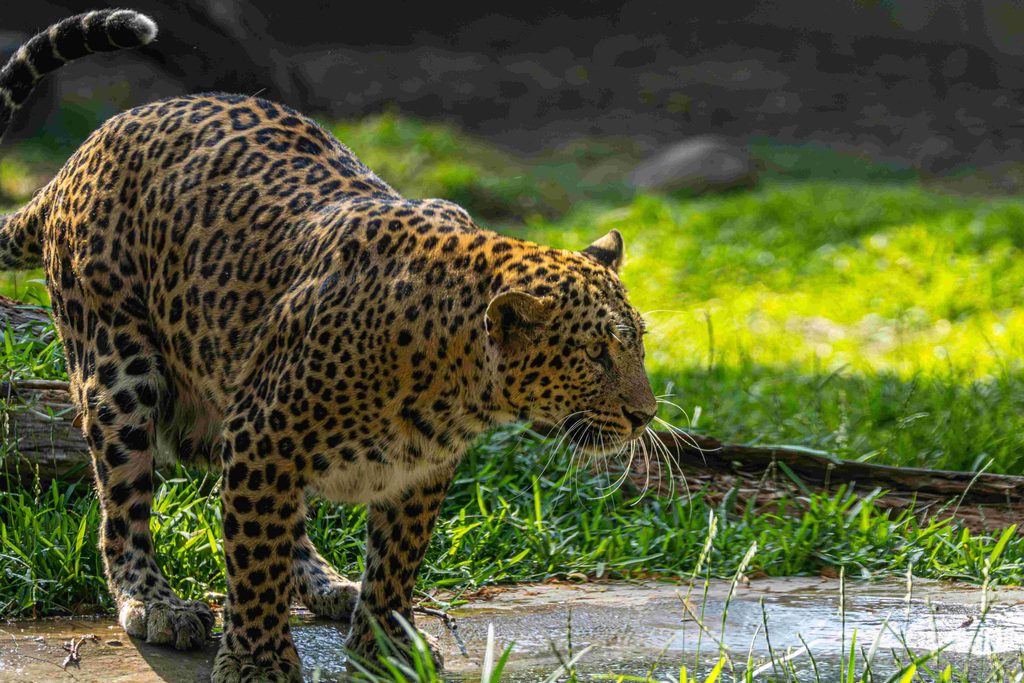
The Paraguayan link began with a river crossing. In 2024, fishermen saw an animal swimming across the Paraná towards Paraguay, says Sofía Heinonen, executive director of Rewilding Argentina, in an interview. The sighting led her team to start working with Paraguayan organisations and individuals. Young jaguars tend to leave their birth territories and expand into new ones. Researchers also believe a giant river otter found in Argentina came downstream from Paraguay.
According to the initiative’s website, the Moisés Bertoni Foundation manages more than 70,000 hectares of protected wild areas. Most of that land is in the Mbaracayú Forest Nature Reserve, in Canindeyú department, with more in the Aguapey Nature Reserve in the Humid Chaco.
Where jaguars live in Paraguay
Paraguay’s jaguars live mainly in two regions, according to WWF Paraguay specialist Carlos Molinas. One is the Eastern region, where one of the most important populations lives in the Atlantic Forest, within the Mbaracayú reserve. The other is the Chaco, which holds the largest concentration and some of the country’s biggest protected areas. The species has lost more than 50% of its historic range, according to WWF Paraguay.
Local media describe the jaguar as critically endangered in Paraguay. They name hunting by ranchers, who see it as a danger to livestock, as a main threat. Under Law 716 on environmental crimes, destroying an endangered species can carry one to five years in prison. WWF Paraguay also promotes ecological corridors to link protected areas and reduce the isolation of jaguar populations.
Conservation alongside business and communities
To reach its goals, the alliance wants public bodies, residents, companies and civil groups on board. Its model is a working landscape where protected areas coexist with crops, cattle, fisheries and visitors. Jaguar Rivers also promotes a regenerative economy built on community wildlife tourism and native agroforestry, which grows crops among trees.
The partners list several pressures on the basin. These include deforestation, dams that alter river floods, pollution and water extraction. Canals have also cut natural links between lagoons, marshes and rivers.
The project proposes protected areas it calls “arks”, which would shelter species and serve as connection points. Monitoring tools would track water levels, sediment and riverbank conditions. The partners would use the readings to decide where to restore first.
Jaguar Rivers starts with a shared fleet and a first target
The first goal is to strengthen the link between two great wetlands. One is the Pantanal, in Brazil and Bolivia. The other is the Iberá Wetlands, in Corrientes, north-eastern Argentina, where jaguars have been reintroduced since 2012. The area now has 50 free-living jaguars.
The organisers have presented the project in Buenos Aires, at the Malba museum, and will present it in the other three countries. Plans include four biological stations and four boats, working with riverside communities along 1,200 kilometres. A shared fleet would keep a constant presence on the water. “The river is not protected because nobody is paying attention to it,” Heinonen says.
The partners have set 2030 as a milestone. For Paraguay, the next few years will show whether rivers can work as safe routes for jaguars. For more info you can visit the Jaguar River’s Initiative website.