
The city of Yguazú, in the Alto Paraná department, has begun using a digital platform to predict dengue outbreaks. The programme combines NASA satellite data with local health records. Why? to show where mosquitoes carrying dengue, zika, chikungunya, and yellow fever are most likely to breed. The tool, called MosquitOFF, was developed by Marcos Codas, a young software developer from the community.
It has now been adopted by the municipal government, in partnership with the National Service for Environmental Sanitation and Vector-Borne Diseases (SENEPA) and local hospitals.
Turning satellite data into street-level alerts
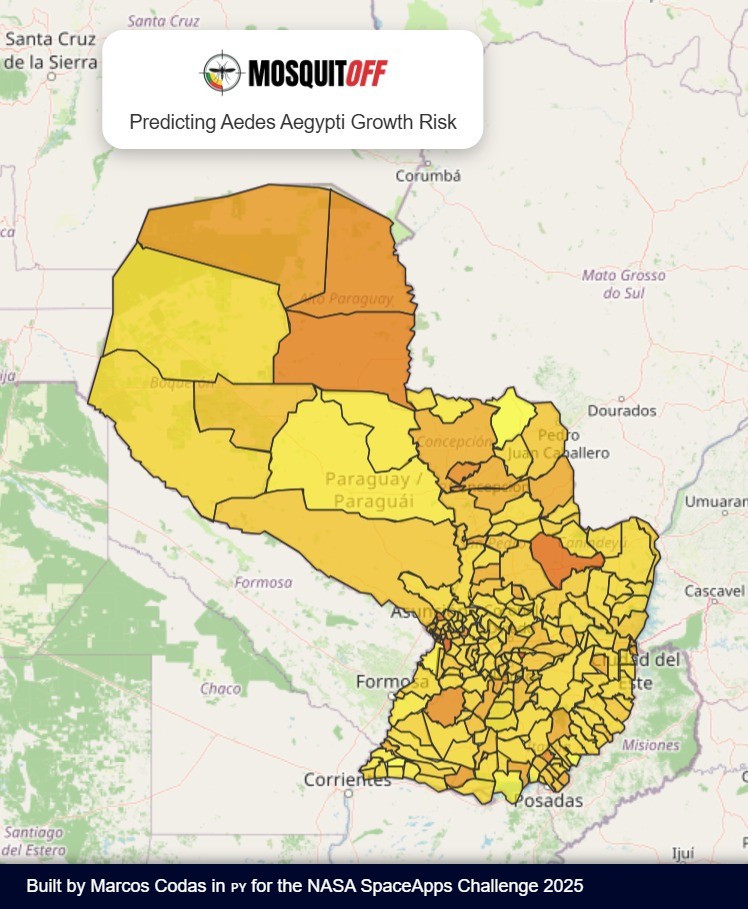
The MosquitOFF app works by layering several sources of information onto a digital map. It draws on NASA precipitation, temperature, and soil moisture readings. These are cross-referenced with population density figures from Paraguay’s National Institute of Statistics (INE), plus epidemiologically validated models of mosquito behaviour. The result is a daily risk score, with a seven-day forecast, covering all 218 municipalities in Paraguay.
For Yguazú specifically, the platform goes a step further. Working with the municipality’s Environment Directorate, Codas built a hyper-local version of the map. It divides the city into the informal sub-neighbourhoods residents actually use, rather than official administrative boundaries. Suspected dengue cases reported at health posts are fed into the system in real time. This lets officials trace outbreaks back to specific streets and blocks.
“A database from the moment the patient arrives”
Yguazú’s mayor, Mauro Kawano, who backed the project from its earliest stages, told local media that the platform would give the municipality continuously updated information. This links suspected cases to the areas where mosquitoes are most active. He added that the tool would let officials pinpoint precisely which streets and blocks are producing breeding sites. Training is also being rolled out to health posts, schools, and other public institutions so staff can use the system directly.
The rollout forms part of a broader push to get ahead of outbreaks before case numbers rise. Instead of responding after they are already underway. Kawano has pointed to four of Yguazú’s most populous neighbourhoods as areas that have historically recorded more cases: San Miguel, San Blas, Caacupemí, and San Valentín. He noted that even within them, small pockets with their own microclimates tend to be more prone to mosquito activity. Training for health post staff, teachers, and other public employees began this week. It is being led by Codas’s technical team alongside the municipality’s Environment Secretariat.
MosquitOFF’s path from regional hackathon to global stage
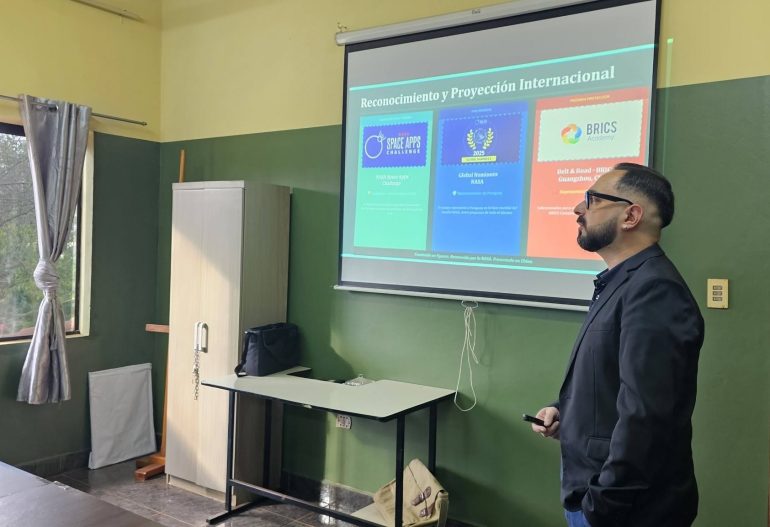
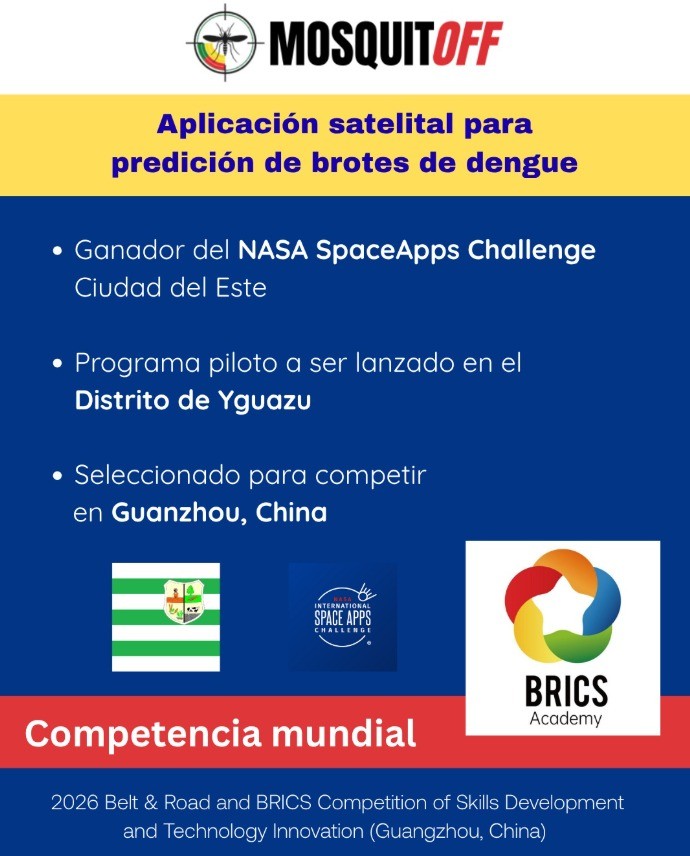
The platform began as an entry in the NASA International Space Apps Challenge, an annual hackathon in which teams worldwide build solutions using NASA’s open data. Codas’s project won the regional round held in Ciudad del Este. It then went on to represent Paraguay at further stages of the competition.
The project has since earned a place in the 2026 Belt & Road and BRICS Competition of Skills Development and Technology Innovation. The BRICS Academy of Skills Development and Technology Innovation in China organises the international event.
A tool residents can use directly
Beyond its role in municipal planning, the platform allows members of the public to check its information. Both the national map and the Yguazú-specific version are freely accessible online. Residents and visitors see which areas currently carry an elevated mosquito risk before travelling there. Health authorities have repeatedly stressed that daily precautions, such as removing standing water and using repellent, remain essential regardless of any single neighbourhood’s forecast. For a fuller rundown of how to stay protected, The Asunción Times‘ dengue prevention guide sets out practical steps residents and visitors can take.
Kawano has described the platform as revolutionary. He said he hopes to see it eventually adopted at the departmental and even national level. He called Codas’s contribution of time and expertise a significant donation to public health. Although MosquitOFF was built specifically to track mosquitoes, its developers have not ruled out expanding it to cover other disease-related risk factors in the future.
For Codas, the project reflects a broader ambition. He wants to show that Paraguay can design applied technology that meets its own public health needs. He also hopes it could, in future, serve other countries facing similar mosquito-borne disease pressures, including Brazil, India, and parts of Africa.