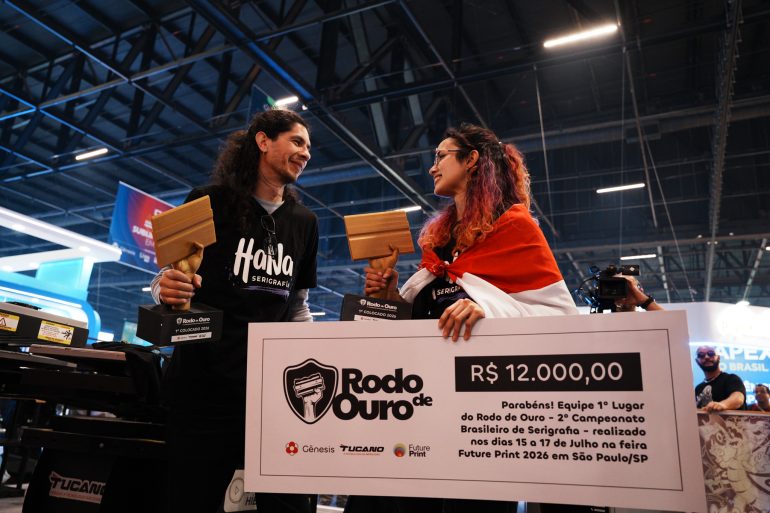

Two Paraguayan screen printers have come out on top of one of Latin America’s largest contests in their craft. Paloma García Ortiz and Alan Escurra, of the Asunción studio HaNa Serigrafia, won the Rodo de Ouro (Golden Squeegee) championship. The Paraguayan duo defeated 15 other teams from Brazil, Argentina, Uruguay, and Mexico. The result came at FuturePrint, a printing and textile trade fair held in the Anhembi District of São Paulo, Brazil.
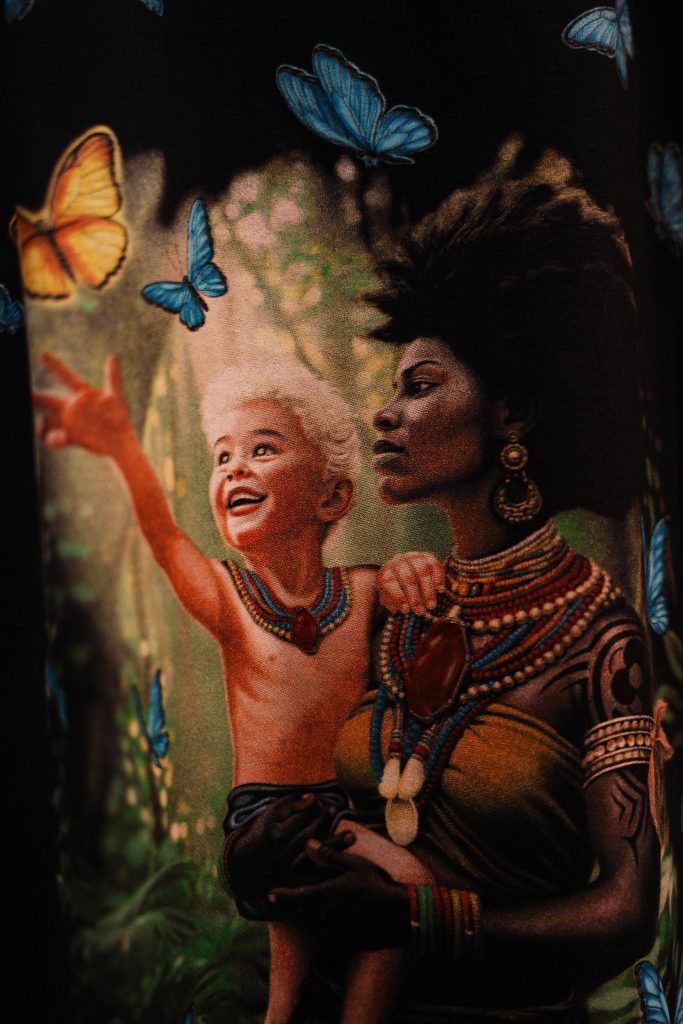
Screen printing, sometimes called silk-screening or serigraphy, involves pushing ink through a fine mesh stencil onto fabric, building up a design one colour at a time. In the contest, teams work under time pressure and public view, printing on a shared carousel press rather than in their own workshops. During that, a panel of judges scores each piece for registration, colour uniformity, and finish.
What is the Rodo de Ouro?
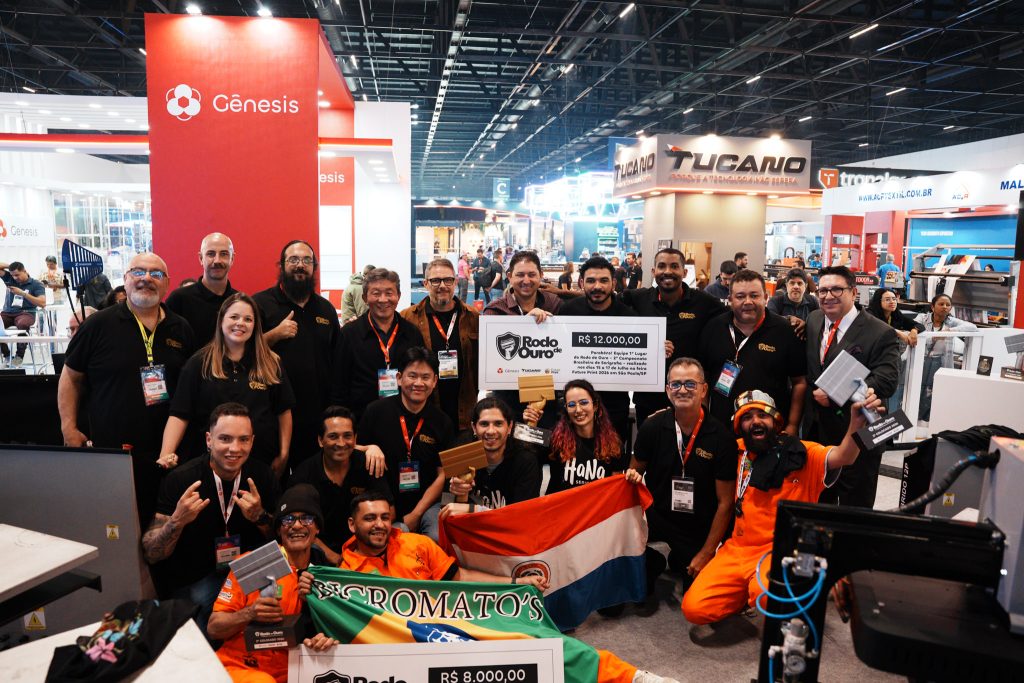
Organisers describe it as the biggest screen-printing championship in Latin America, now in its second edition and, for the first time, open to teams from outside Brazil. Most of the 16 teams that entered fielded three or four members, the maximum allowed. García Ortiz and Escurra chose to compete as a pair, the smallest team size permitted, relying on the strength of their individual technique rather than numbers. It proved no disadvantage: judges repeatedly praised their work as the rounds progressed.
The duo set up HaNa Serigrafia in 2015, building on a decade of experience in the trade beforehand.
Four rounds, four techniques
Getting to the final meant clearing three earlier stages, each with its own design brief and time limit. In the opening, qualifying round, competitors had 30 minutes to print a four-colour design; HaNa Serigrafia finished second, comfortably through to the knockout stages.
The quarter-final brought a tougher challenge: a seven-colour print with a raised “puff” ink effect, to be completed inside 45 minutes. The Paraguayans got the better of Mexico’s EJ Ramírez. In the semi-final, facing Brazil’s Mão no Rodo, they turned to four-colour process printing, layering cyan, magenta, yellow, and black inks to reproduce a photographic image, and advanced once again.
The final, against fellow Brazilians Bicromatos, gave both teams an hour to complete a twelve-colour simulated process print, an exacting technique that blends multiple inks to recreate photographic detail and shading. García Ortiz described the contest as closely fought, since their opponents were equally skilled in the technique, and said the margin came down to a single detail in the finished piece.
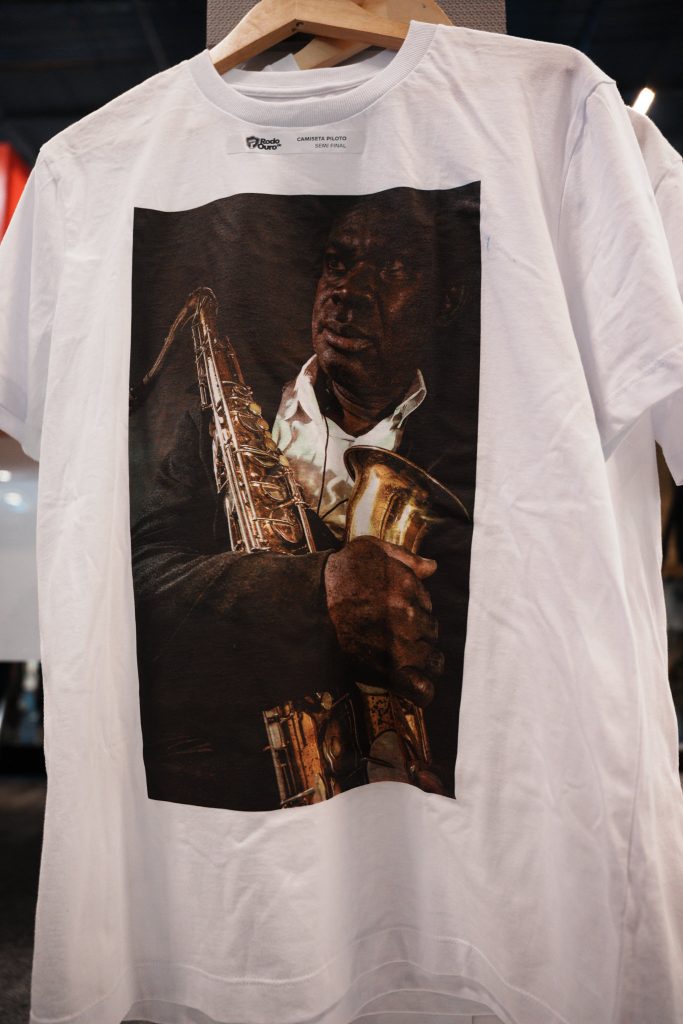
A trophy the pair did not expect
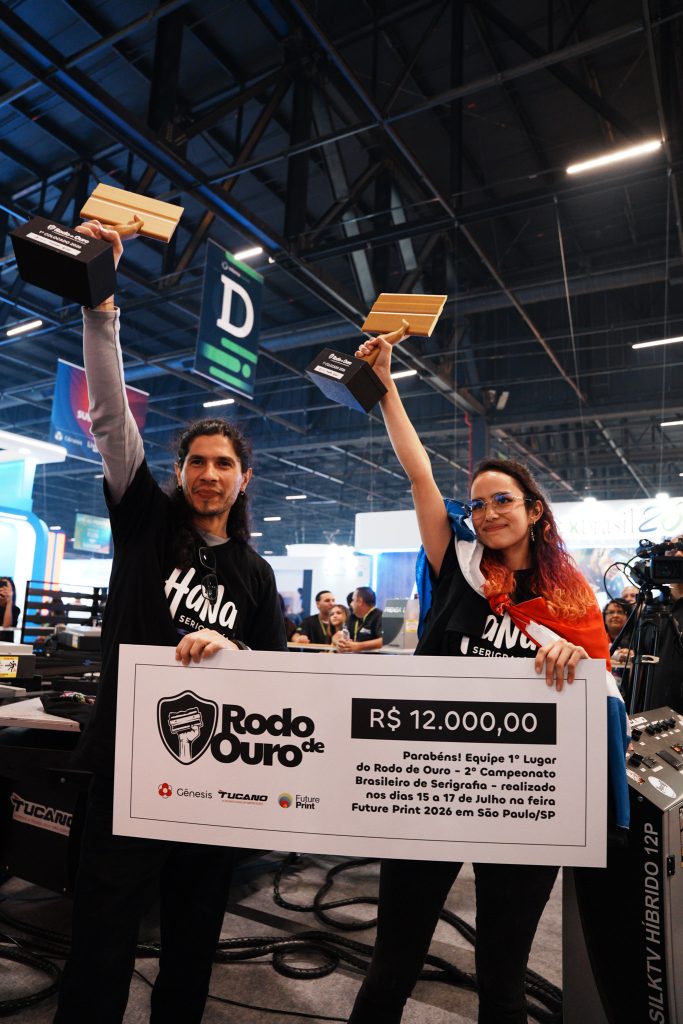
By their own HaNa Serigrafia Instagram account, García Ortiz and Escurra share they entered the championship mainly for the experience, without expecting to make it past the early rounds, let alone win. Reaching fourth place would have satisfied them. It was only once the judges’ feedback turned notably positive that they decided to push for the title itself.
Along with the trophy, HaNa Serigrafia collected a cash prize of R$12,000, worth around US$2,100. The pair told local media they were grateful for the chance to show what they could do on an international stage.
FuturePrint, the fair that hosted the Rodo de Ouro, drew more than 600 exhibiting brands and tens of thousands of visitors from across the printing, signage, and textile industries, according to its organisers. Yeda Monteiro, the fair’s business manager, said the contest helps the public connect directly with the skills behind the industry, linking visitors, brands, and specialists in a way trade stands alone cannot.
Another Paraguayan craft worth celebrating: Piribebuy Weavers Celebrate Poncho Para’i Heritage In Mastery Competition.