
While much of South America remembers independence through stories of long military campaigns and devastating battles, Paraguay’s liberation unfolded in near silence. Every year on 14 and 15 May, Paraguay pauses for a rare two-day independence celebration.
The holiday marks not a prolonged war nor a decisive battlefield victory, but the tense overnight hours of 1811 when a small group of local officers quietly shifted the course of the nation’s history without plunging the capital into bloodshed.
In a continent shaped by revolutions of fire, Paraguay’s independence emerged through caution, political calculation, and a single night of pressure that changed everything by dawn.
A different independence story
Across Latin America, the early nineteenth century became defined by violent struggles against Spanish colonial rule. Revolutionary figures such as Simón Bolívar and José de San Martín led armies across mountains and deserts in campaigns that lasted years. From Venezuela to Peru, independence wars devastated cities, displaced populations, and reshaped the continent by force.
Paraguay’s path, however, developed differently. At the time, the region was geographically isolated and politically cautious. The local criollo elite which were the descendants of Spaniards born in the Americas, did not necessarily support Spanish rule, but neither did they trust the revolutionary ambitions emerging from Buenos Aires after the May Revolution of 1810.
For many Paraguayans, replacing control from Madrid with control from Buenos Aires was not true independence.
The invasion that changed Paraguay
In early 1811, Argentine general Manuel Belgrano entered Paraguay expecting to rally support for the revolutionary movement spreading through the Río de la Plata. Instead, Paraguayan forces resisted. The battles of Paraguarí and Tacuarí ended in defeats for Belgrano and unexpectedly strengthened local confidence within Paraguay itself.
The victories demonstrated that Paraguayan militias could defend their territory independently, while also weakening the authority of the Spanish colonial administration. Local officers and landowners, caught between Spain and Buenos Aires, began quietly envisioning a future of their own.
The situation intensified when Governor Bernardo de Velasco reportedly sought support from Portuguese forces stationed in Brazil. To revolutionary sympathizers within Paraguay, the idea of Portuguese involvement represented a dangerous threat. Historical tensions between Portuguese and Spanish territories in South America made the possibility deeply unpopular among local officers.
The revelation accelerated plans for an uprising already being discussed in secret. Among the central figures were Pedro Juan Caballero and Fulgencio Yegros, military leaders who decided they could no longer wait.
The night of 14 May
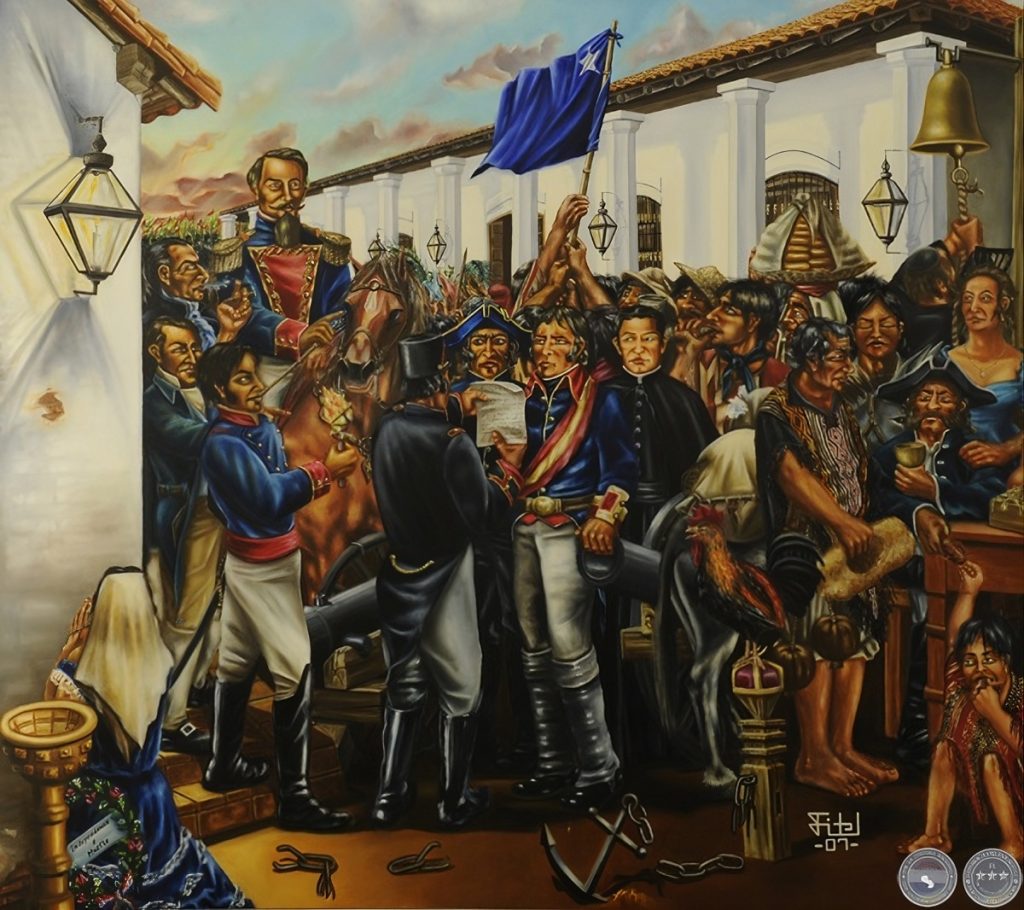
On the evening of 14 May 1811, revolutionary forces quietly moved through Asunción. Soldiers secured strategic locations while much of the city remained unaware of what was unfolding. At midnight, Iturbe issued Velasco an ultimatum: hand over weapons, treasury, and political control.
The confrontation placed the capital in a fragile moment between negotiation and violence. When Velasco hesitated, the revolutionaries positioned cannons facing the government headquarters. Yet the anticipated battle never came.
Rather than allow destruction inside the city, the governor surrendered authority peacefully. On 15 May 1811, colonial control collapsed and Paraguay quietly stepped into independence without bloodshed.
Why Paraguay celebrates two days
Unlike many national holidays tied to a single declaration or battle, Paraguay’s independence celebration reflects the continuous nature of that overnight transition. 14 May commemorates the beginning of the uprising and the seizure of strategic positions throughout Asunción. 15 May marks the dawn of the country’s new political reality.
Together, the two days symbolize the passage from colonial rule into self-government. Although Paraguay’s international recognition as an independent republic developed gradually in the decades that followed, the events of May 1811 became foundational to the nation’s identity.
A revolution remembered
Today, Paraguay’s independence celebrations blend patriotism with cultural pride. Streets come alive with the tricolour, music, and Guaraní, one of the Americas’ strongest surviving Indigenous languages.
Traditional dishes such as sopa paraguaya remain central to family gatherings during the holiday, connecting modern Paraguayans to generations past. More than two centuries later, the events of 14 and 15 May continue to stand apart within Latin American history: a revolution shaped not by sweeping battlefields, but by a single night when a city quietly awakened to independence.
Find out how Independence Day is celebrated in and around Asunción on 14 and 15 May 2026!