
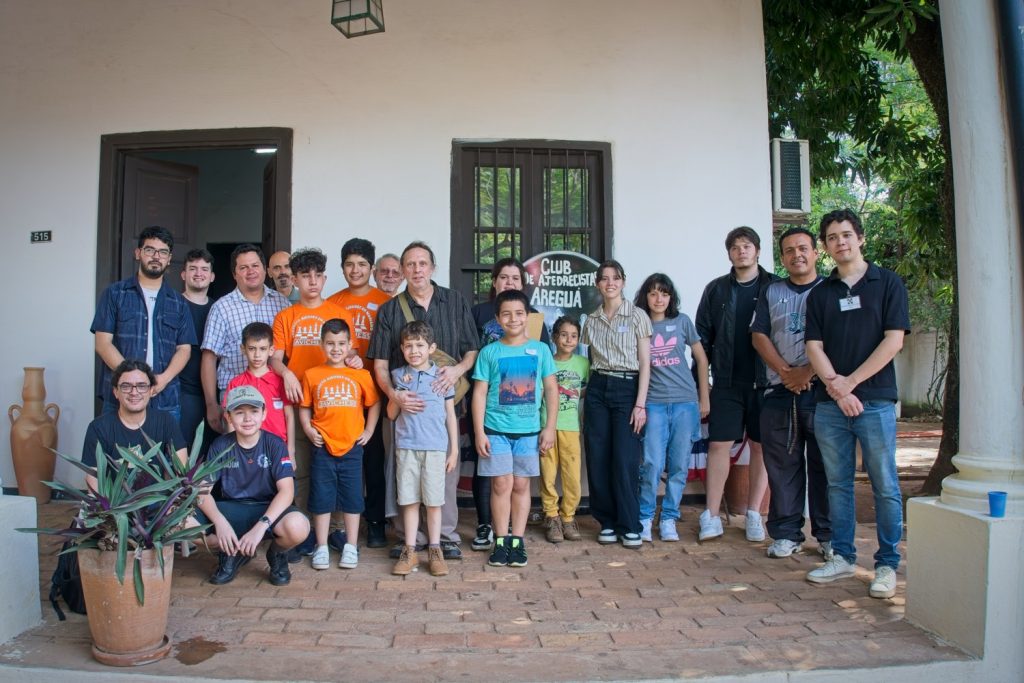
Jason Sullivan (58), born in the United States but based in Paraguay for last few years, had been looking to play chess with people in person, and that search snowballed into the Chess Players Club of Areguá (Club de Ajedrecistas de Areguá) a city 20 kilometres from Asunción, a now registered club with the Paraguayan Federation of Chess.
The Chess Players Club of Areguá origin
The story began in 2022, shortly after Sullivan returned to Paraguay. Looking for opponents, he responded to an old online post. “It was four or five years old, but I answered it anyway,” he recalls in conversation with The Asunción Times. That message led to a connection with another expatriate in Areguá, who later became a close friend.
Around the same time, Sullivan reconnected with local ties. “I lived in Areguá for 31 years ago with a host family,” he says. “My host brother took me to what was really my first tournament… very informal.”
From there, the group grew organically. “Little by little we just kept meeting people.” The idea quickly went from conversation to something real on the board. “Then we met another group… including a carpenter, Don Barrios, who makes chess boards.”
Their coming together signalled a turning point. “We joined forces just to play,” he explains. “And then next thing you know, we had a tournament.”
The gathering around the board
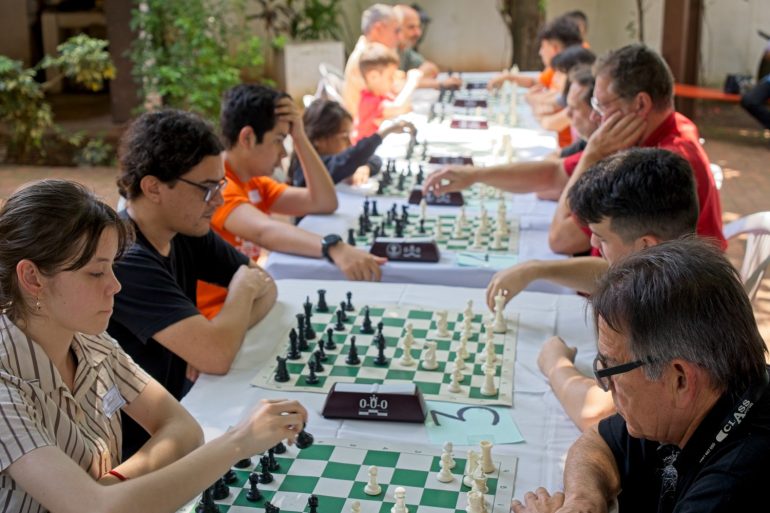
That first tournament, held in 2023, exceeded expectations. “We had 80 people. That was really the maximum, because that was the number of chess sets we had borrowed. It was more than we could have imagined.”
Soon after, the group formalised its structure. “We had our founding meeting on 30 July 2023 with over 15 founding members that are still active. It took a long road, but now we have our legal status. We are an official club.”
The club continues to grow steadily. “We have about 49 people on our WhatsApp group and over 300 on Facebook. We get people from all around… mostly Paraguayans, but also some expatriates.”
Finding a home in the community
Initially, meetings rotated between private homes. “We started playing in people’s houses. But as we got bigger, it became more challenging.” Sullivan’s host brother suggested the SENATUR in Areguá, a multipurpose venue from the Tourism Ministry, “We held a tournament there, and it was very successful.”
The partnership proved mutually beneficial. “We brought a lot of people there… parents, players, children. I think we helped generate traffic for them.”
Since then, the club has used the space regularly. “It is great because it is right in town and open,” he adds.
Open to all, free for everyone
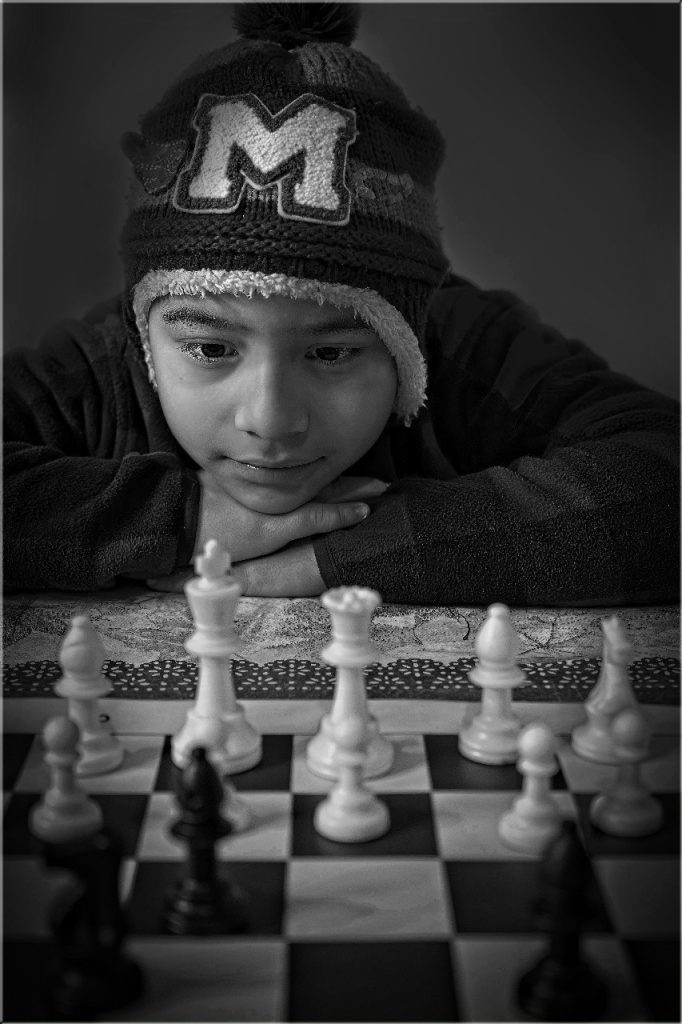
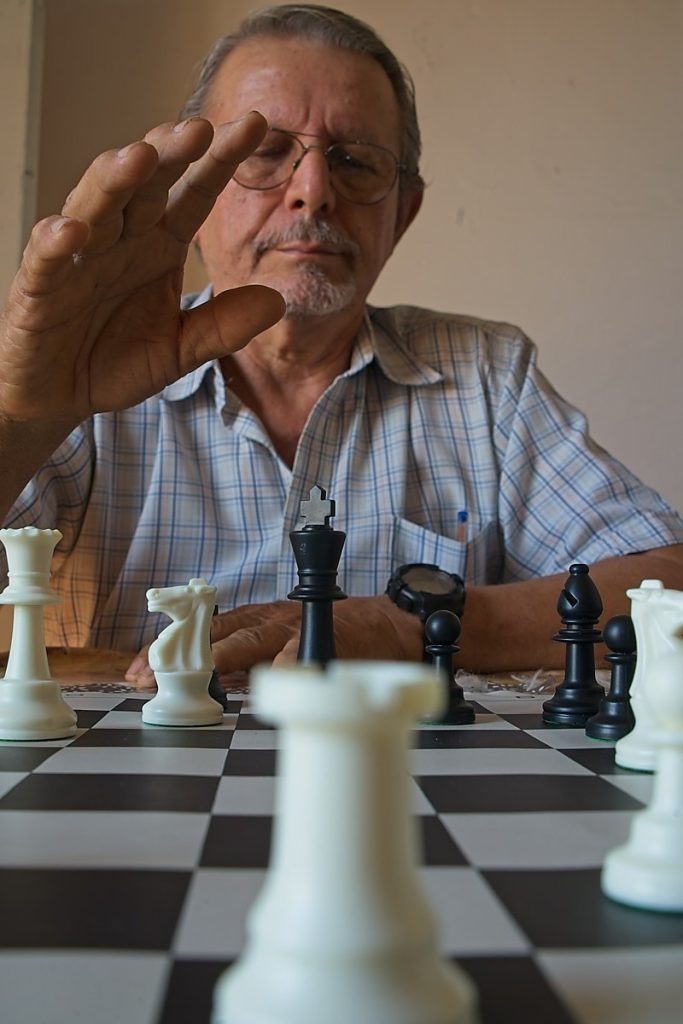
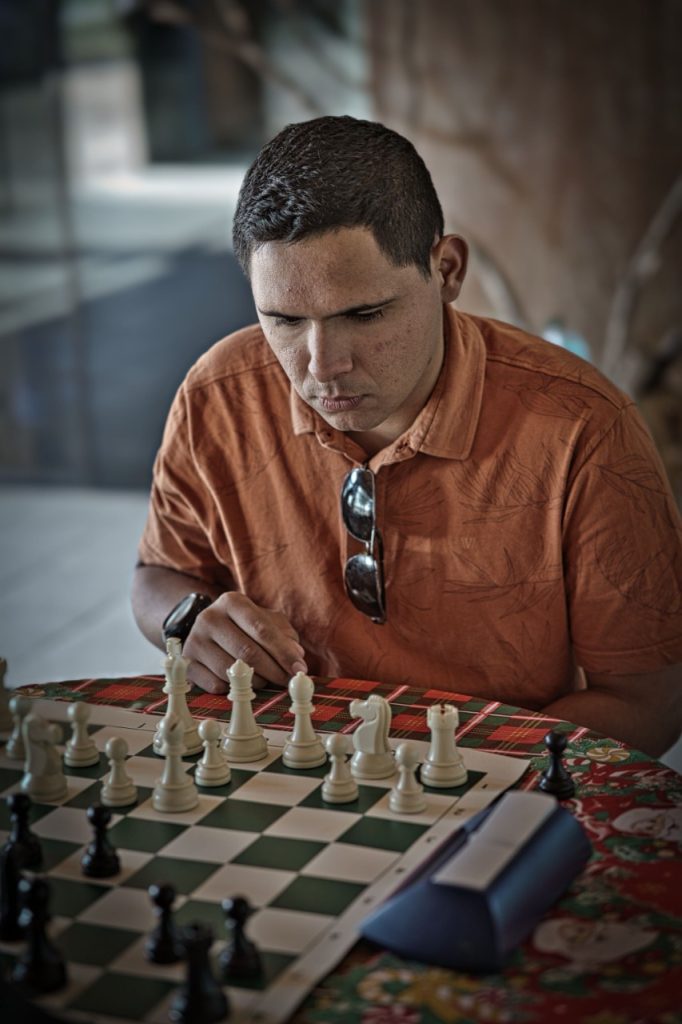
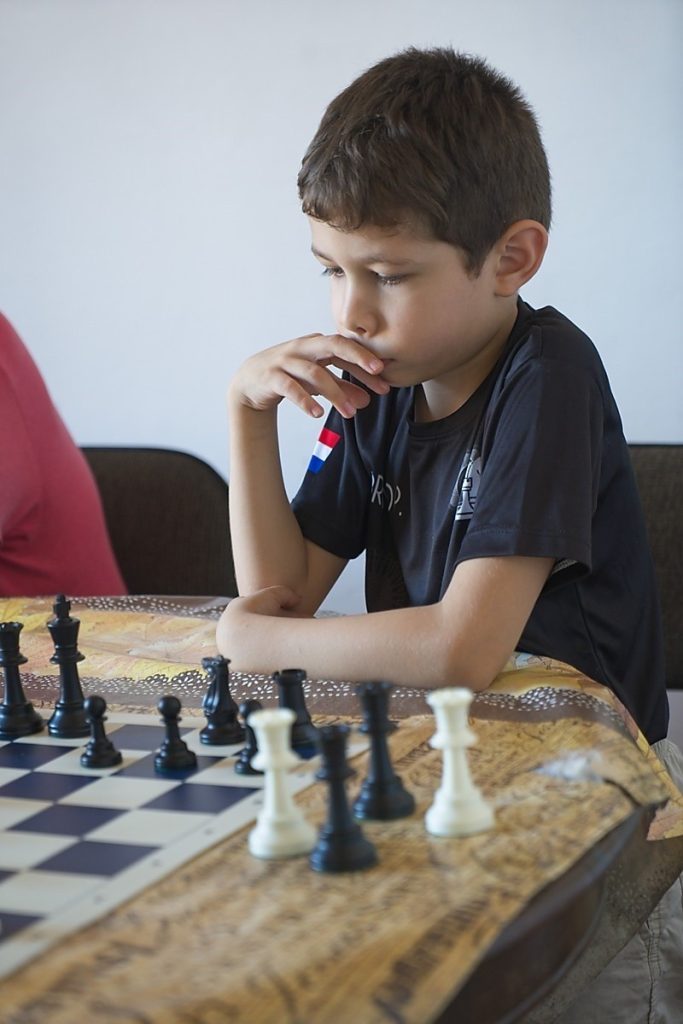
One of the defining features of the club is its accessibility. “It is completely free and open to anybody. Players range widely in age and experience. The club’s open and free format also creates opportunities for younger players to develop their skills. “We have had children as young as eight or nine,” Sullivan says, noting how quickly some begin to improve through regular play.
Access to spaces like this can play a significant role in developing future talent. Such initiatives build talent; Paraguay’s youth earned third place and multiple medals at the Pan American School Chess Championship.
For beginners, the environment is welcoming. “We might do some one-on-one after games… a bit of informal teaching, but it is more ad hoc.” Equipment is also available. “We usually have enough boards, people can bring their own, but it is not required,” he says with a shrug.
A flexible rhythm
The club currently meets every two weeks, typically from 09:00 to 11:00, with the next session scheduled for 10 May 2026.
And if you happen to find yourself in Aregua on a weekday itching for a worthy opponent? You can still propose a game in the Facebook group or their Whatsapp group chat and someone will be willing to join you.
More than just chess
Beyond regular play, the club is working on initiatives to expand its presence in the community, including a public chess installation.
“A local carpenter made a cement chess board that he wants to donate to the municipality. It has already been approved by the city council.” The goal is to create a permanent space where anyone can play. “We hope it will be installed somewhere central. It would be great for anyone to come and play.”
He even suggests a shared system for access. “Maybe people could leave their ID with a guard and borrow the pieces. Like a small library, but for chess.”
The endgame
For Sullivan, the club is more than a hobby. It is a way of building community across cultures and generations. “It has been a great way of meeting all sorts of people. Young and old.”
The experience has also been meaningful personally. “I did not have great Spanish when I first came here. Being involved like this made me appreciate people’s support.”
He recognises the challenges of starting from scratch. “People do not want to join until they see success. But it cannot be successful without people.”
Today, the club stands as proof of that effort. “We are still here. Three or four years later, we are solid.” As it grows, Sullivan hopes it becomes more sustainable. “I do not want to be president forever,” he admits. “I hope someone else takes it on one day.”
For now, he remains committed. “As long as I can keep playing and keep it going, I will be involved.”
In a city that previously lacked an established chess club, the impact is palpable. “There are very good players here. It is interesting there was nothing close by before.” Now, thanks to Jason Sullivan and the Chess Players Club of Areguá, that has changed.