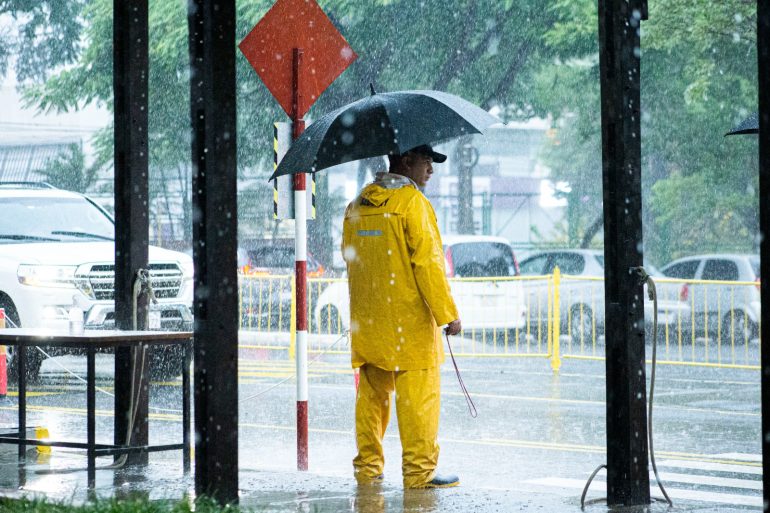

Ask anyone who has spent time in Paraguay about the weather and you will likely hear the same thing: it is unpredictable, extreme, and the seasons do not seem to follow any pattern they recognise. One day brings blistering heat; the next, a sudden cold front. This is not an anomaly. Understanding Paraguay’s seasons means understanding why the climate of this landlocked country, bordered by Brazil, Argentina and Bolivia, is governed by rules that differ fundamentally from those of the temperate world.
A subtropical country, not a four-season one
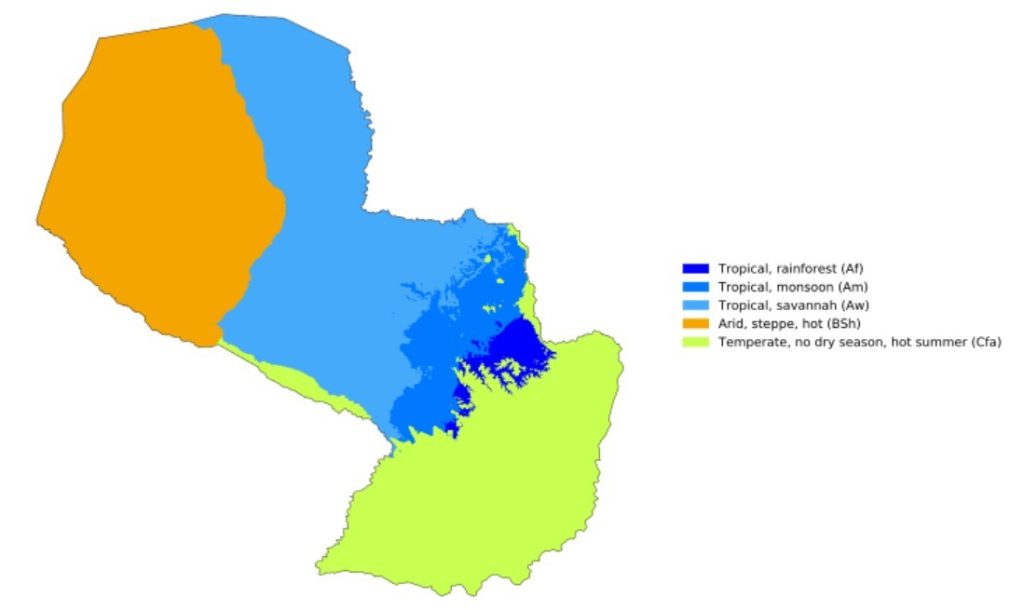
Paraguay has a subtropical climate in its eastern region, known as the Paranaense, and a tropical to semi-arid climate in the western Chaco. These classifications, drawn from the widely used Köppen-Geiger system and recognised by the World Bank’s Climate Change Knowledge Portal, already signal something important: Paraguay does not fit neatly into the temperate model of four distinct seasons, the crisp autumn, the snowy winter, the blooming spring, the hot summer, that dominates the imagination of much of the northern hemisphere.
For visitors from Europe or North America, the calendar reverses: their summer becomes Paraguay’s winter. But the deeper reason Paraguay’s seasons feel unusual has less to do with timing and more to do with structure.
Two phases, not four
In practice, meteorologists and climatologists describe Paraguay’s year in terms of two dominant phases, a warm, wet season and a cooler, drier one, rather than four clearly delineated periods.
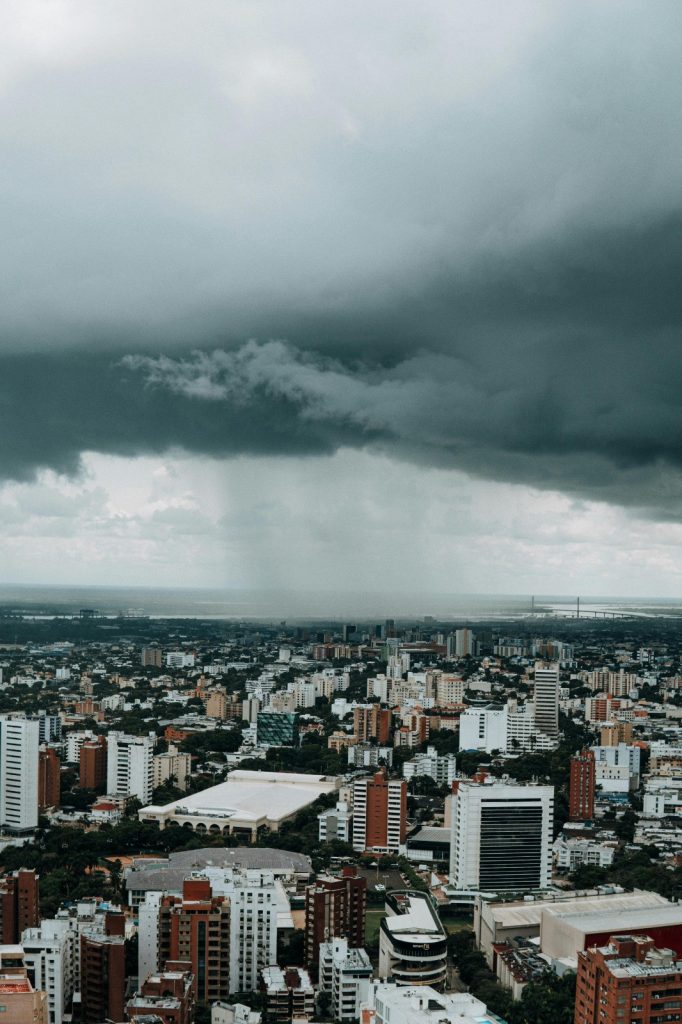
In the eastern Paranaense region, the climate is humid, with abundant rainfall throughout the year and only moderate seasonal changes in temperature. The two periods of greatest rainfall occur between March and May and between October and November. This also blurs the boundary between the so-called wet and dry seasons: rain falls in most months, with only July standing out as reliably drier.
In the Chaco, which covers the vast, flat western half of the country, the pattern is starker. In winter, extensive areas dry out, but in summer they turn into swamps. There, the wet-dry contrast is more dramatic, but temperature differences between seasons remain modest. In both regions, what most people would call “spring” and “autumn” pass almost unnoticed.
The clash of two wind systems
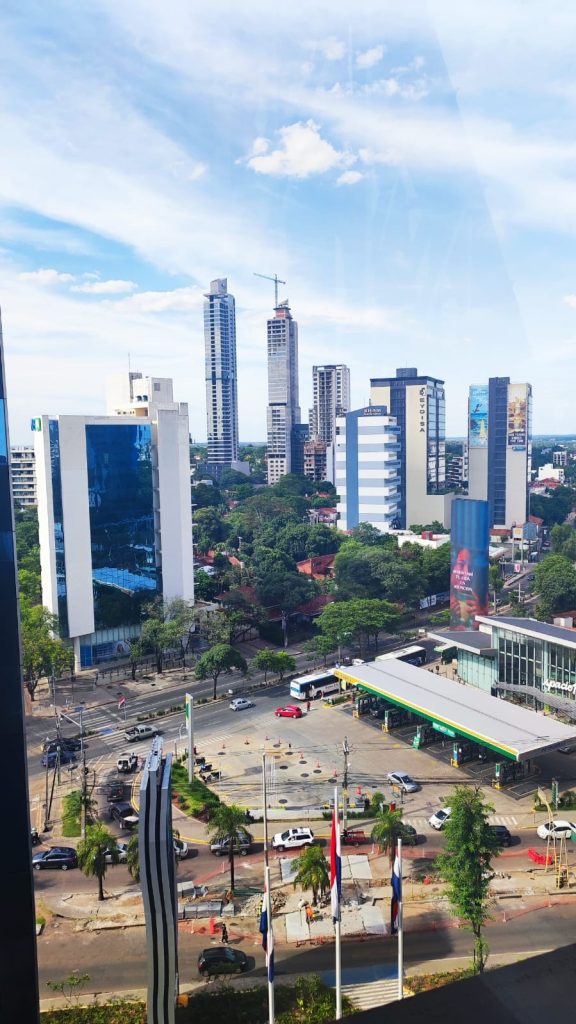
The reason for this behaviour lies in Paraguay’s geography and its position between two dominant air masses. During summer, warm winds blowing from the northeast shape the climate. During winter, the cold pampero dominates; it originates over the South Atlantic, sweeps across Argentina, and the Andes deflect it northeastward.
Because Paraguay lacks major mountains or barriers, these opposing winds cause sudden, irregular shifts in otherwise moderate weather. This is why a warm morning can give way to a cold evening, and why a week of summer-like heat in June (technically winter) is entirely normal. The country lies in an open corridor where tropical and polar air masses meet unhindered. Winds up to 160 km/h occur in the south, and a tornado once levelled Encarnación.
A pattern that Is getting more extreme
This climatic volatility is not merely a curiosity, it is intensifying. In February 2026, nine localities set multiple daily maximum temperature records, according to Paraguay’s meteorological authority. In March 2026, Asunción recorded 210.8 mm of rain, surpassing its 1964 monthly record. These are not isolated events: they reflect a broader trend. The Intergovernmental Panel on Climate Change, in its Sixth Assessment Report, documents that South America is experiencing increased climate variability, with more frequent and intense heat events and shifts in precipitation patterns expected to continue under all major emissions scenarios.
Paraguay’s seasons: not broken, just different
The temperature data, at least, does confirm that seasons exist. January, at the height of summer, sees average daily temperatures in Asunción of around 37-38°C, with peaks regularly exceeding 38°C. July, the coldest month, brings averages closer to 17°C, occasionally dipping below freezing when the most intense cold fronts arrive. In severe winters, Antarctic air brings sub-zero temperatures nationwide, and some areas report snow flurries.
What Paraguay’s seasons lack is not contrast, it is predictability. They are defined primarily by moisture and wind, not by the gradual progression of temperature that marks the year in temperate climates. The transitions are abrupt rather than gradual, the boundaries porous rather than clear. For a country sitting on a flat plain at the intersection of tropical and polar weather systems, that is not strange at all. Paraguay’s seasons simply operate on their own terms.