
In the humid, sprawling expanses of the Gran Chaco and the dense forests of Paraguay, the air often carries a low, rhythmic whistle that makes even the most seasoned woodsman pause. For many in the Guaraní heartland, that sound signals the presence of the Pombero, the most enigmatic and feared figure in their ancestral mythology.
Known by many names, including Lord of the Night (Karai Pyhare) and Master of the Sun (Kuarahy Jára), the Pombero is far more than a simple nursery-room bogeyman. He is a complex, multi-faceted deity of the wilderness, serving as both a benevolent protector of nature and a vengeful spirit of the shadows.
A creature of the thresholds

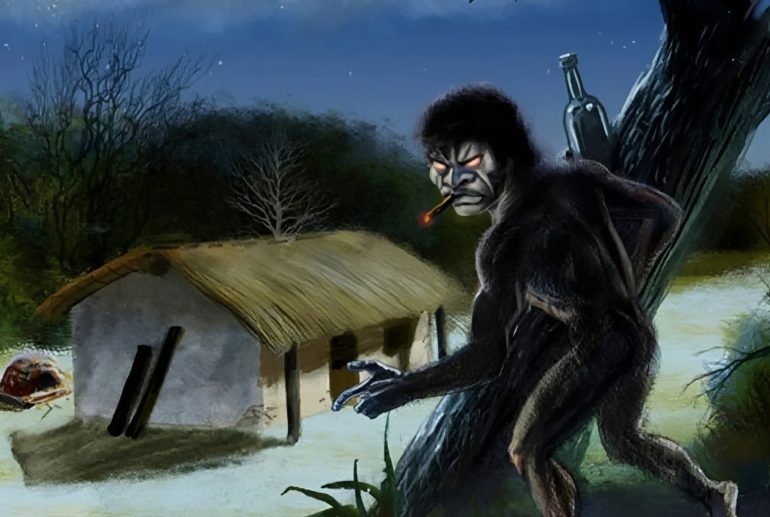
People rarely see the Pombero in full, but Guaraní oral traditions provide a vivid, if unsettling, portrait. He is typically described as a short, stout man with excessive body hair, so much so that his feet are said to be covered in thick fur, earning him the moniker Hairy Feet (Pyrague).
Perhaps his most disorienting physical trait is his reversed feet: his heels face forward and his toes point backward. This anatomical anomaly serves a strategic purpose in the wild; anyone attempting to track him through the mud or dust will find themselves walking in the opposite direction of his true path.
He often wears a tattered straw hat, carries a bag over his shoulder, and slips through abandoned kilns (tatakua) or the hollows of ancient trees.
The invisible warden
At its core, the legend of the Pombero is an ecological cautionary tale. He is the self-appointed protector of the birds and the forest. Guaraní lore dictates that the Pombero watches over the balance of the ecosystem with a jealous eye.
- He harbours deep hatred for those who hunt more than necessary or fell unused trees. To offenders, he becomes a nightmare, mimicking bird calls and leading them deep into the thicket.
- The friend of the respectful: Conversely, those who treat the land with reverence may find a silent ally. An allied Pombero guides hunters to the fattest prey and protects rural homesteads from intruders.
The price of friendship: Honey, tobacco, and rum
In rural communities, the Pombero is treated with a mixture of dread and diplomatic respect. To secure his favour or at least buy his silence, locals engage in a nightly ritual of offerings. The Pombero craves black tobacco (petí), wild honey, and sugar cane spirit (caña).
If you ask the Lord of the Night for a favour, you must be prepared to pay the debt. For thirty consecutive nights, an offering must be left behind the house. Forget once, and the friendship turns to a terrifying vendetta.
If offended, the Pombero’s mischief scales from the annoying to the life-threatening. He might scatter kitchen utensils, lock doors from the inside, or cause accidents around the farm. Some versions of the myth claim that his touch causes tremors, muteness, or permanent feeble-mindedness.
The lascivious shadow
There is a darker, more predatory side to the Pombero that persists in rural folklore. Folklore frequently associates him with unexpected pregnancies in isolated areas. Tradition portrays him as having a particular obsession with single women or those who have not been baptised.
Folklore claims he can induce pregnancy with a mere touch of the hand, a narrative historically used to explain social taboos or extramarital births in conservative rural societies.
A living myth
The Pombero is not a relic of the past; he is a living part of the Southern Cone’s cultural identity. His influence has seeped out of the woods and into modern creative works, including horror video games like Pomberito (2024) and metal albums that invoke his name to channel the primal power of the Chaco.

The Pombero remains a powerful symbol of the unconquered wild. He embodies the Guaraní belief that the forest is a living entity with its own laws and guardian.
Whether he is a literal spirit lurking in the shadows of a Paraguayan ranch or a psychological personification of the mysteries of the night, the Pombero ensures that in the heart of South America, the Lord of the Night still commands respect.