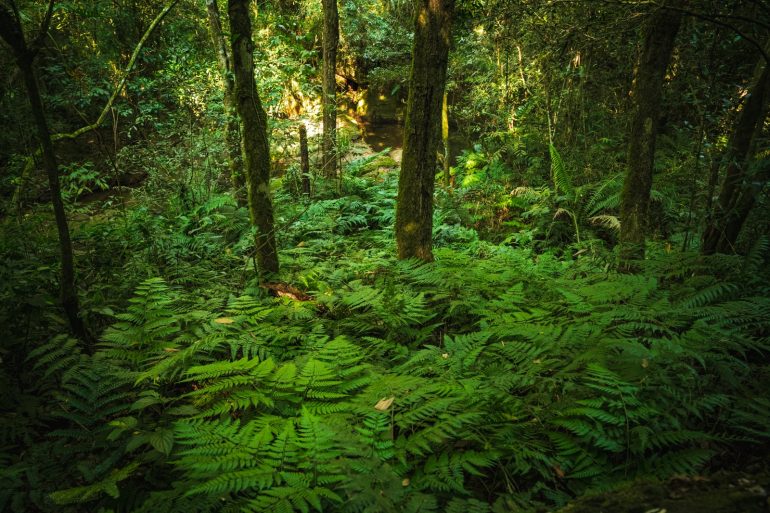

A new National Forest Inventory report has revealed that forests cover 44.4% of Paraguay’s national territory. In addition, the extensive fieldwork led to the identification of over 250 different tree species. The findings come from the 2026 National Forest Inventory, which provides a detailed analysis of the country’s woodland resources. Native forests constitute the largest portion, at 36%, while palm groves account for just over 6% and forest plantations make up 0.8%.
Cristina Goralewski, the president of the National Forestry Institute (INFONA), highlighted the significance of the data. She stated that the information not only positions Paraguay as a regional leader in sustainable development, but also generates crucial knowledge. The inventory was presented during an event commemorating International Mother Earth Day at the National University of Asuncion.
A decade of comprehensive data
During the presentation, Goralewski explained that the report represents a decade of information gathered through the National Forest Inventory. This latest publication is the third comprehensive report, resulting from two years of dedicated work and the third complete measurement of the nation’s forests, palm groves, and plantations.
Furthermore, the inventory serves as a vital tool for understanding the state of Paraguay’s forests, their distribution, and how they are used. This long-term monitoring provides an invaluable resource for policymakers and conservationists alike, ensuring decisions are based on robust scientific evidence.
Paraguay Forest Inventory key insights
The institute’s head also informed attendees about the significant findings on carbon storage capacity. The inventory collected data on more than 200 variables, allowing for precise estimations of stored carbon in both trees and soil. These metrics are essential for understanding the overall health and condition of the forests.
In addition, the extensive fieldwork led to the identification of over 250 different tree species. Goralewski noted that data was collected from more than 200 measurement plots across the country. While the sanitary condition of the forests is generally good, she explained that it varies by area, with most measured plots showing above-average health.
Managing urban growth and land use
Responding to questions about deforestation linked to urban expansion in the Central department, Goralewski indicated that INFONA is collaborating with other government bodies. The institute is working with the Ministry of Environment and the Ministry of Economy and Finance to strengthen territorial management plans.
She asserted that while urban growth is inevitable as part of the country’s industrial development, it must occur in an orderly fashion. Goralewski maintained that municipal-led territorial plans developed with community participation are therefore essential for sustainable expansion. Paraguay’s forestry sector surpassed US$100 million in exports n 2025.
Regional policies yield record-low deforestation
The president also referenced a forest cover report launched last week, which detailed land use dynamics across Paraguay’s two distinct regions. The Eastern Region is governed by the Ley de deforestación cero (Zero Deforestation Law), which has been in effect since December 2004.
Conversely, in the Chaco region, changes in land use are permitted under strict regulations. These rules mandate a 25% legal reserve, the protection of forests along waterways, and the maintenance of forest corridors between agricultural plots. Consequently, these policies have led to a significant decrease in deforestation levels between 2022 and 2023, reaching the lowest recorded rate in over two decades.
A model for international transparency
Goralewski concluded by highlighting that Paraguay is one of the few countries to generate and openly share such detailed information about its forest resources. This transparency makes the data available not only to Paraguayan citizens, but also to the international community.
The event, titled “Paraguay forestal: ciencia, cultura y vida” (Forestry Paraguay: science, culture, and life), was designed to offer an innovative experience that transcends technical data. It recognises that forests are not merely measurable ecosystems but also territories of life, culture, and knowledge for indigenous and rural communities, academia, and industry, according to INFONA.