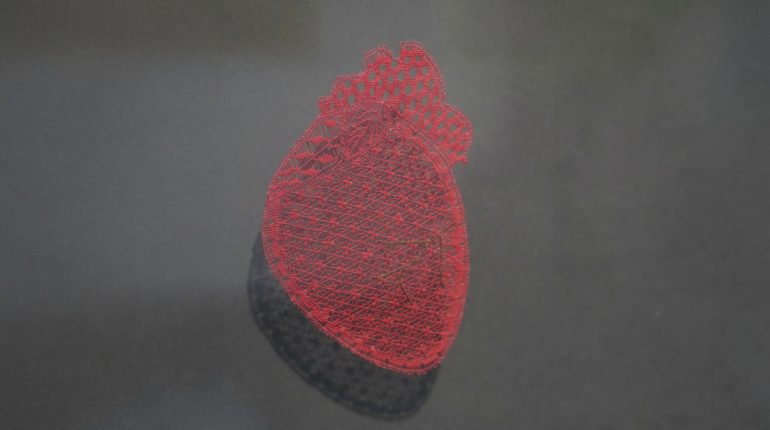

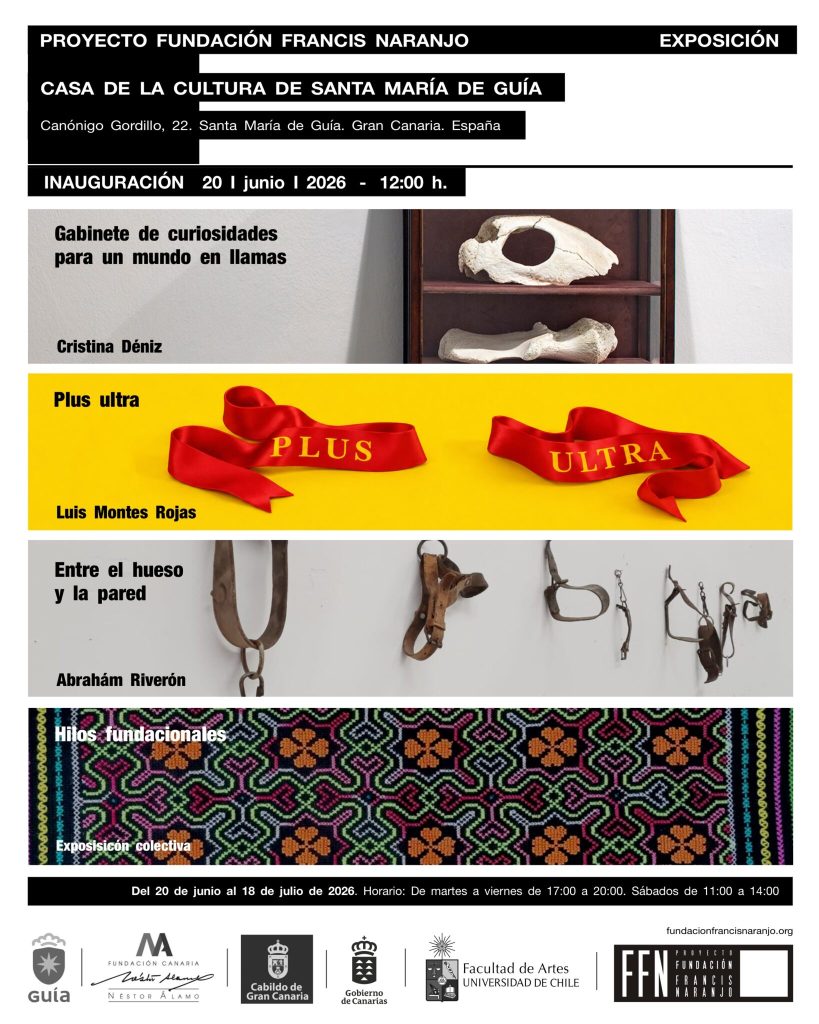
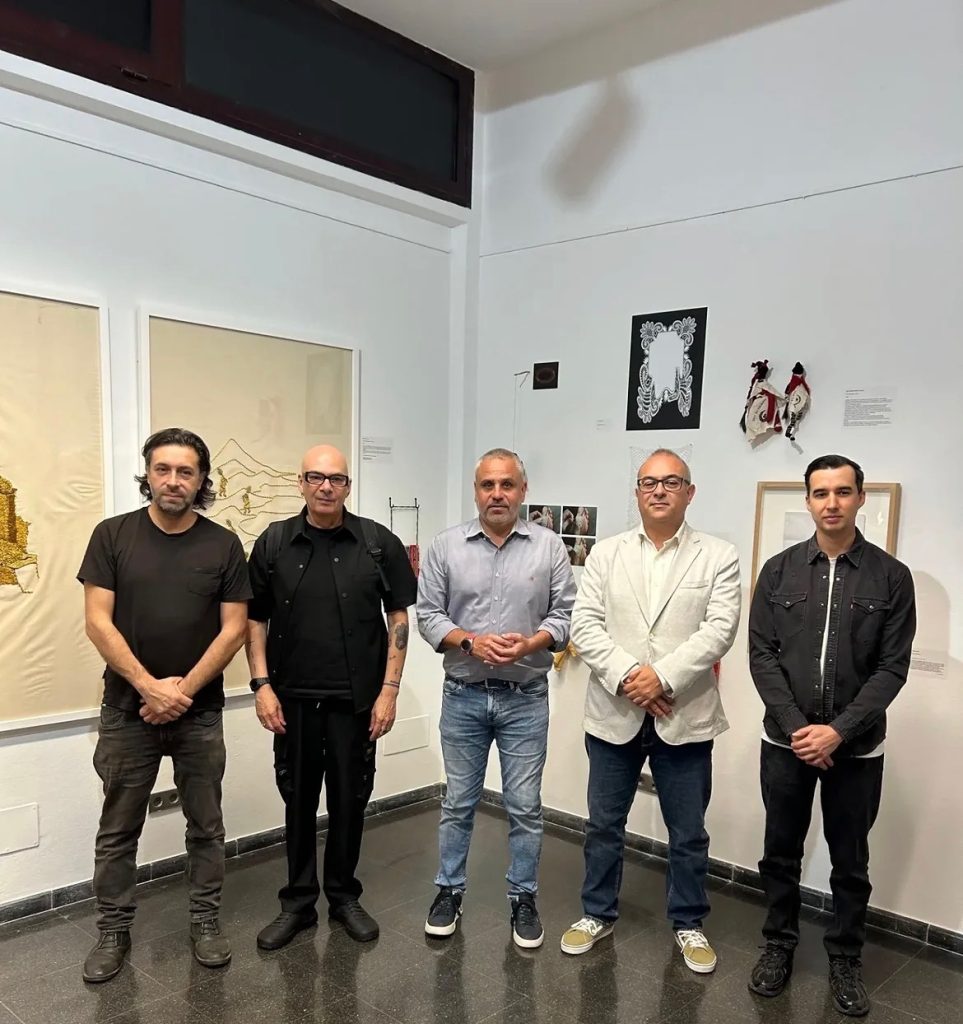
The House of Culture in Santa María de Guía, Gran Canaria, is hosting the collective exhibition Hilos Fundacionales (Foundational Threads). Curated by Francis Naranjo, the exhibition assembles contemporary artists and Indigenous creators from across Latin America. Showcased is an exploration of textiles that offer distinct perspectives on the contemporary world, addressing subjects ranging from power and representation to place and belonging. The collective is formed of Paraguayan Marcos Benítez, Joaquín Sánchez, and Osvaldo Salerno.
The name, Hilos Fundacionales, reflects the exhibition’s exploration of weaving and textile practices beyond their decorative or utilitarian functions. Instead, it contextualises textile production as an emblem of evolving cultural identity. Among the Paraguayan participants are Marcos Benítez, Joaquín Sánchez, and Osvaldo Salerno, alongside works created by the Ayoreo and Guaraní communities.
Marcos Benítez and the material language of memory
Born in Asunción in 1973, Marcos Benítez is a contemporary Paraguayan artist. After working with traditional printmaking, he studied with artists including Livio Abramo, Edith Jiménez, and Olga Blinder. Then, he expanded beyond engraving into installation, photography, performance, and mixed-media work.
In recent years, environmental themes have become increasingly prominent in Benítez’s work. His exhibition La fiera entre las fieras (the beast among beasts), have addressed the consequences of deforestation and biodiversity loss. In that project, textile fibres, organic pigments, bark traces, and animal patterns become a way of thinking about ecological loss and survival. These concerns align with themes explored in Hilos Fundacionales, where textiles are presented as carriers of cultural knowledge.
Joaquín Sánchez and the poetics of cultural memory
Joaquín Sánchez, born in Eusebio Ayala (then Barrero Grande) in 1975, is a multidisciplinary artist whose work has been shaped by the cultural histories of both Paraguay and Bolivia. During his childhood, his family travelled extensively through rural Paraguay while his grandfather operated a mobile cinema. He attributes this experience to his early fascination with visual culture.
His works span across photography, sculpture, installation, video, and drawing. Through those mediums, Sánchez has developed a practice that reflects the realities of a region shaped by movement and overlapping cultural traditions. As a bilingual artist working in Spanish and Guaraní, he frequently explores questions of identity, memory, and belonging.
Furthermore, his art frequently investigates how memories are preserved, evolved, or forgotten over time. He is revealing the continued presence of history within contemporary life. Alongside an international exhibition career that includes participation in major biennials across Latin America and Europe, Sánchez has also contributed to contemporary art through curatorial projects. This includes two editions of the SIART Biennial in La Paz. His contribution to Hilos Fundacionales reflects an enduring interest in cultural memory and the stories embedded within objects and communities.
Osvaldo Salerno and Paraguay’s cultural institutions
Born in Asunción in 1952, Osvaldo Salerno is an artist and curator whose career has been closely linked to the development of Paraguay’s cultural institutions. After studying architecture at the National University of Asunción, Salerno pursued further training in engraving and illustration in Argentina and Spain. His artistic practice encompasses printmaking, painting, graphic design, installation, and conceptual work. Salerno’s art has been exhibited internationally, represented in museum and private collections across Latin America and Europe.
Alongside his artistic career, Salerno has made substantial contributions to cultural preservation and museum development in Paraguay. He is a founder of the Museo del Barro, where Indigenous and contemporary artistic traditions are presented within a shared framework. Through his curatorial and institutional endeavors, he helped promote broader recognition of Paraguay’s diverse artistic heritage. Salerno is challenging conventional distinctions between fine art and craft.
Salerno has also contributed to projects dedicated to preserving historical memory and cultural heritage, including work connected to the presentation of the Archive of Terror. As both an artist and cultural organiser, he has consistently sought to create dialogue between artistic practices, historical experience, and contemporary society. His participation in Hilos Fundacionales reflects a career-long commitment to examining how culture, memory, and artistic expression intersect.
The curator behind the Hilos Fundacionales
Francis Naranjo is a contemporary artist from Gran Canaria born in 1961 whose work examines the complexities of human existence. Across a career spanning several decades, he developed a multidisciplinary practice encompassing installation, sculpture, and collaborative projects with poets. Naranjo’s artistic approach frequently explores the relationship between the tangible and the intangible. Specifically, he considers how internal experience intersects with the physical world. His work is often characterised by a reflective and atmospheric sensibility.
As curator, Naranjo brings together artists and communities from diverse backgrounds. Hilos Fundacionales forms part of the Francis Naranjo Foundation Project of Director Eduardo Caballero. Naranjo himself developed the project in collaboration with the Department of Culture of the Santa María de Guía City Council. This exhibition will be open to the public until 18 July 2026 at the House of Culture of Santa María de Guía.