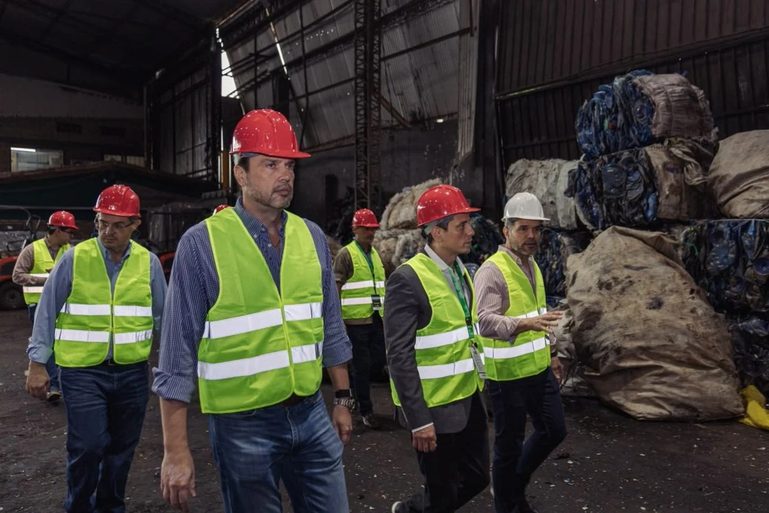

Paraguay’s recycling sector has established itself as a significant economic force. According to data from the Paraguayan Chamber of Sustainable Industries (Cispy), the industry generates more than US$200 million in economic value and mobilises investments of US$105 million.
These figures were presented during the Cispy year-end meeting late November 2026, which marked six years since the organisation’s creation and brought together associated companies, authorities and representatives from sectors linked to the circular economy, including the Ministry of Environment and Sustainable Development (Mades).
More than 216,000 tonnes each year
Paraguay’s recycling sector processes approximately 216,280 tonnes of materials annually. It covers paper, cardboard, ferrous and non-ferrous metals, glass, plastics, end-of-life tyres, waste electrical and electronic equipment (WEEE), long-life packaging and other recovered materials that are returned to production processes. This activity generates 7,500 jobs in industrial plants and connects a supply chain that includes some 2,500 collection centres and 25,000 informal recyclers.
In total, the industry reaches nearly 35,000 families and benefits more than 140,000 people. The numbers illustrate how recycling has moved beyond informal collection to become a structured industrial activity with measurable economic and social reach across Paraguay.
Investments expand industrial capacity
Current projects focus on expanding industrial capacity. They include the installation of new industrial plants, the incorporation of a 100% electric oven, and the acquisition of machinery and equipment for various transformation processes. Investments are also under way in modernising metal recycling, developing spinning mills and looms, recovering PET plastic, and creating new facilities for processing end-of-life tyres.
These initiatives aim to increase the volume of materials that can be recovered and reintroduced into manufacturing. The sector brings together companies dedicated to the use of different types of waste and coordinates the work of industries, collection centres and recyclers to strengthen the overall chain.
Opportunities to scale the circular economy further
Cispy president Carlos Mangabeira highlighted the growth of the activity and the opportunities to expand its participation in the national economy. “These numbers show us that the circular economy is already happening in Paraguay, and our challenge is to take it to a much larger scale and integrate more sectors,” he said.
The meeting underscored both the progress achieved over six years and the remaining work required to incorporate additional materials and actors into formal recycling systems. Continued investment and closer coordination between industry, collection networks and public authorities are expected to support further expansion of circular practices in the country.
Also read: Understanding Waste Management In Paraguay: A Practical Guide.