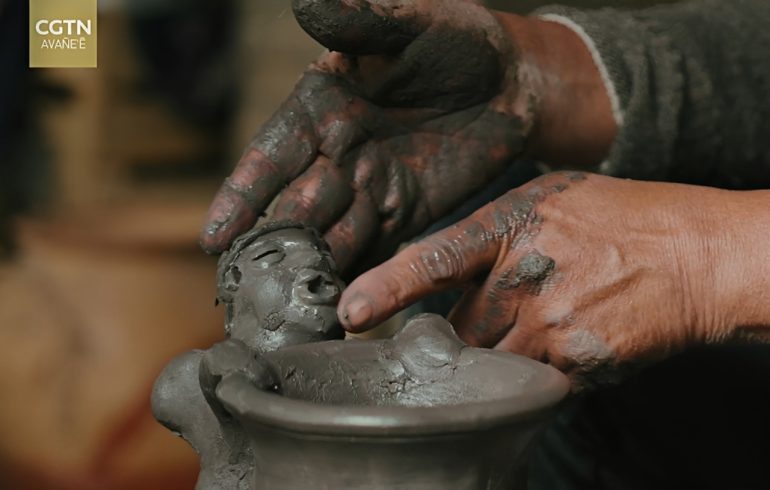

In the city of Tobatí, Paraguayan craftswoman Carolina Noguera is keeping a generations-old pottery tradition alive while passing it on to her daughters. Her story is now reaching audiences far beyond Paraguay through Daughters of Clay, a three-part documentary series by CGTN Español that explores the women preserving ñai’ũpo (a traditional Paraguayan technique of modelling pottery by hand) and draws unexpected parallels with ceramic traditions in Jingdezhen, China.
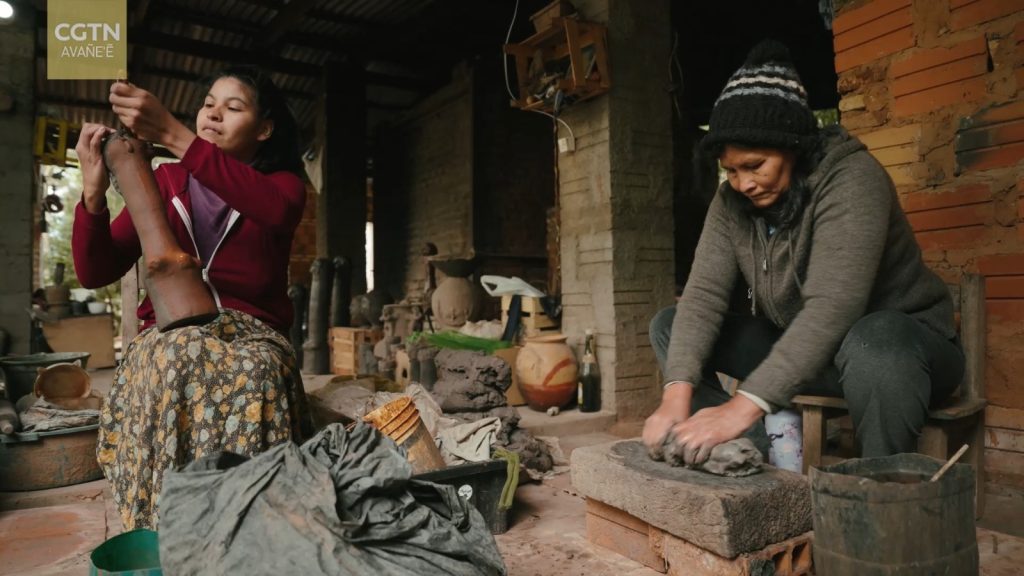
In the company of 21 de Julio in Tobatí, Cordillera Department, Noguera works with the same clay her mother taught her to shape. After around four decades dedicated to pottery, she now works alongside her daughter, passing on techniques and knowledge she inherited from the previous generation. The documentary begins with a simple question: how can a piece of earth become memory, identity and culture? In Paraguay, its answer begins in Tobatí.
From mother to daughter
Noguera comes from a family with a long history of pottery. She and her sisters learned the craft from their mother, Mercedes Noguera, a recognised ceramicist who devoted her life to the art of pottery. Mercedes continued working even while pregnant with her 15 children. Today, Carolina carries that legacy into another generation, working with her own daughter.
The family story illustrates something central to traditional crafts. Every finished piece contains knowledge that cannot be separated from the object itself. That knowledge has survived because women have passed techniques, experience and an understanding of the material from one generation to the next.
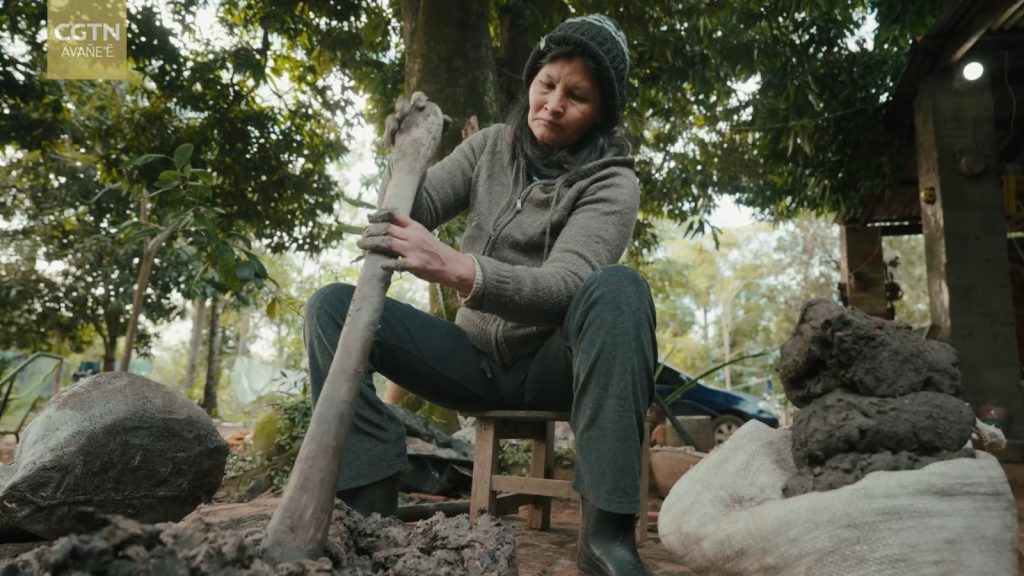
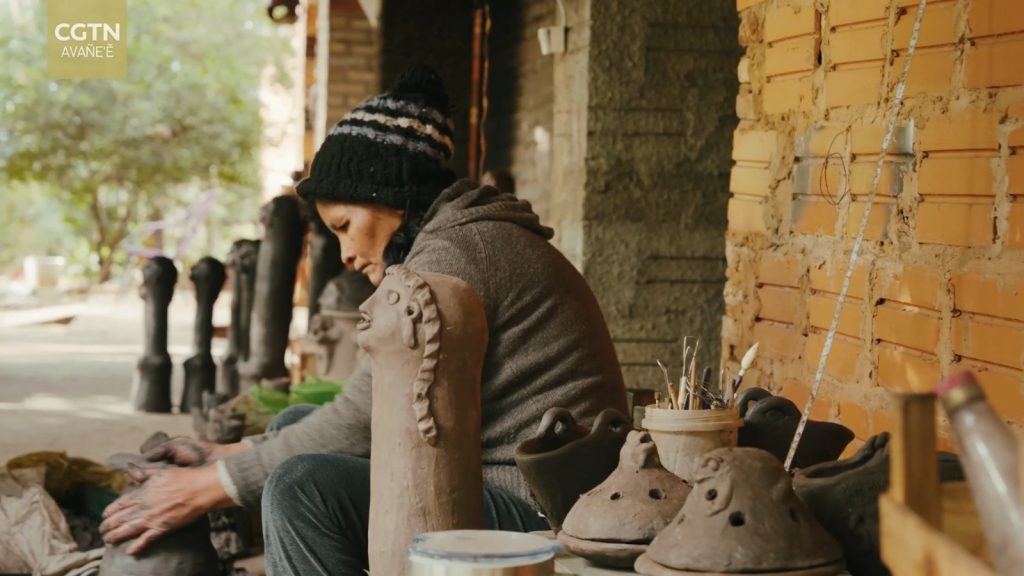
Noguera takes part in every stage of the process. Her work begins with collecting ñai’ũ, or black clay, and kaolin, the white clay used in pottery. She then prepares the materials before modelling, polishing and firing the pieces, eventually selling the finished works. Among her creations are distinctive black angels, whose dark colour is produced through traditional smoking techniques during the firing process. Her work has also travelled well beyond Tobatí. Her pieces form part of the permanent collection of the Museo del Barro and have appeared in international exhibitions, including a show in Paris.
From clay to the wood-fired kiln
Daughters of Clay takes viewers through the ñai’ũpo process, beginning with the collection and preparation of clay and continuing through modelling, polishing and firing. Traditionally, artisans fire their pieces in wood-fired kilns, transforming raw earth into objects that carry both practical and artistic value.
But ñai’ũpo represents more than a pottery technique. The technique brings together knowledge of the land, community and Paraguayan cultural identity, with women playing a central role in transmitting that knowledge. For artisans such as Noguera, the relationship with pottery begins long before the clay reaches the workshop.
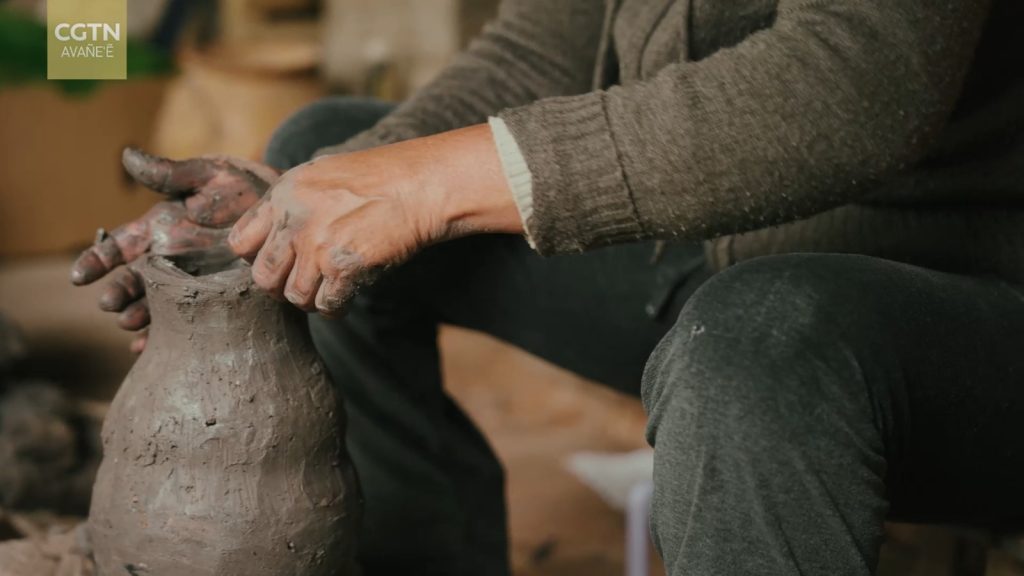
The documentary also highlights the growing difficulties involved in obtaining the raw material itself. Traditional clay sources are found in wetlands, many of which are shrinking or located within private properties. As access becomes more difficult, collecting the clay can become more complicated and expensive, creating another obstacle for artisans who depend on the material.
Access to clay is not the only challenge facing pottery makers in Tobatí. The tradition also faces a generational question. Limited economic opportunities associated with pottery can make it difficult to encourage younger people to continue the craft. That creates a risk beyond the closure of individual workshops. If fewer young people learn the techniques, generations of accumulated knowledge could eventually disappear.
From Tobatí to Jingdezhen
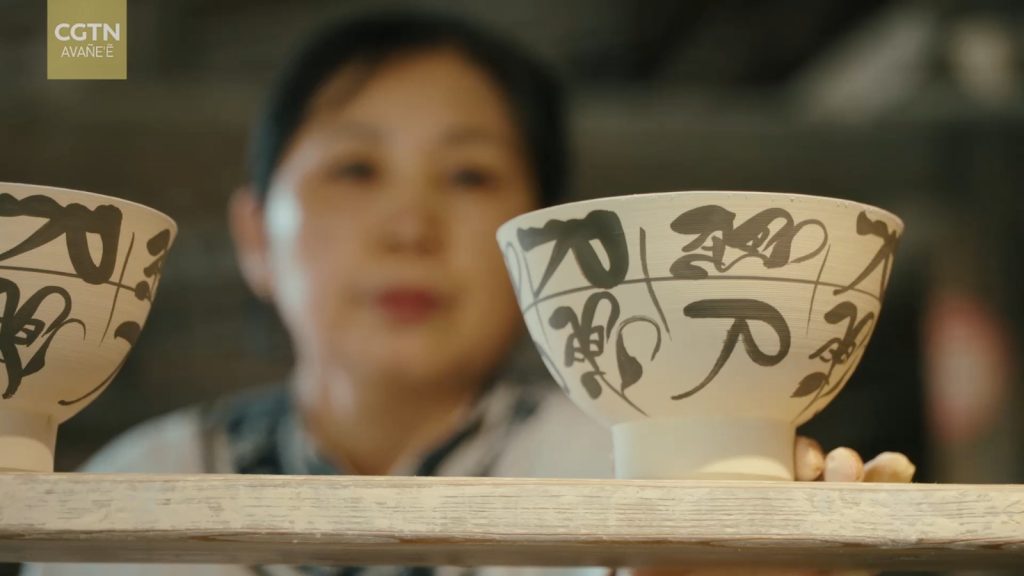
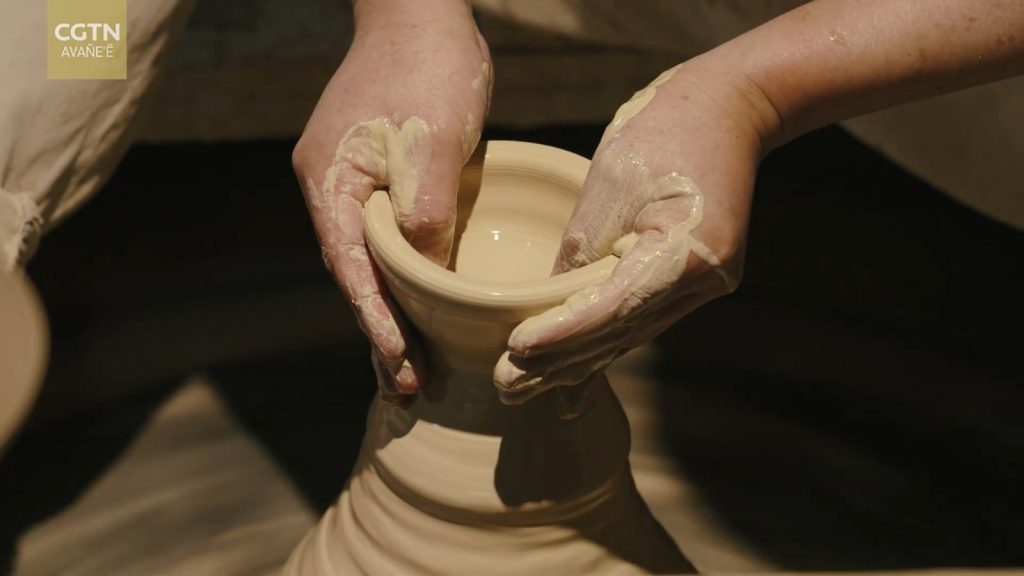
From Paraguay, the documentary travels to Jingdezhen, a Chinese city known as the “capital of porcelain”. The two places are separated by thousands of kilometres and have developed very different ceramic traditions. Yet Daughters of Clay finds common ground in the women who continue to work with clay while adapting inherited practices to the present.
In Jingdezhen, the series follows women ceramic artists from different generations and explores how centuries-old practices continue to evolve through new techniques, ideas and creative approaches. One of the stories centres on a mother and daughter from a family of ceramic artists. Their different creative philosophies initially caused disagreements, but their shared desire to improve their work eventually brought them closer and led them to collaborate.
The parallel with Tobatí is striking. Traditions do not necessarily survive by remaining unchanged. Instead, each generation must decide what to inherit, what to preserve and what to transform.
Two traditions connected by clay
The Paraguayan and Chinese ceramicists featured in the documentary never met in person. Yet their stories reveal similarities despite the distance between them. When the Paraguayan protagonists learned about women on the other side of the world dedicating their lives to ceramics, they expressed surprise and admiration at the experiences they shared.
Their circumstances are different, but their relationship with clay is shaped by similar themes: learning, creativity, family and the responsibility of preserving knowledge. In both Tobatí and Jingdezhen, women are helping carry traditional ceramic practices into the future. Daughters of Clay therefore becomes more than a documentary about pottery. It is a story about what happens when generations inherit something made with their hands and choose to keep shaping it.
Where to watch Daughters of Clay
Daughters of Clay is a three-part documentary series produced by CGTN Español, part of China Media Group. Each episode runs for approximately five to six and a half minutes. The production was filmed in China in June 2026 and Paraguay in July. In Paraguay, filming took place in the 21 de Julio company of Tobatí, Cordillera.
The series premiered on CGTN’s Chinese- and Spanish-language digital platforms on 25 July. A Guaraní-language version was published on CGTN’s Facebook page on 8 August. The series is currently available through CGTN Español’s digital platforms, including CGTN website, CGTN on Facebook and CGTN on YouTube.