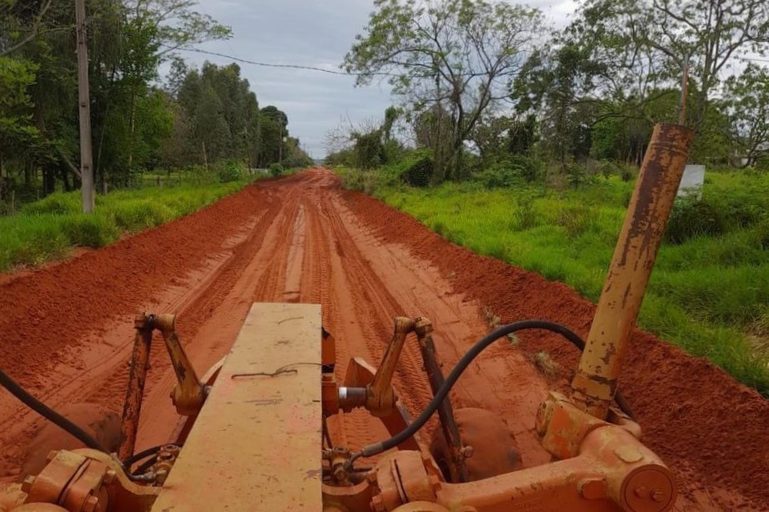

Paraguay’s national road network currently spans 78,795 kilometres, according to an updated inventory from June 2026. However, only 12,912 kilometres of this total feature paved or improved surfaces, including asphalt concrete, surface treatments, cobblestones, stone paving, and gravel. Paraguay’s Ministry of Public Works and Communications (MOPC) emphasised the critical role of these connections in a statement marking “Día del Camino” (Road Day) on 5 October.
The presented data means approximately 16% of the country’s roads are paved or improved. Consequently, the remaining 84%, which amounts to some 65,883 kilometres, consists of unpaved dirt tracks. These figures highlight both the scale of the system and the ongoing challenge of maintaining and adapting it to the needs of a growing population.
The challenge of connectivity
The composition of the road network, according to the MOPC, is particularly significant in areas where these routes are the primary connection to urban centres and essential services.
‘A road can make the difference between arriving or being isolated’, the ministry stated on Road Day. ‘It allows production to reach the market, students to access their schools, an ambulance to reach a community, and thousands of families to travel daily to jobs, care centres, and opportunities in different parts of the country.’
In response to this reality, the MOPC is focusing its efforts on sustaining mobility throughout the nation. The ministry aims to improve travel between towns, productive agricultural areas, and service hubs.
Impact on daily life and production
Maintaining passable roads has a direct and significant impact on daily life across Paraguay. For the productive sector, it means goods can be transported with greater regularity and reliability. For families, it reduces the difficulties and time associated with travel. Furthermore, for many towns and localities, it ensures a stable and consistent line of communication with the rest of the country.
The extensive network of earth roads presents one of the principal challenges for national road management. Servicing these routes is essential for populations who depend on them to study, work, produce, trade, or receive assistance.
Adapting to urban growth
In addition to managing the vast rural network, there is a pressing need to support urban transformation. The MOPC is currently advancing several high-impact projects in densely populated areas. These initiatives are designed to meet new demands for mobility and accommodate urban growth.
This modern vision for infrastructure now extends beyond simple road connections. It incorporates the development of coastal roads, linear parks, public spaces, hospitals, and schools, thereby broadening the scope of public works. According to the ministry, this approach redefines infrastructure not merely as a connection between two points, but as an integrated solution that can organise urban development, improve communal spaces, and facilitate daily life for citizens.
Find out about Paraguay’s plans aimed at strengthening the paved road network in the country’s national 2027 budget plans.