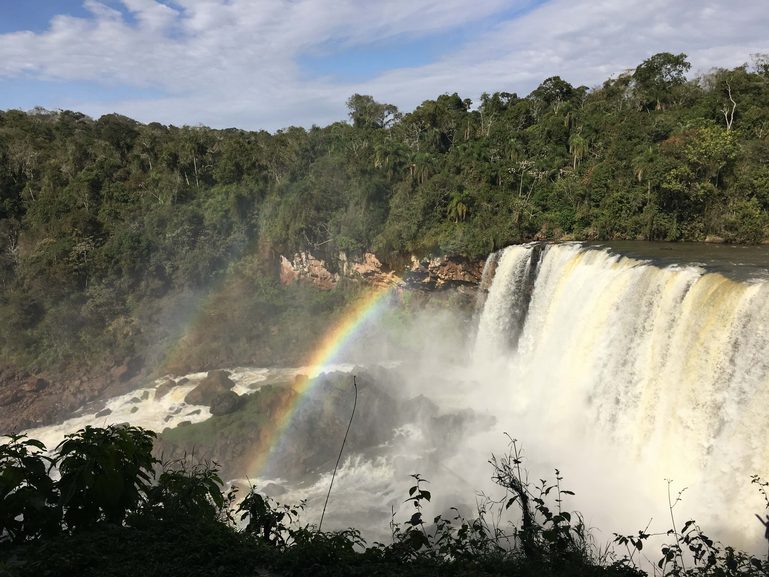

Paraguay’s national parks are some of the country’s most vivid landscapes, and some of its least told stories. Into the Wild, a series from The Asunción Times, travels through them in chronological order, from the first park established to the most recent. Our second stop is Ñacunday National Park, in Alto Paraná, where one of Paraguay’s great waterfalls cuts through a surviving fragment of Atlantic Forest.
Where the forest meets the water
There are places where the landscape announces itself before you have had time to take it in. At Ñacunday, it is the sound and movement of water that does it.
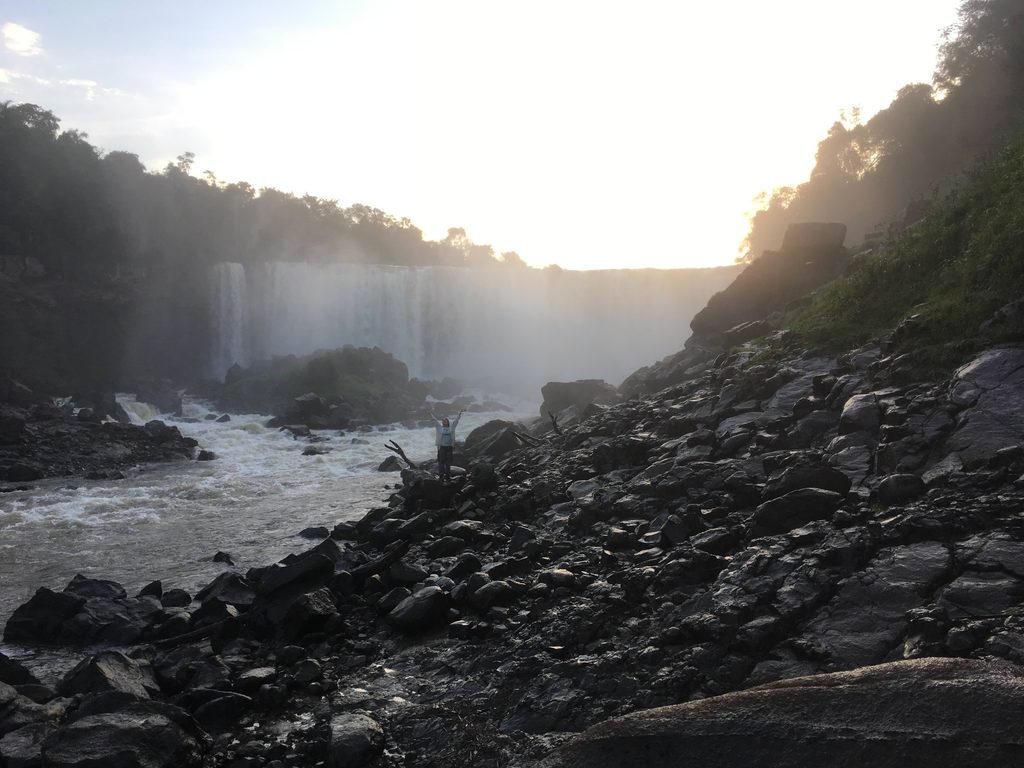
The Ñacunday River runs through nearly 2,000 hectares of protected forest before reaching the Paraná River. Along the way, it drops in a spectacular 40-metre-high cascade, spreading roughly 70 metres across the rock. Salto Ñacunday is the park’s defining landmark and, according to the Ministry of the Environment and Sustainable Development (MADES), one of its principal natural attractions.
But the waterfall is only the most visible part of what is being protected here. Beyond it lies a landscape of dense subtropical forest, streams, riverbanks and rolling terrain, one of the remaining fragments of the Atlantic Forest in Paraguay. The trees, waterways and surrounding vegetation form a living network that provides food, shelter and movement corridors for wildlife.
A forest has survived a complicated history
The area was first declared Parque Nacional Ñacunday in 1973. Two years later, its status was changed to Bosque Protector Ñacunday. In 1993, it became a Reserva para Parque Nacional. Later, Law No. 5,156 established it as a protected public-domain area in the National Park category.
The names and legal categories changed, but the central purpose remained: to protect the forest, wildlife, water resources and landscape surrounding the Ñacunday River and its waterfall.
Before such protections existed, however, the area was being used by people. During the colonial period, La Industrial Paraguaya exploited the region for timber and yerba mate. Today, communities of the Mbya Guaraní retain connections with the surrounding landscape and use natural resources according to their traditions.
A surviving Atlantic Forest
Ñacunday forms part of the Bosque Atlántico del Alto Paraná, or BAAPA, one of Paraguay’s most biologically important ecosystems. Much of this forest has been lost or fragmented, making the remaining areas especially significant.
Within Ñacunday, the forest is not uniform. Some areas are made up of trees reaching between 15 and 20 metres, while taller forest can rise to around 35 metres. Cedro, katigua pytã, palmito, ñangapiry and yvyra pytã grow among vines, ferns and orchids. Closer to the Ñacunday River and its smaller waterways, the vegetation changes again. Wetter, lower-growing areas create another habitat, linked to the forest around them.
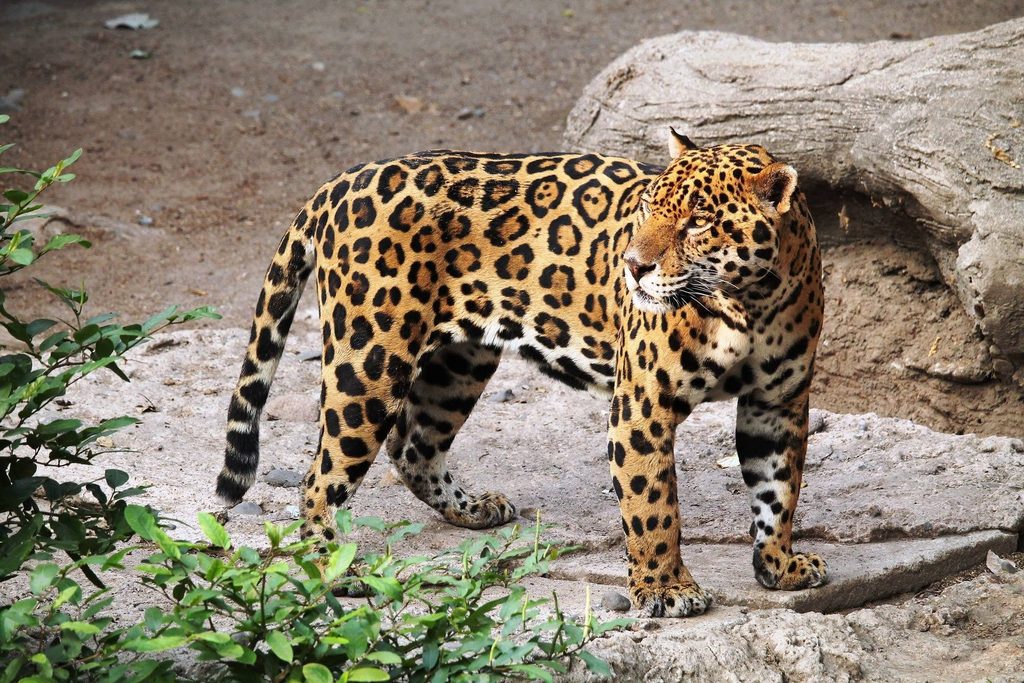
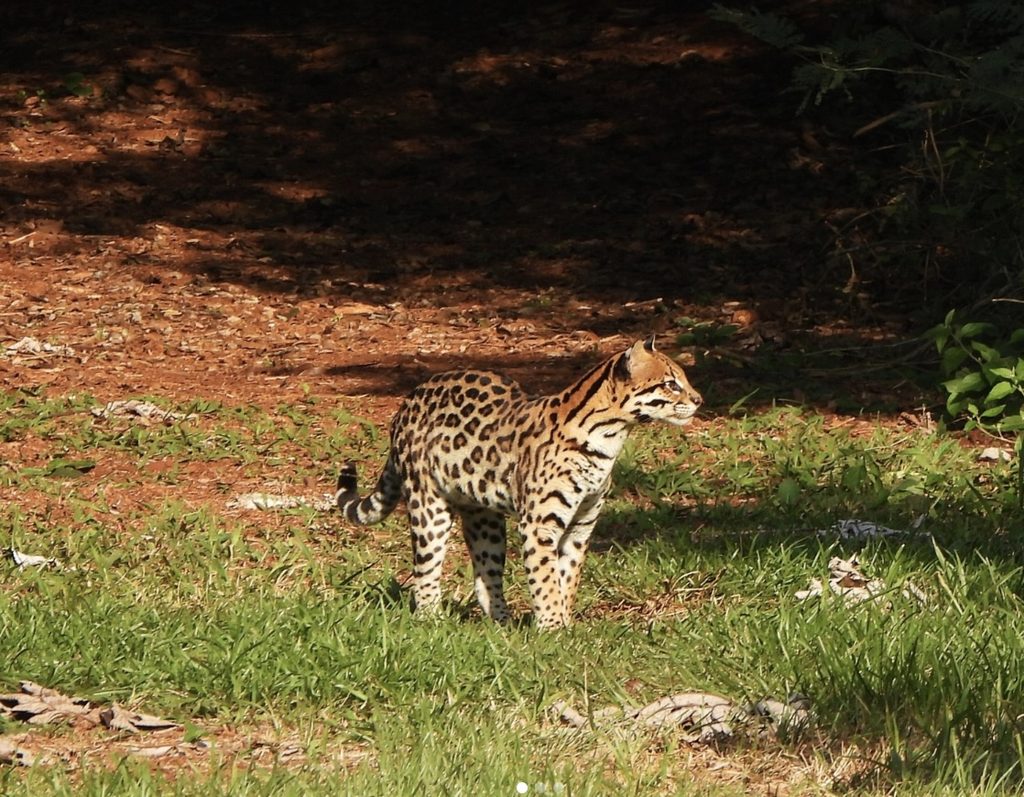
That variety helps explain the park’s wildlife. Among them the more elusive species such as pumas, ocelots and jaguarundis. Lowland tapirs also move through the forest, while the jaguar remains among the threatened species associated with the park.
For anyone looking upwards, there is another world to discover. Toucans, woodpeckers, parrots and parakeets move through the trees, alongside characteristic Atlantic Forest species such as the surucua and chiripepé. The river, meanwhile, is more than scenery. It provides habitat for aquatic life and links the forest to the Paraná, carrying the story of the park towards one of South America’s great rivers.
Beyond the main waterfall
Salto Ñacunday may be the park’s most recognisable feature, but it is not the only waterfall here. Smaller cascades, including Kañy, Punta Yovay, Imperial and Torocuá’i, run through the protected area. There is also a natural beach at Puerto Paranambú. Trails and viewpoints lead visitors beyond the main attraction and into the forest.
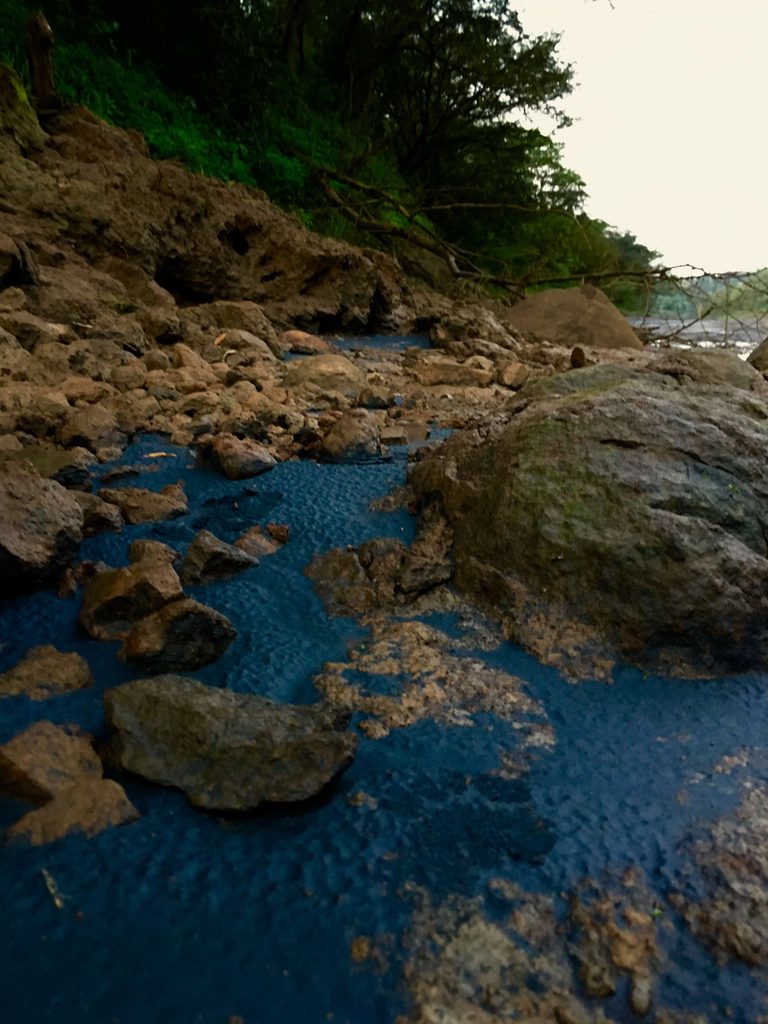
The geography makes Ñacunday National Park particularly striking. The main waterfall lies only about a kilometre from where the Ñacunday River meets the Paraná, meaning that, within a relatively small area, forest, waterfall and one of the continent’s major waterways come together.
How can one visit it?
For visitors, the park is currently open every day from 7:00 to 17:00. It can be reached via Route 7 and lies approximately 406 kilometres from Asunción, a journey of around seven hours. Trails, viewpoints and camping areas offer ways to spend longer in the landscape, although heavy rain can make access more difficult.
Entrance fees apply under current regulations, and the MADES website should be consulted before travelling for the latest information on access, road conditions and visitor requirements.
A landscape larger than its waterfall
It would be easy to remember Ñacunday simply as the park with the spectacular waterfall. But the waterfall is really the beginning of the story.
Behind it is a surviving piece of Atlantic Forest; around it are waterways, wildlife and plant communities; and alongside it is a human history that stretches from Indigenous connections with the landscape to colonial exploitation and modern conservation. That is what makes places such as Ñacunday worth looking at beyond the viewpoint. A protected area is part of a much larger ecological landscape, shaped by centuries of use, alteration, fragmentation and, in some places, preservation.
In the next episode of Into the Wild, we travel to Ybycuí National Park, where waterfalls and dense forest surround the remains of La Rosada, a historic iron foundry hidden deep in the woods. For now, Ñacunday National Park leaves us with a simple image: a river moving through the forest, gathering speed before dropping towards the Paraná, and a landscape whose story extends far beyond the waterfall itself.
Read the first episode of the series Into The Wild #1: Caazapá National Park, Home Of Paraguay’s Toucans.