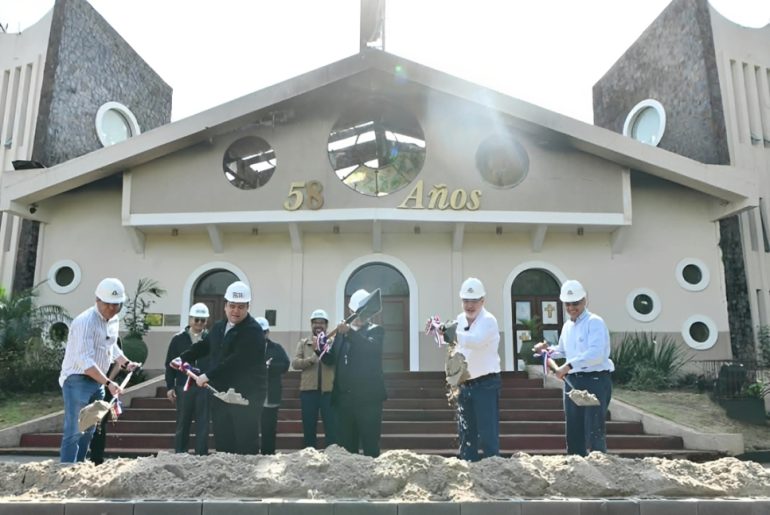

San Blas Cathedral in the Paraguayan city of Ciudad del Este began a new chapter in September 2026, with restoration works following February’s devastating fire. The project seeks to restore the historic building while preserving its architectural, cultural, and religious significance for the local community.
The project will restore damaged areas while introducing new safety measures to protect the cathedral in the future. Restoration works will be carried out through an agreement between ITAIPU Binacional, the Organisation of Ibero-American States and the San Blas Consortium. The restored cathedral is planned to reopen on 3 February 2027. That date coincides with celebrations dedicated to Saint Blaise, one of Paraguay’s patron saints.
Restoration work begins
The first stage will focus on rebuilding structures affected by the fire, particularly the cathedral’s roof and wooden beams. The project also includes new fire protection systems, an external water tank, an electrical generator and sound equipment for future events. These improvements aim to strengthen the building’s safety while maintaining its role as an important religious and community space.
Although the fire caused significant damage to the cathedral’s upper section and roof, technical inspections confirmed that restoration remained possible. The inspections found that the building’s main structural elements did not suffer damage requiring complete demolition or reconstruction. This assessment allowed restoration works to proceed.
A cathedral connected to Ciudad del Este
San Blas Cathedral is closely connected to the history of Ciudad del Este, whose foundation stone was laid in 1957 when the city was established. Its development continued during the following decade, while the city was still known as Puerto Presidente Stroessner.
Bolivian architect Javier Querejazu designed the cathedral, which officially opened on 25 July 1966. Since then, it has become one of Ciudad del Este’s most recognisable landmarks. The building features a distinctive design resembling a ship or Noah’s Ark, giving the cathedral a modern and unusual architectural appearance. Its construction incorporated local materials, while artistic elements contributed to its identity and cultural significance within Ciudad del Este.
In 2015, the cathedral underwent renovations that introduced additional artistic elements, improved lighting, and several interior improvements. More than a decade later, the latest restoration project seeks to preserve that legacy following one of the most damaging incidents in the cathedral’s recent history.