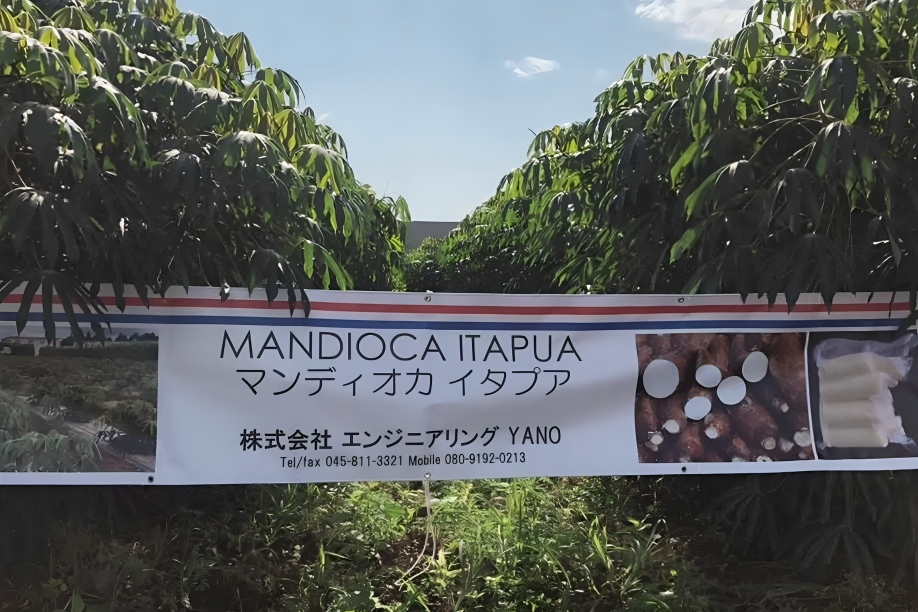

Despite the more than 18,000 kilometres that separate Paraguay from Japan, some flavours refuse to disappear. Traditional staples such as mandioca (cassava), maize, sopa paraguaya (a savoury cornbread), mbeju (a starchy flatbread), and chipa (a cheesy bread) continue to be part of daily life for hundreds of Paraguayan families in Japan. This is thanks to the efforts of Paraguayans who have decided to cultivate and produce these typical products on Japanese soil.
The story was brought to light by Miryan Megumi Kumagai, a leader within the Paraguayan community in Japan. She is also the author of the book “Paraguay, sabor de mis recuerdos, aromas que llegan al corazón” (Paraguay, taste of my memories, aromas that reach the heart), a work written entirely in Japanese that aims to introduce Paraguayan cuisine and culture to the Japanese public.
A growing demand for tradition
Kumagai explained that during the extensive research for her book, she discovered numerous stories of Paraguayans who had successfully reproduced the essential ingredients of their national cuisine in Japan. These entrepreneurial ventures have become a vital link to their cultural heritage.
“Many Paraguayans do not want to lose the customs or the flavours they grew up with. That is why initiatives to cultivate and produce typical foods have been developing,” she commented during an interview with state media.
The annual cassava harvest
One of the most notable examples is the production of Paraguayan cassava in Japan. The harvest traditionally takes place in October, and many Paraguayan families purchase large quantities to freeze and preserve for use throughout the year. The anticipation is so high that the pre-season for reservations and advance orders has already begun on social media.
Producers primarily promote their crops on platforms like Facebook, where they offer the upcoming harvest to the Paraguayan community residing in Japan. One recently circulated announcement stated ‘Itapúa cassava, fresh in Japan, harvested in October 2026. Straight from the earth to your table’. The notice warns of limited availability and reservation slots for the deliveries scheduled for October.
An emotional and economic value
Beyond the emotional component, Paraguayan cassava holds significant economic value in Japan. According to Kumagai, the average price is around US$5 per kilogram, which is equivalent to approximately Gs. 30,000. This is a considerably higher price than what is typically paid in Paraguay.
However, for many migrants, the cost is a secondary concern. The opportunity to prepare a family meal with the authentic taste of Paraguay represents much more than just food. It signifies keeping the connection to their roots alive, reliving childhood memories, and passing on traditions to new generations born in Japan.
Overcoming culinary obstacles
This agricultural production is not limited to cassava. Kumagai reported that Paraguayans living in different parts of Japan also cultivate varieties of maize used in traditional dishes. Furthermore, a portion of the harvested cassava is processed to obtain starch, an indispensable ingredient for making chipa, mbejú, and other typical recipes.
One of the greatest historical obstacles to recreating Paraguayan gastronomy in Japan was sourcing queso Paraguay (Paraguayan cheese), a fundamental ingredient in many traditional recipes. Nevertheless, the perseverance of the community overcame this barrier. Kumagai revealed that some entrepreneurs made great efforts to reproduce the traditional cheese-making method.
“They even went as far as bringing the cuajo (rennet) so they could make the cheese with the same characteristics that we know in Paraguay,” Kumagai stated.
Thanks to these efforts, there are now Paraguayans who produce authentic cheese to order, supplying families who wish to prepare traditional dishes with genuine ingredients. This production is publicised through social media groups, where the community shares information on product availability.
A culture documented and shared
Although the initial goal of Kumagai’s book was to introduce Paraguayan cuisine to the Japanese people, her research also documented how the Paraguayan community keeps its cultural identity alive through food. The first edition of 850 copies sold out completely, reflecting the interest that Paraguay, its culture, and its flavours have sparked in Japan.
Beyond the recipes, the author found stories of farmers, cooks, and entrepreneurs working to ensure Paraguayan flavours remain present on the other side of the world. For many Paraguayans in Japan, identity is not just preserved in memory; it also grows in the furrows where Itapúa cassava is cultivated on Japanese soil, ensuring the taste of home continues to reach their tables.
For more information follow Miryan Megumi Kumagai on Instagram, and also read: Japan And Paraguay Mark 90 Years Of Friendship With Cultural Events And New Museum.