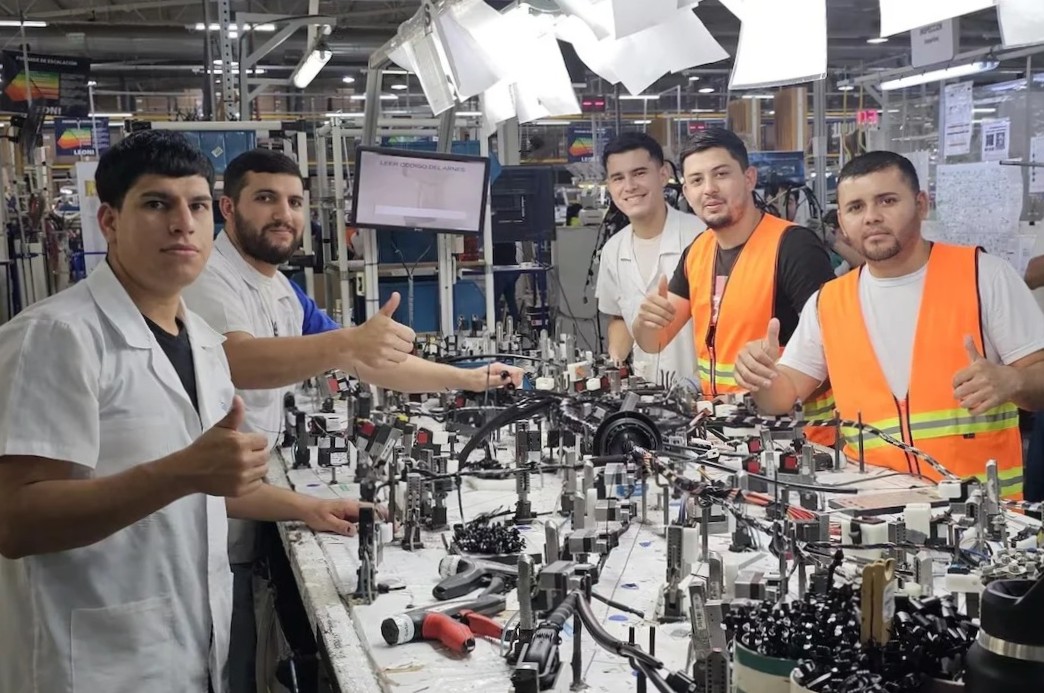

Paraguay is experiencing a period of significant industrial expansion, with manufacturing output growing 26% year-on-year, according to the Minister of Industry and Commerce, Marco Riquelme. Speaking on Paraguay’s National Industry Day on 8 September 2026, Riquelme noted that the sector now provides around 350,000 jobs. Paraguayan manufacturing is one of the most important strategic sectors of the nation’s economy.
Riquelme stated that Paraguay is leveraging its current positive economic climate to attract new large-scale projects. The government aims to secure investments valued between US$500 million and US$1 billion. He suggested such projects would represent a “gigantic leap” for investment in Paraguay. However, attracting this level of capital will require greater predictability, alongside improved infrastructure and energy supplies.
A strategy for long-term growth
The Minister emphasised that these developments must be supported by a strategic agenda with clear medium and long-term goals to provide greater security for investors. This forms part of a broader push to enhance the nation’s industrial capacity and global competitiveness.
“Paraguay is living through a privileged moment in industrial terms, in which we have grown 26% in industrial manufacturing from one year to the next,” Riquelme said. “This means that the whole world sees Paraguay as a country that produces with quality and also with competitiveness. We are not only growing at a regional level; we are also growing at a global level.”
New digital tool for investors
In line with the Paraguayan Manufacturing strategy, the government has launched a new, free digital tool called the Competitive Intelligence Map. President Santiago Peña announced the initiative, describing it as a platform designed to guide production and investment decisions by integrating data on over 20,700 industries, logistics, and energy.
The “heat map” will allow potential investors to identify the most suitable locations for establishing new industries. It will provide crucial data points, including energy availability, labour force numbers, training institutions, transport access, the economically active population, and the existence of local land use plans.
Focus on small and medium enterprises
Riquelme highlighted that Paraguay is home to more than 37,000 industrial companies, with approximately two-thirds classified as micro, small, and medium-sized enterprises (MSMEs). He stressed the government’s commitment to this segment, focusing on tools to encourage formalisation and improve access to finance. Access to credit remains one of the primary obstacles for MSMEs. The Ministry of Industry and Commerce is currently collaborating with the financial sector to develop more accessible financial products.
“Through technology, the reduction of bureaucracy, and the consolidation of a better environment with the financial sector itself, we are developing tools so that usury is fought with financial products that are accessible,” he explained.
Attracting larger scale maquila investment
The minister also noted a significant shift in the scale of investment in the country’s maquila (export-focused manufacturing) sector. Previously, investments in this area were minimal, averaging around US$2.5 million. Today, the government is targeting projects worth US$500 million and even over US$1 billion.
Riquelme clarified that attracting these larger investments necessitates a new set of conditions, such as establishing secure, long-term energy tariffs denominated in US dollars, without which such projects would not be profitable.
Paraguayan manufacturing jobs: A breakdown
The manufacturing industry in Paraguay is one of the most important strategic sectors of the nation’s economy, which concentrates 10.8% of the employed population, which translates to the equivalent of 353,031 workers, who are mostly from the Central Department. The Paraguayan industry represents 19.6% of the Gross Domestic Product (GDP) and expects a growth of 4% in 2026, according to the Ministry of Industry and Commerce (MIC).
Regarding gender distribution men represent 66.1% of the total, with 233,450 workers, while women constitute 33.9%, with 119,581 workers. Furthermore, according to area of residence, 268,443 workers (76%) live in urban areas and 84,588 (24%) in rural areas, demonstrating the presence of industrial activity in both.
Most workers, according to MIC statistics, have between 7 and 12 years of education and work as private employees or laborers, while micro-enterprises concentrate the largest proportion of the workforce. Regarding the educational and occupational profile, 57.1% of workers have between 7 and 12 years of study, while 22.8% have between 13 and 18 years and 19.7% have between one and six years of training.
Private employees or workers constitute the main occupational category, with 65.5% of the total, followed by self-employed workers, with 26%, and employers or bosses, with 5.4%.
Also read: Paraguayan Maquila Exports Up 25%, Surge To US$717 Million In First Half Of 2026.