

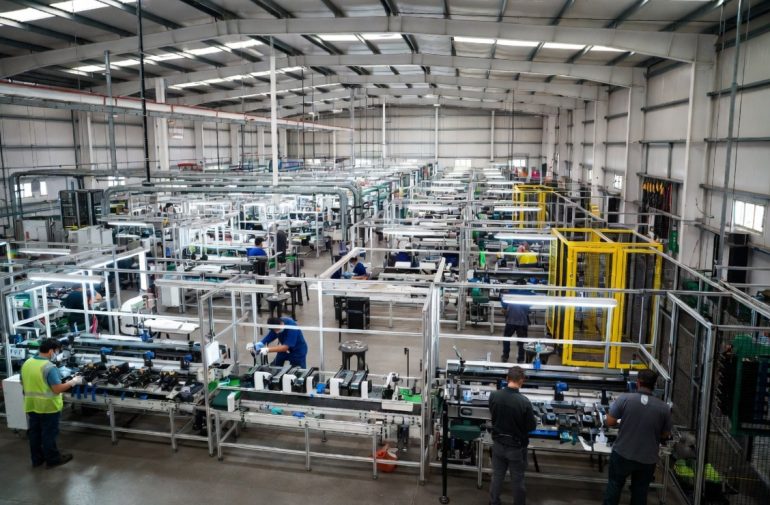

Exports under Paraguay’s Maquila regime, a special system for manufacturing companies, totalised US$717 million during the first half of 2026. This figure represents a significant 25% increase when compared to the Paraguayan Maquila exports in the same period in 2025. Furthermore, this economic expansion has led to the creation of 1,923 new jobs this year, according to a new report.
The growth was primarily driven by strong performances in the automotive parts, clothing, and chemical products sectors, which continue to form the backbone of the country’s manufacturing export strategy. The Maquila regime allows companies to import raw materials and equipment on a duty-free basis for assembly or manufacturing within Paraguay, before exporting the finished products.
This impressive performance highlights the increasing competitiveness of Paraguayan manufacturing on the international stage. The sustained growth not only boosts the national economy through increased foreign currency earnings but also directly benefits the labour market by providing stable employment opportunities.
Dominant export markets and key sectors
An analysis of export destinations reveals a heavy concentration of trade within the Mercosur bloc. Indeed, member countries of the South American trade group received 78% of all Paraguayan Maquila shipments. The report from the Vice-Ministry of Industry indicates that Brazil was the single largest importer, purchasing 62% of all goods exported under the regime. Argentina followed as the second most important market, accounting for 15% of exports. Outside of the region, the Netherlands emerged as a key trading partner, representing 9% of the total export value up to June.
By June 2026, the data showed that 71% of all exporting Maquila industries operated predominantly in four key areas. These vital sectors were identified as:
- Automotive parts;
- Food and beverages;
- Clothing;
- Manufacturing of aluminium products.
This concentration underscores the specialised nature of Paraguay’s export-oriented manufacturing base and its strategic focus on industries where it has developed a competitive advantage. The reliance on these sectors also points to their critical role in the overall health and continued expansion of the Maquila programme.
Paraguayan Maquila exports performance and growth
Breaking down the performance by sector, automotive parts clearly dominated the export basket, constituting 32% of all shipments. This sector also recorded a solid consolidated cumulative growth of 6% over the first semester. Following this, the clothing and textiles sector accounted for 16% of total exports. It demonstrated a stable performance, with a cumulative monthly growth rate of 4%, thereby providing a significant and steady contribution to the overall success of the Maquila regime. This stability is crucial for long-term economic planning and employment security within the industry.
Meanwhile, other sectors displayed even more dynamic growth. Chemical and pharmaceutical products, for instance, accounted for 4% of total exports but showed an impressive cumulative monthly growth of 10%. However, the segment of pigments, paints, and colourants registered the highest rate of expansion among all sectors with continuous export activity. This category achieved a remarkable 12% cumulative monthly growth rate, signalling a key area of expansion and highlighting its substantial potential to diversify and strengthen Paraguay’s overall export offerings in the near future.
Increased imports reflect manufacturing activity
On the import side of the ledger, Maquila industries increased their procurement of raw materials and machinery. Total purchases from abroad reached US$383 million during the first six months of the year. This represents a 12% rise in comparison to the first semester of 2025. This increase in imports is a positive economic indicator, as it directly reflects a higher level of manufacturing and assembly activity within the country. The greater demand for raw materials and capital goods suggests that companies are ramping up production to meet growing international orders for their finished products.
Significant job creation and workforce composition
The economic growth within the Maquila system has had a direct and positive impact on the national labour market. Currently, the regime employs a total of 36,052 people across its various industries. This figure marks an increase of 1,923 employees when compared to 2025 levels, which translates to a healthy 6% growth in the workforce in just one year. An examination of the workforce composition reveals a significant level of female participation in the sector. Women hold 45% of all positions, while men account for the remaining 55%, consolidating the sector’s role as a major employer for both genders.
Geographical and sectoral employment distribution
The vast majority of Paraguayan Maquila exports operations are concentrated in a few key regions of the country. The departments of Alto Paraná, Central, Capital, and Amambay collectively host 92% of all registered Maquila companies. This geographical concentration points to the existence of established industrial hubs with the necessary infrastructure and labour pools to support these export-oriented businesses. These regions serve as the primary engines of the country’s manufacturing growth under the special regime.
Finally, when looking at employment distribution by specific industry, the clothing and textiles sector stands out as the largest employer. It provides jobs for 8,363 workers, making it a critical source of employment. The automotive parts sector follows closely behind, with a workforce of 7,865 people. The services sector, which supports manufacturing operations, is the third-largest employer, with 3,982 jobs. This data highlights the labour-intensive nature of the leading industries within the Maquila framework and their importance for national employment.
Also read: Paraguay Maquila Law Reform Opens The Door To Global Services.

