

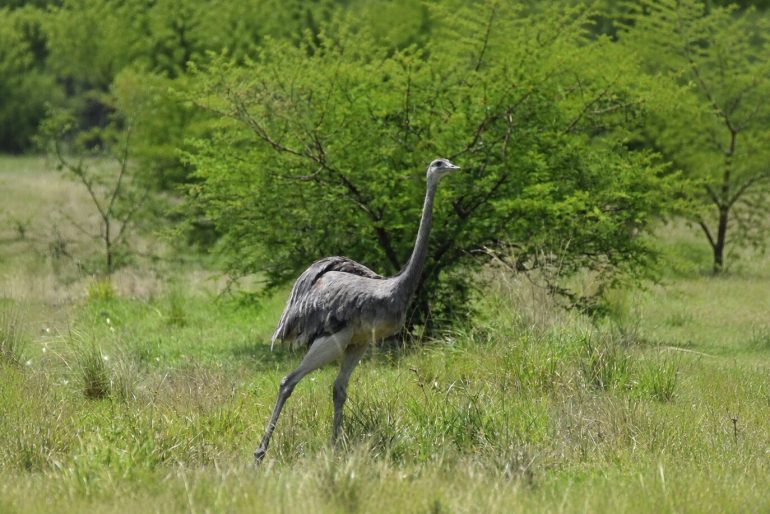

Paraguay is home to an extraordinary variety of birds, inhabiting everything from forests and wetlands to grasslands, the Chaco and urban spaces. Yet many of these species often go unnoticed, even when they live close to us. In this new Birds of Paraguay series, The Asunción Times, with the support of the Club de Observadores de Aves del Paraguay (CON), invites readers to discover the country through its birdlife, exploring different species, their habitats, behaviours and role in Paraguay’s ecosystems. In Birds of Paraguay #1: The Ñandú (Greater Rhea).
A striking resemblance to the African ostrich
Inside Paraguay’s vast open grasslands, one species still defines the landscape: the Greater Rhea, known locally as the Ñandú (Rhea americana). As South America’s largest bird, it bears a striking resemblance to the African ostrich; both belong to the ancient superorder Paleognathae, a group of flightless birds known as ratites.
The similarity, however, is mostly superficial. Rheas and ostriches evolved on different continents and belong to distinct families: Rheidae in South America and Struthionidae in Africa. What these birds do share is a defining limitation: they cannot fly. Yet, this constraint has shaped a remarkable adaptation. On land, the rhea is built for speed, capable of reaching over 60 km/h. The Ñandú uses its powerful legs and keen balance to evade predators such as pumas and jaguars.
An exemplary father
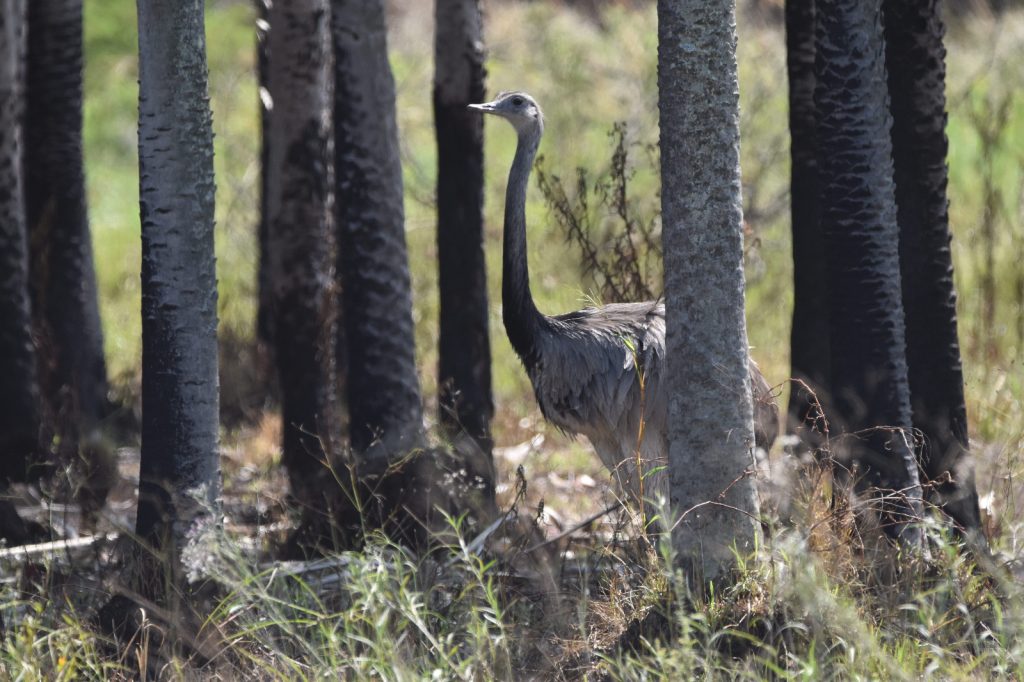
What truly distinguishes the species is not its size or speed, but its unique breeding system. In a reversal of the typical avian pattern, the male assumes nearly all parental responsibilities. He builds a simple ground nest, often little more than a shallow scrape hidden among the grasses. Several females will lay their eggs in this shared nest, sometimes resulting in clutches exceeding 20 eggs.
Once the laying is complete, the females move on, but the male remains. For roughly 35 to 40 days, he incubates the eggs, exposed to heat, rain, and potential predators. After hatching, his role continues: he guards, leads, and defends the chicks, which begin following him within hours of emerging. While grouping eggs in one place concentrates risk, this system has proven highly effective in stable environments. For observers, this method remains one of the most striking examples of parental role reversal in the animal kingdom.
Gardener of the ecosystem
Beyond its behavior, the rhea plays a vital functional role in the environment. Ñandú’s varied diet, consisting of fruits, seeds, insects, and small vertebrates, makes it both an effective seed disperser and a regulator of insect populations. In practical terms, the Ñandú contributes to the constant maintenance and regeneration of grassland systems.
Fun facts
- The Rudder: Although it cannot fly, it uses its wings as a “rudder” while running, allowing for incredibly sharp turns at high speeds.
- Surprising swimmers: Ñandú can swim if necessary, a little-known ability for such a large land bird.
- Panoramic vision: Its large eyes allow it to detect movement from great distances, a key advantage in wide-open terrain.
- Early starters: Chicks are “precocial,” meaning they can follow their father just hours after hatching, forming compact groups for protection.
A species in need of protection
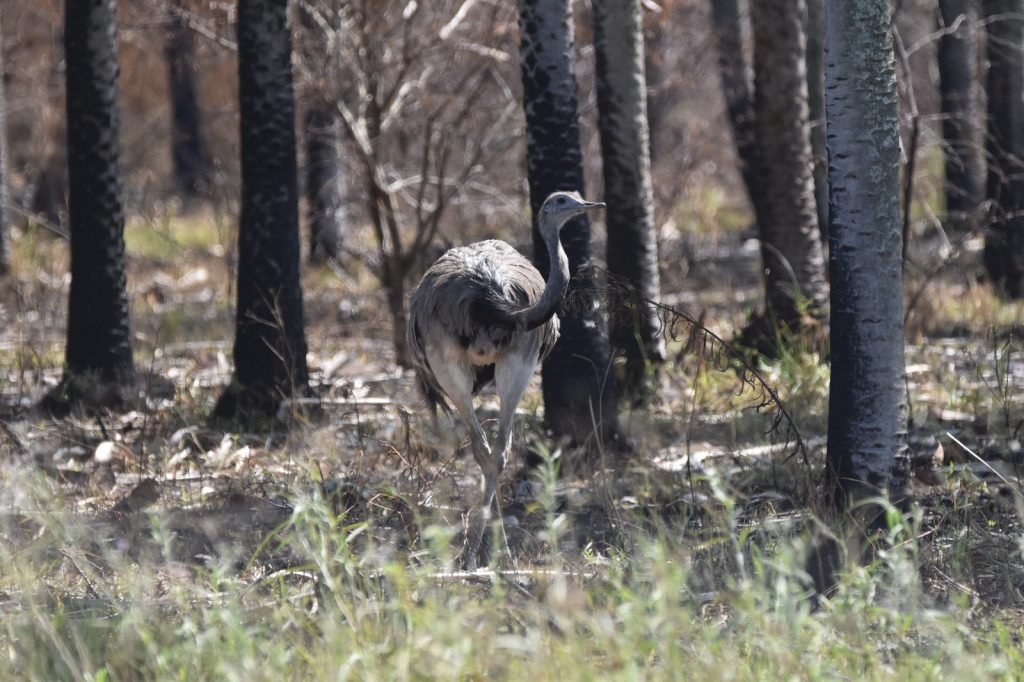
Despite Ñandú’s size and visibility, the bird is increasingly affected by landscape changes. The expansion of intensive agriculture, the spread of tree plantations, and the fragmentation of natural grasslands have reduced the continuous habitats Ñandú depends on. Hunting and egg collection add further pressure, particularly during the breeding season.
The species can still be found in parts of Paraguay, especially in protected areas. But its distribution is no longer as continuous as it once was. Ñandú’s presence, or absence, serves as a “bio-indicator” for the state of grassland ecosystems.
Public awareness becomes essential for grassland ecosystems. Events such as the South American Bird Fair, to be held at the Cultural Center of the Port of Asunción from 17 to 20 September 2026, provide a vital opportunity to connect scientific knowledge, field experience, and public interest. Birdwatchers, researchers, and newcomers alike will gather for talks, guided outings, and educational activities focused not only on the species themselves but on the habitats that sustain them. More information on the South American Bird Fair official website.

