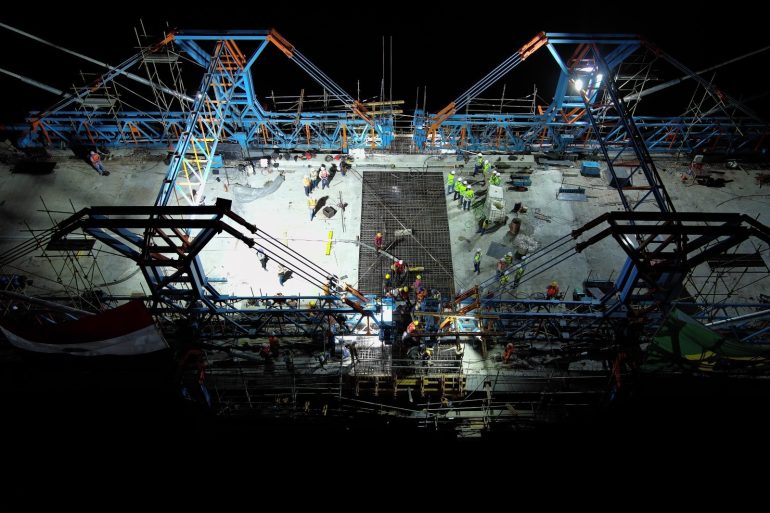

A historic milestone in South American integration was achieved between Wednesday night and the early hours of Thursday morning, 16 July 2026, as construction teams completed the physical union of the Bioceanic Bridge. This emblematic structure now connects the Paraguayan city of Carmelo Peralta with Puerto Murtinho in Brazil, spanning the significant Paraguay River.
Paraguay’s Ministry of Public Works and Communications (MOPC) reported that the final, decisive stage involved pouring the last remaining cubic metres of concrete to close the gap between the two advancing sections of the bridge deck.
This event marks the culmination of one of the most critical phases of the bridge’s construction, which began with its initial works in 2022. The bridge serves as a vital component of the broader Bioceanic Corridor, a transformative infrastructure project designed to create a strategic road network across the continent. Ultimately, this corridor will link not only Paraguay and Brazil but also Argentina and Chile, thereby connecting the Atlantic and Pacific oceans and forging a new, efficient route for global trade.
A new era for regional connectivity
The completion of this physical link is set to fundamentally reshape regional logistics. The mega-infrastructure will significantly strengthen connectivity between Paraguay and Brazil, offering a more direct and reliable path for commerce. By linking the Atlantic and Pacific coasts, the Bioceanic Corridor will facilitate the movement of goods, reduce transport times, and lower costs for producers across South America. This new route is expected to provide a competitive alternative to existing maritime and land-based trade channels.
Furthermore, the project represents a powerful symbol of collaboration and shared ambition among the participating nations. It is anticipated to stimulate economic development in previously isolated regions, creating new opportunities for businesses and communities along its entire length. The improved access will foster greater economic integration, encouraging investment and strengthening political ties throughout the southern cone of the continent.
Engineering and design specifications
The Bioceanic Bridge is a significant feat of engineering, with a total length of 1,294 metres. Its design includes a cable-stayed central section measuring 632 metres, which features a main navigation span of 350 metres between the two central pylons. This specific design was carefully chosen to ensure the continued navigability of the Paraguay River, a crucial artery for regional transport.
Consequently, the bridge’s height and the wide main span will allow for the passage of large convoys of barges and other vessels without impediment. This foresight ensures that the new infrastructure enhances connectivity without disrupting existing economic activities reliant on the river. The construction has been a complex undertaking, requiring precise coordination to join the two independent superstructures extending from each bank.
The final connection phase
The final works to unite the bridge deck were executed meticulously. The operation consisted of a carefully planned concrete pour to fill the final space between the two ends. This critical task was concluded at approximately 22:00 on 15 July, officially sealing the physical union of the structure. While this connection is a monumental achievement, the MOPC has clarified that several finishing stages are still underway and will be completed in the coming days.
This achievement represents the successful progression of a project that has been a long-held aspiration for the region. The works, which commenced in 2022, have advanced steadily, leading to this pivotal moment that makes the prospect of cross-river traffic a tangible reality. The bridge now stands as a testament to the engineering skill and collaborative effort invested in the project.
Inauguration and future prospects
The official inauguration of the Bioceanic Bridge is tentatively scheduled for 23 July. The event is expected to be a major diplomatic occasion, with the anticipated participation of the presidents of Paraguay and Brazil, Santiago Peña and Luiz Inácio Lula da Silva, respectively.
Beyond its logistical advantages, the bridge is poised to deliver a wide range of benefits. It is expected to stimulate the tourism and commerce sectors by opening up a new gateway to the diverse landscapes of the Paraguayan Chaco and the Brazilian Pantanal. Moreover, the entire route offers travellers a journey through a region renowned for its rich biodiversity, creating potential for new eco-tourism ventures and related economic activities for local communities.
To ensure its longevity and safety, the Bioceanic Bridge will be equipped with an innovative digital monitoring system. This advanced technology will allow for the permanent and real-time control of the structure’s integrity and performance over the years. Sensors integrated into the bridge will continuously collect data on stress, vibration, and other critical factors, providing engineers with valuable insights for maintenance planning.