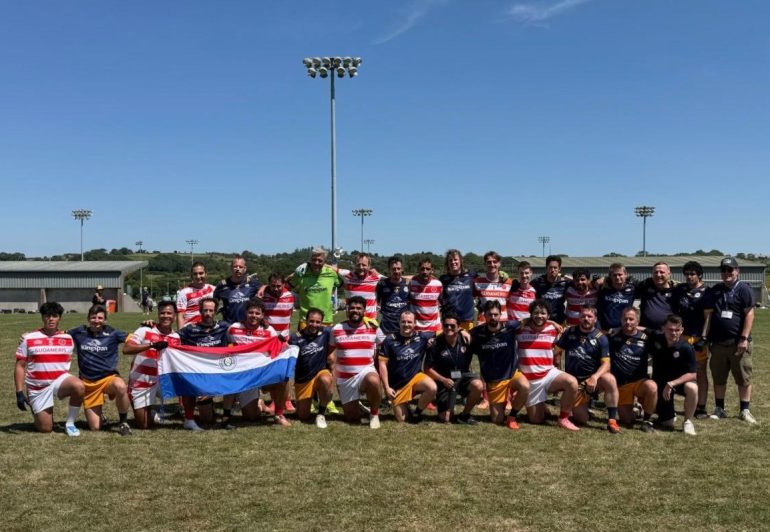

Paraguay’s remarkable debut campaign at the 2026 GAA World Games came to an end on Thursday, 16 July, after Las Arpas reached the semi-finals of the Division 3 competition. The team advanced from the group stage with four wins from six matches. In the quarter-finals, Paraguay defeated Iberia by a single point in one of the tournament’s most hard-fought contests. In the semi-finals, Las Arpas fell to a dominant Zambian side, thereby finishing in a shared third spot.
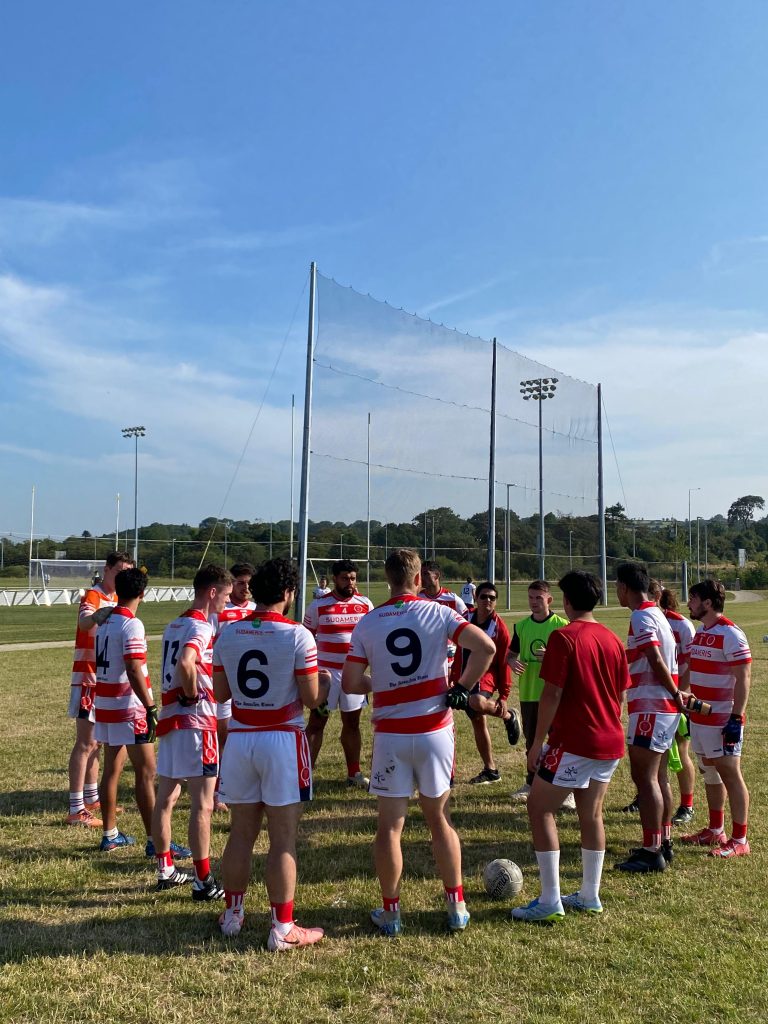
Last-minute winner seals quarter-final
Paraguay’s quarter-final against Iberia was a fiercely contested encounter that swung back and forth throughout, with emotions boiling over during several flashpoints on the field. According to Las Arpas player Andrew Kaminsky, Paraguay had been warned before the match that one of Iberia’s players had a reputation for aggressive play.
Kaminsky says the contest featured several flashpoints, including one incident in which a Paraguayan player was punched in the back of the head. In another, a Paraguayan player was fouled to the ground before an Iberian player stood over him and punched him in the face. Kaminsky says he did not witness every detail of the incident but was told the Paraguayan player may have pushed or thrown a punch beforehand.
Despite trailing by two points with only a minute or two remaining, Paraguay completed a dramatic comeback when Joel Candia scored a last-minute goal worth three points to secure a one-point victory and a place in the semi-finals. Candia, who had been punched in the face, was involved in the heated closing moments before the final whistle, with an Iberian player shown a red card as the referee ended the game.
Zambia proves unstoppable
Paraguay’s reward was a semi-final at the GAA World Games against Zambia’s Sables Shamrocks, a team Kaminsky described as both the strongest side in the competition and the tournament favourites among neutral supporters. “They murdered us,” Kaminsky says, with clear imagery. “They were relentless.”
Although Paraguay was unable to match Zambia’s pace and precision, Kaminsky was full of praise for the other side, describing them as worthy finalists. “They are so fast, have so much energy, and kick so well. They defend so well too,” he says. “They deserved to win. They are the better team.”
Kaminsky noted that while Zambia is still developing some technical aspects of Gaelic football, particularly the solo, their athleticism allows them to recover quickly from mistakes and overwhelm opponents. “They are so fast that they can make those mistakes, recover the ball, make another mistake, recover the ball again, and score.”
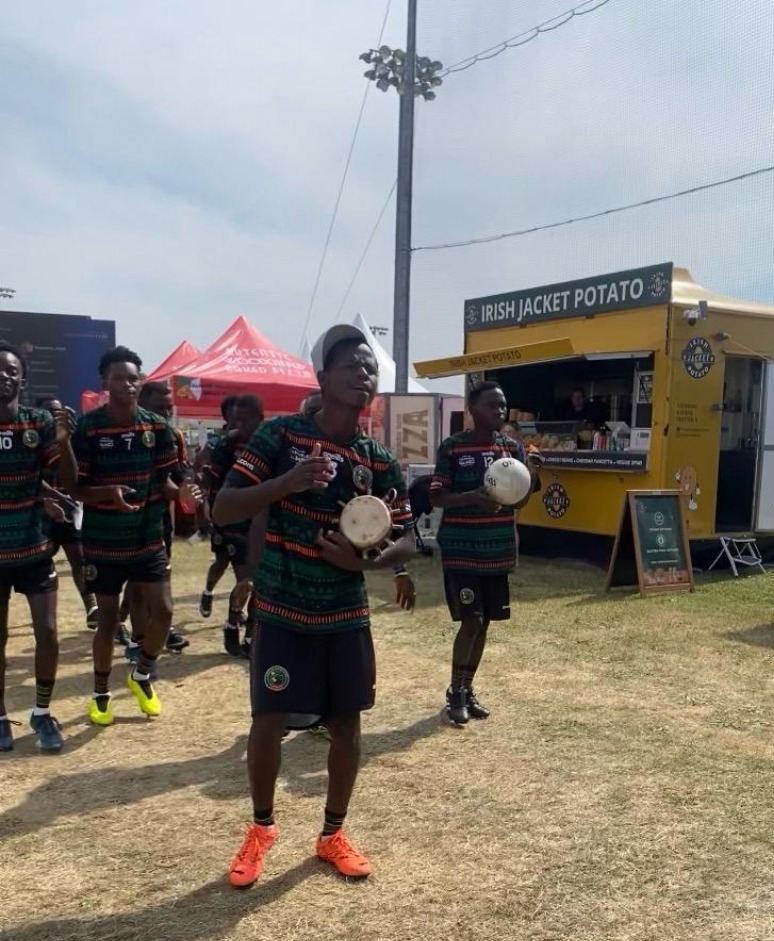
Zambia’s Sables Shamrocks: An inspiring story
The Zambian programme has attracted widespread admiration throughout the tournament because of the players’ backgrounds. The Sables Shamrocks were established after a Waterford teacher became involved with the Sables orphan centre in Zambia, introducing Gaelic football following a teaching exchange.
The centre, which began by supporting a small group of street children, has since grown into a school serving hundreds of pupils. Many of the players come from Makululu, one of the largest informal settlements in sub-Saharan Africa, where poverty and limited opportunities make organised sport difficult to access.
Despite those challenges, the young squad has developed into one of the fastest-rising teams in international Gaelic football, earning praise from opponents throughout the World Games. “I am proud to have played against them and lost to them,” Kaminsky says. “They deserve everything they have.”
A remarkable achievement for a young team
Paraguay officially finished sharing third place in Division 3 with Europe Wolves. Las Arpas, however, take added satisfaction from having defeated Europe Wolves during the group stage.
The result caps a remarkable rise for Paraguay’s Gaelic football programme, which has existed for only around a year and a half. “Coming here from the small fields that we have been practising on with the few resources that we have, it is really incredible what we have accomplished,” Kaminsky conludes.
“None of our players, except for our club founder Moz, played Gaelic football before. We have an entire team of people that started to learn in their adulthood in Paraguay, and we took that to the world stage, and we came out third.”
See what else the Paraguayan GAA team is up to at the World Games, with behind-the-scenes warm-up footage, and all things Gaelic Football by following Las Arpas on Instagram.