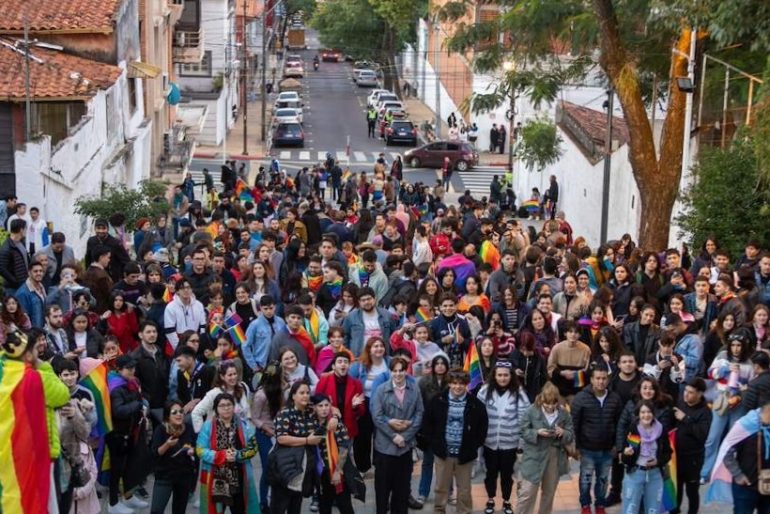

In Paraguay, REPAR, the Paraguayan Network of LGBTQ+ Artists, serves as a beacon of creativity and resilience. Established in 2023 by artist Hugo González, the organisation embodies the belief that art can be both a celebration of identity and an instrument for social change.
“Art is a tool of social transformation and a political instrument to achieve change in our society,” says Hugo González, founder of REPAR, to The Asunción Times. With its open membership and diverse leadership, including trans, bisexual, non‑binary and drag artists, REPAR has quickly become a vibrant collective. Its festivals, parades and cultural initiatives not only bring joy and visibility, but also demonstrate the strength of a community determined to thrive.
How REPAR was born
REPAR was founded in 2023 by Hugo González, an artist who work for many years around other national musicians, turned human rights activist, who sought to reconcile two seemingly separate paths. For years, González had worked with renowned Paraguayan musicians while simultaneously advocating for LGBT+ rights.
“Why should I live two professional lives, one as an activist and another as an artist? REPAR exists so that both can coexist,” he explains.
This fact became the seed of REPAR, an organisation designed to unite art and activism, giving visibility to LGBT+ artists and communities.
An open membership model
REPAR embraces an open membership model. Anyone identifying as LGBT+ can join. “We are the first LGBT+ organisation in Paraguay with a membership of more than 100 people, and we aim to grow further,” Hugo affirms. This structure has allowed REPAR to become a collective voice, not only for artists but for all individuals seeking recognition.
Art as an instrument
REPAR’s philosophy is clear: art is not merely entertainment, but a tool capable of mobilising society. Festivals, drag battles and cultural events, according to the organization, have proven more effective in engaging audiences than traditional workshops or lectures.
“When you organise a drag battle or a cultural festival, you engage people instantly, and that is when you can share messages of equality and rights,” González notes. Through these initiatives, REPAR has transformed cultural spaces into platforms for advocacy, drawing thousands to parades and festivals of celebration.
Despite its cultural success, REPAR operates in a challenging legal environment. Paraguay remains one of the few countries in the region without comprehensive anti‑discrimination legislation, González states. Civil unions, gender identity recognition and equal marriage rights are absent from the legal framework. “We urgently need a law against all forms of discrimination. Without it, every other right remains out of reach,” González stresses.
Alliances and international reach
REPAR collaborates with local and international organisations, including Casa Diversa (Diverse House), and Amnistía Internacional Paraguay (Amnesty International Paraguay). These alliances strengthen its capacity to reach diverse audiences and extend its advocacy beyond national borders.
“We are autonomous and independent, financed mainly by our members and donations. We welcome support from abroad to continue our mission,” González says. Such partnerships have enabled REPAR to expand into Paraguayan regions like Ciudad del Este, Encarnación and the Chaco.
At its heart, REPAR is a testament to resilience. It stands as proof that art and activism together can inspire change. “We have always been here, and we will continue.”
If you want to learn more about the organisation, you can find REPAR on Instagram.