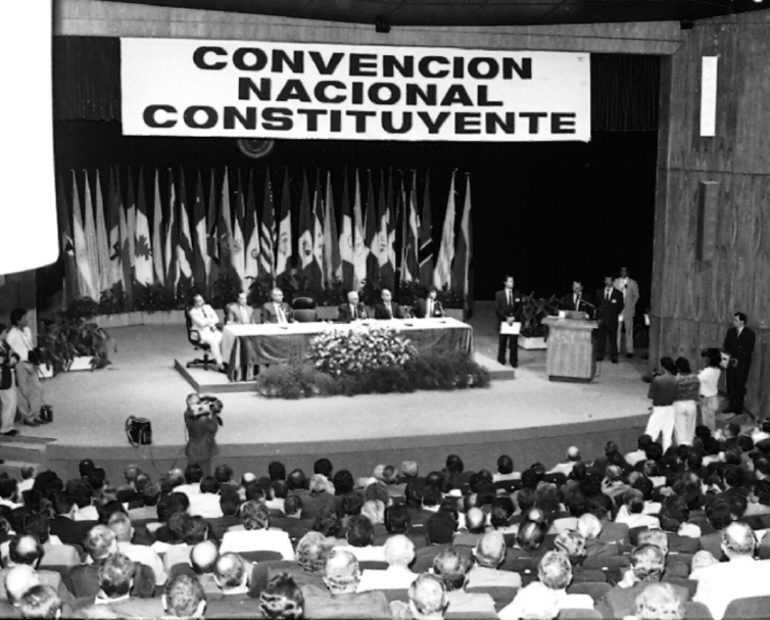

On 20 June 2026, Paraguay marks 34 years since the adoption of its current Constitution, a document that laid the foundations for the country’s modern democratic system. Approved in 1992 during a period of political transformation, the Constitution replaced the previous legal framework. Decades of authoritarian rule were changed to new guarantees for civil liberties, political participation, and the separation of powers.
More than three decades later, the Constitution remains the supreme law of the Republic and continues to shape the country’s institutions, elections, and legal system. For Paraguay’s residents, the Day of the Oath of the National Constitution anniversary (Día de la Jura de la Constitución Nacional) serves as an opportunity to reflect on the country’s democratic journey and the principles that guide public life today.
From dictatorship to democracy
The adoption of the Constitution came at a pivotal moment in Paraguay’s history. Following the overthrow of the Stroessner regime in February 1989, the country entered a period of democratic transition. Political reforms were introduced, and opposition parties gained greater participation. Therefore, calls grew for a new constitutional framework that reflected democratic values.
To achieve this goal, Paraguay elected members of a National Constituent Convention in December 1991. The convention brought together representatives from different political parties and sectors of society to draft a new constitution. The process was widely viewed as a milestone because it allowed elected representatives to shape the country’s future through dialogue and negotiation.
After months of debate, the new Constitution was approved and promulgated on 20 June 1992 in Asunción. It was the first constitution in Paraguayan history to emerge from a broadly democratic and participatory process.
New rights and stronger institutions
One of the Constitution’s most significant contributions was the expansion of individual rights and protections. The document established broad guarantees for freedom of expression, political participation, and due process under the law. It also defined Paraguay as a social state governed by the rule of law and strengthened the separation of powers among the executive, legislative, and judicial branches. These provisions were designed to prevent the concentration of power that had characterised previous periods of the country’s history.
The Constitution introduced additional mechanisms aimed at reinforcing democratic governance. Local authorities gained greater autonomy through decentralisation measures, while citizens received stronger legal protections against abuses of power. Another notable feature was the recognition of Indigenous peoples and their collective rights. The Constitution acknowledged Paraguay’s cultural diversity and established protections for Indigenous communities, their identities, and their traditional lands.
A constitution shaped by participation
The constitutional process also stood out for the involvement of civil society. Various organisations, including women’s groups, professional associations, and Indigenous representatives, contributed ideas and proposals during the drafting stage. Although the final text reflected political compromises, many observers regarded the process itself as an important democratic achievement. It demonstrated a willingness among different sectors of society to participate in shaping the country’s institutions after years of limited political freedoms.
The Constitution ultimately became more than a legal document. It represented a symbol of Paraguay’s commitment to democracy and constitutional government.
Its role today
Thirty-four years after its adoption, the Constitution continues to provide the framework for public institutions and democratic processes in Paraguay. Every law enacted by Congress must conform to its principles, and courts regularly rely on its provisions when interpreting legal disputes. The document has also remained at the centre of public debate on issues ranging from institutional reforms to citizens’ rights and government accountability. While political and social challenges continue to evolve, the Constitution serves as the reference point for discussions about the country’s future.
As Paraguay commemorates the anniversary of its adoption on 20 June, the date offers a reminder of a defining chapter in the nation’s history. The Constitution of 1992 emerged during a period of profound change and helped establish the democratic foundations that continue to guide the country more than three decades later.
For younger generations or newcomers who did not experience the transition firsthand, the anniversary also provides an opportunity to better understand the historical significance of a document that continues to influence everyday life across Paraguay.
Also read: The Making Of Modern Paraguay: A Historical Timeline Of Triumphs And Tragedies.