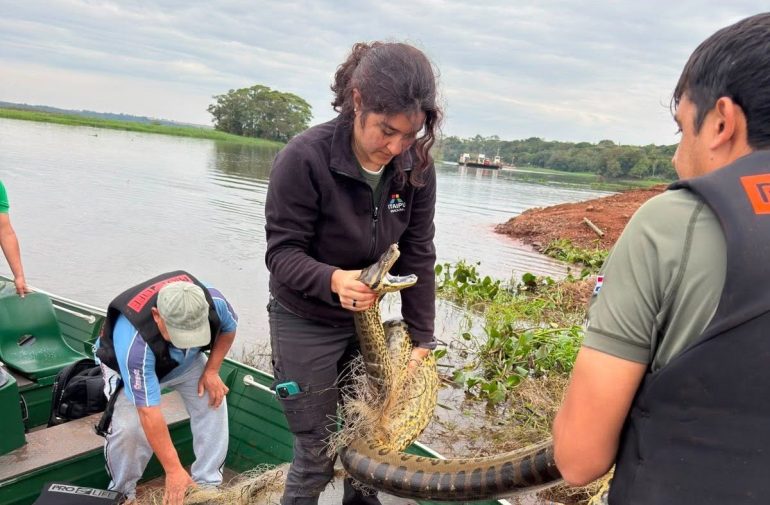

A large anaconda, one of Paraguay’s most emblematic aquatic snakes, has been successfully rescued by park rangers and technicians from ITAIPU Binacional. The reptile, named mbói jagua in Guaraní language, became trapped in a fishing net in a waterway within the department of Canindeyú. This rescue operation was part of the permanent biodiversity monitoring and patrol tasks conducted by the entity in its protected areas.
The intervention was made possible following an alert from local fishermen. They discovered the immobilised animal and promptly notified the authorities. In response, a specialised team from ITAIPU’s Protected Areas Division was dispatched to the location. Consequently, they managed to carefully free the large snake from the net.
A swift transfer for health assessment
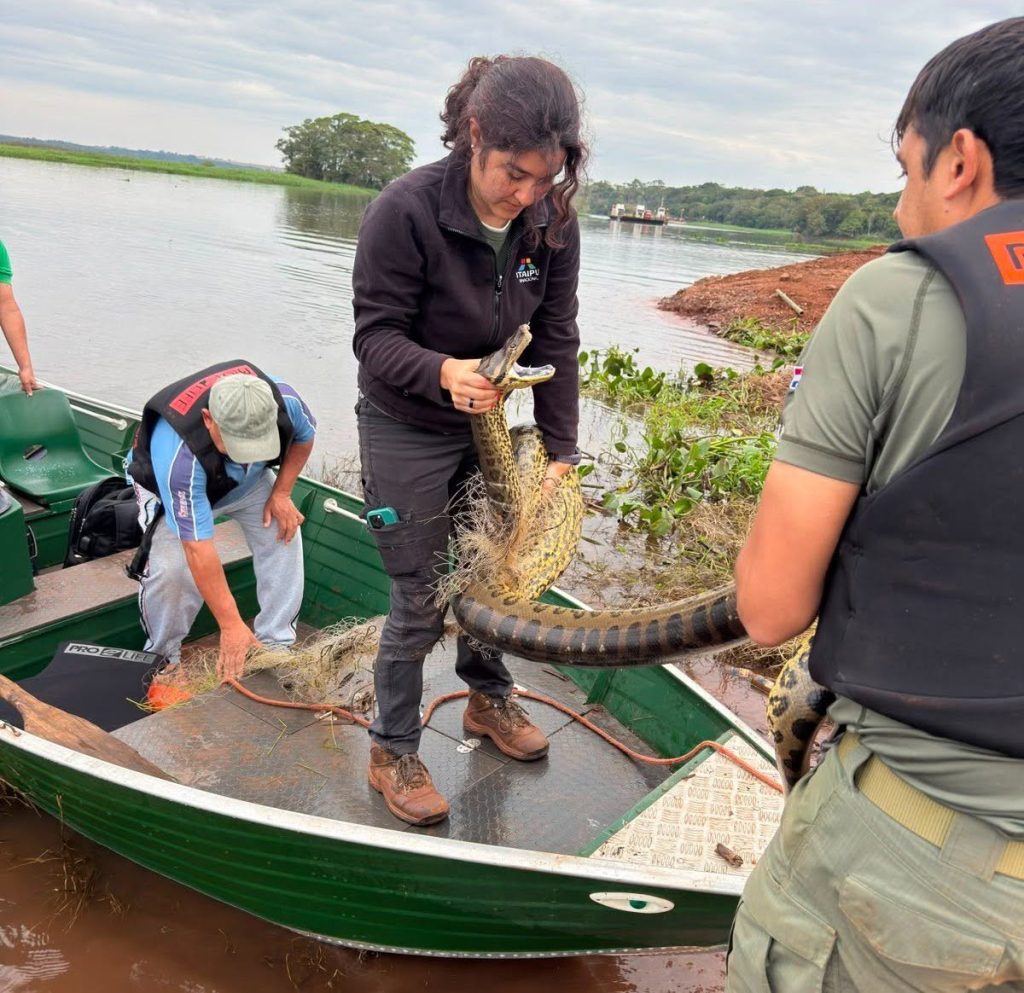
Following its release, the reptile was transported to the Wildlife Research Centre, which is located in Hernandarias. At the facility, veterinarians and specialists conducted a thorough evaluation to verify its state of health and ensure it had not sustained any serious injuries during the ordeal. The rescue highlights a successful collaboration between local communities and environmental authorities.
The specimen was identified as a female mbói jagua (Eunectes murinus), more commonly known as the green anaconda. It measured an impressive 3.6 metres in length and weighed approximately 20 kilogrammes. This species belongs to the boa family (Boidae) and is a significant predator in its habitat. These massive, non-venomous constrictors can grow up to 3 to 4 meters (and sometimes larger) and are native to South American wetlands.
In Paraguay, mbói jagua is also a fearsome creature from Guaraní mythology, often described as a gigantic water serpent with the head of a dog or jaguar and a hooked tail used to drag prey into the water.
An indicator of ecosystem health
The mbói jagua animal plays a fundamental role within the aquatic ecosystems and wetlands it inhabits. As an apex predator, it contributes to maintaining the natural balance of populations of fish, birds, and other vertebrates. Therefore, its presence is considered a positive sign for the environment.
Environmental specialists emphasise that the existence of this species serves as an important indicator of the health of water bodies. Furthermore, its presence signifies the biological richness of the ecosystems where it is found. A healthy anaconda population suggests a robust and thriving natural habitat capable of supporting a complex food web.
Conservation status and ongoing threats
Currently, the mbói jagua is officially catalogued as a species threatened with extinction by Paraguay’s Ministry of the Environment and Sustainable Development (MADES). This classification underscores the urgent need for focused conservation efforts to protect the remaining populations across the country.
The primary threats facing the species include the widespread destruction of its natural habitat due to deforestation and land development. Additionally, the anaconda is often hunted by humans. This persecution is frequently motivated by fear or a general lack of knowledge regarding its behaviour and its vital ecological importance. Educating communities, according to MADES, is therefore a key component of its conservation strategy.
A call for collaborative conservation
In a statement, ITAIPU highlighted the crucial role that fishermen and local communities play in the conservation of biodiversity. Officials pointed out that the effective protection of natural resources requires joint efforts between public institutions, private citizens, and the direct users of the ecosystems.
The organisation also took the opportunity to reiterate the importance of respecting all current regulations related to fishing activities. Promoting responsible practices is essential to preserve not only wildlife but also the vital water resources for future generations. Such measures ensure the long-term sustainability of the region’s natural heritage.
Finally, ITAIPU remarked that the protection of species like the mbói jagua represents a shared responsibility. They concluded that every action oriented towards the sustainable use of natural resources contributes directly to safeguarding Paraguay’s environmental heritage and the essential ecosystem services that benefit all of society.