
In a year filled with inspiring stories and uplifting voices, The Asunción Times is proudly publishing this Top 5 Soul Of Paraguay Stories of 2025. These are the articles that readers cherished, shared with friends and family, and came back to time and again. By sharing several Top 5’s with our readers on the edge of 2026, we celebrate the very best of human connection, hope, and community in Paraguay in 2025.
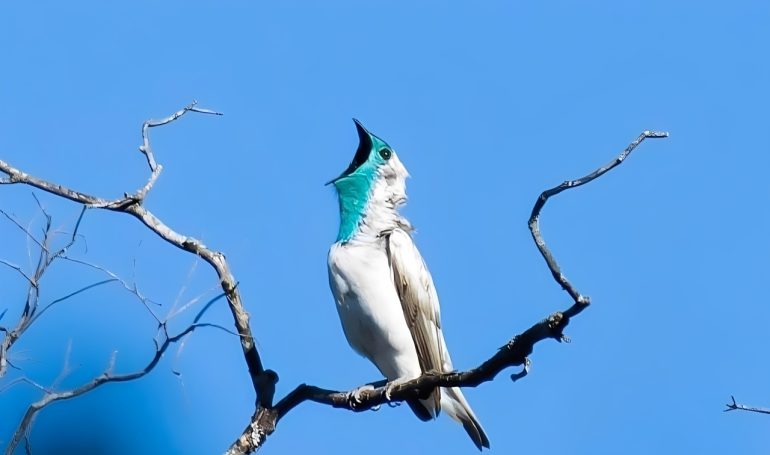
1. Meet Pájaro Campana: Paraguay’s National Bird And Its Legendary Call
The pájaro campana is Paraguay’s national bird, celebrated for its unmistakable metallic, bell‑like call that echoes through the Atlantic forest at dawn. It inhabits the humid canopies of eastern Paraguay and neighbouring regions. Despite its striking presence and cultural importance, its population has declined due to habitat loss, leading to its listing as “Near Threatened”, and efforts to protect its remaining forests.
The bird’s extraordinary sound has inspired myths and artistic traditions in Paraguayan culture. One legend tells of a church bell transformed into the bellbird’s call. While Guaraní mythology recounts how the bird’s powerful voice humbled even the jaguar. These stories feed into music and dance. The celebrated folk polka Pájaro Campana imitates the bird’s chimes on the Paraguayan harp. And traditional dances evoke courtship and celebration.
Read Meet Pájaro Campana: Paraguay’s National Bird And Its Legendary Call.
2. Threads That Speak: The Living Story Of Ñandutí In The Hands Of Norma Báez
Norma Báez is a Paraguayan artisan from Itauguá. Recognised for her mastery of ñandutí, she masters the intricate spider‑web lace that symbolises national craft and heritage. Captivated by the craft from childhood, she learned by watching elder weavers. Later, she turned her passion into a lifelong vocation, creating vibrant, detailed lacework that attracts admirers both locally and abroad.
Over more than fifty years, Báez has helped keep ñandutí alive. She does not only produces distinctive embroidered pieces, but also teaches new generations and fosters community involvement. Her work has earned national recognition from Paraguay’s Honourable Chamber of Deputies for its cultural significance, and she continues to envision collaborative projects that elevate the craft’s visibility and future.
Read Threads That Speak: The Living Story Of Ñandutí In The Hands Of Norma Báez.
3. Marcelo Rojas: The Paraguayan Harp In The Hands Of A Cultural Ambassador
On #3 in this Top 5 Soul Of Paraguay Stories of 2025, Marcelo Rojas: One of Paraguay’s most internationally recognised harpists, whose deep connection with the Paraguayan harp has made him a cultural ambassador at home and abroad. Born in Yuty, Caazapá, he began studying the harp at age ten under the guidance of his father. Later, he continued his training in Asunción, going on to represent Paraguay at festivals and conferences worldwide.
Moreover, Rojas has taken the unmistakable sounds of the Paraguayan harp to audiences across Japan, Argentina, Mexico, Switzerland, Spain, and England. His music reflects personal inspiration from his homeland and family. And through performances, compositions, and cultural exchanges, he highlights the harp’s role as a symbol of national identity, proving that Paraguay’s musical heritage resonates internationally.
Read Marcelo Rojas: The Paraguayan Harp In The Hands Of A Cultural Ambassador.
4. Whispers of the Past: Discovering Paraguay’s Jesuit Missions Of Trinidad And Tavarangue
The Jesuit missions of La Santísima Trinidad de Paraná and Jesús de Tavarangue are among Paraguay’s most important historical sites. They are located in the countryside of the Itapúa Department. Founded in the 17th and 18th centuries, these missions were part of a network of reducciones. Jesuit missionaries lived and worked with the Indigenous Guaraní, combining religion, education, agriculture, and community life. Today, both missions are UNESCO World Heritage Sites, preserved for their cultural and architectural value.
At Trinidad, visitors can explore communal areas and the remains of a grand church, where European baroque design mixes with local craftsmanship. At Tavarangue, the unfinished basilica rises with silent arches, left incomplete after the Jesuits’ expulsion in 1767. Together, these missions show both the achievements and abrupt interruptions of colonial projects. Visitors can experience history as a living presence in stone, ruins, and the quiet countryside.
Read Whispers of the Past: Discovering Paraguay’s Jesuit Missions Of Trinidad And Tavarangue.
5. Seven Monstrous Brothers: Exploring The Heart Of Guaraní Mythology
Guaraní mythology is one of South America’s richest oral traditions and remains alive in Paraguayan culture, art, and rural imagination. At its heart are the seven monstrous brothers, the cursed sons of the malevolent forest spirit Tau and the mortal woman Keraná. These figures, including the cave guardian Teju Jagua, the water-dwelling serpent Mbói Tu’í, the long-horned Moñái, and the siesta‑associated Jasy Jatere, embody nature, behaviour, and taboo, teaching lessons about respect for elders, the land, and caution in the wild.
Other brothers, such as fertility symbol Kurupi, the mountain‑prowling Ao Ao, and the night‑haunting Luisón, also populate stories meant to warn, instruct, and entertain, showing how myth encodes social rules and ecological respect. From children’s tales and festival songs, to place‑names and ecological education, anchoring Paraguay’s national identity to its indigenous roots.
Read Seven Monstrous Brothers: Exploring The Heart Of Guaraní Mythology.
All the best for 2026!
We hope you loved this look back at The Asunción Times’ Top 5 Soul Of Paraguay Stories of 2025. From the bottom of our hearts, and on behalf of the entire team, we thank you for reading, sharing, and being part of our journey. Feliz Año Nuevo, Happy New Year!