
The World Bank has singled out Paraguay as one of Latin America’s fastest-improving economies for poverty reduction, crediting a jobs-led model and sound fiscal management. The institution also noted that some interior regions still lag behind, and called on the country to extend the same approach to those communities.
The World Bank has been a partner in Paraguay’s development for over 70 years, providing support through financing, knowledge, and technical assistance.
What the World Bank found in Paraguay
In a blogpost posted in April 2026, World Bank leaders highlighted Paraguay’s progress over the past two decades. According to Paraguay’s National Statistics Institute, in 2025 more than 213,000 people in the country emerged from poverty. According to the blogpost authors, roughly one third of the population has escaped poverty in that period.
The pace of the improvement stands out even in a region that has broadly made social progress. In the last two years alone, numbers state that approximately 300,000 Paraguayans have moved out of poverty, driven primarily by higher wages and greater access to formal employment.
Jobs, not handouts
The World Bank analysis is clear about what drove the improvement: employment. Paraguay’s gross domestic product (GDP) has grown at close to 5% per year, one of the highest rates in Latin America, but the report’s authors argue that growth alone does not explain the results. What mattered, they say, was that growth translated into better-paying jobs, particularly for lower-income workers.
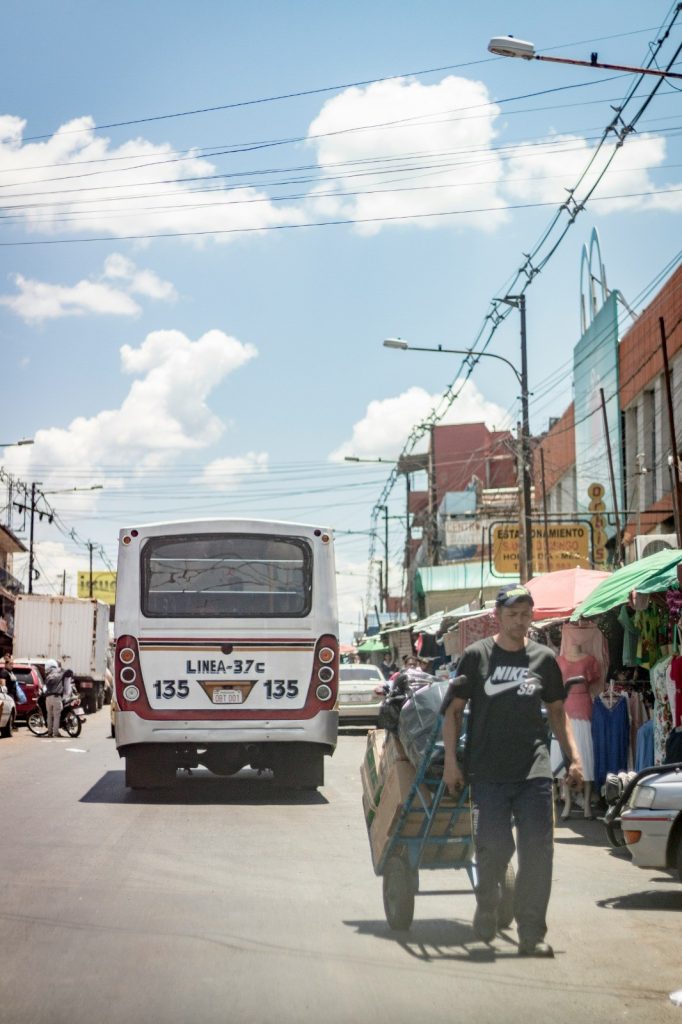
Three pillars underpinned this jobs-led model. First, infrastructure: investment in roads, ports and digital connectivity reduced transport costs and linked workers and businesses to wider markets. Energy played an especially significant role. Paraguay’s Itaipú and Yacyretá dams provide low-cost energy, helping attract foreign investment and support industrial growth.
Second, regulatory reform. Successive governments streamlined small and medium business registration and updated the maquila regime to support export manufacturing. They also encouraged broader private sector investment and expanded opportunities for locally hired workers in foreign-run operations. These changes, the World Bank notes, reduced risk and created conditions for sustained job creation.
Third, macroeconomic stability. A new Investment Law, updated PPP framework, and modern capital markets regime have expanded conditions for private investment. Paraguay’s Fiscal Responsibility Law, which caps the central government deficit at 1.5% of GDP, has anchored investor confidence. The country earned investment-grade ratings from two agencies within 18 months, a regional first this decade.
Social programmes complemented market gains

The World Bank also highlights the role of targeted social spending. The Hambre Cero (Zero Hunger) programme, which provides school meals to more than one million children in the public education system, was cited not only for improving child nutrition but for its economic ripple effects: the programme sources food from family farmers and small local businesses, channelling public spending back into lower-income communities.
The blog highlights a results-focused design, using real-time systems to track every planned and served meal. This accountability model is presented as a benchmark for effective social programmes.
The road ahead: reaching the interior
The World Bank’s assessment also points to the next chapter of Paraguay’s development. Some departments in Paraguay, notably Caaguazú, Caazapá and San Pedro, interior regions with largely rural, agricultural economies, continue to show poverty rates above the national average.
Rather than treating this as a setback, the institution framed it as an opportunity: the same policies that transformed the national economy can, if extended, deliver similar results in those communities. A concrete step already taken is the production of Paraguay’s first poverty map in more than two decades, covering all 263 districts of the country, developed jointly with the World Bank. That map is now guiding where investments go and how programmes like Hambre Cero are targeted.
For Paraguay, the report arrives as an authoritative external validation of the policy choices made over the past two decades, and as an encouragement to keep going.
The Paraguay and World Bank connection
As stated earlier, the World Bank has been a partner in Paraguay’s development for over 70 years, providing support through financing, knowledge, and technical assistance.
Acoording to the World Bank, its current portfolio in Paraguay focuses on four main areas:
- Supporting human capital development and sustainable growth;
- Improving market access for agricultural producer organisations and indigenous communities;
- Enhancing the quality and safety of selected routes to improve connectivity and efficiency;
- Strengthening primary health care to provide better, more accessible health services.