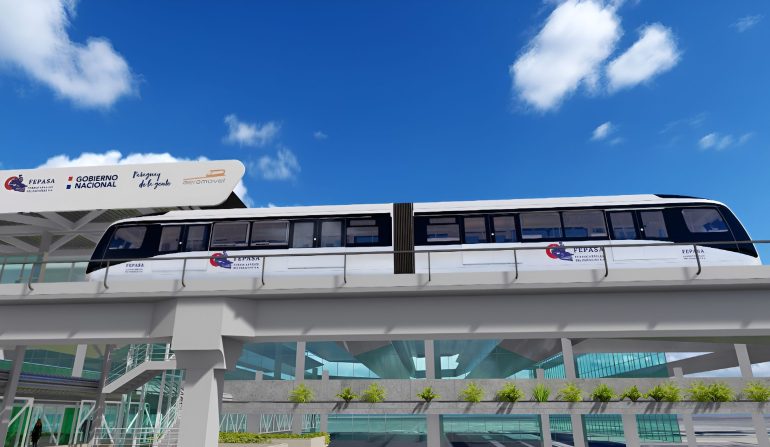

Preliminary works for Paraguay’s new Commuter Rail project, known as Tren de Cercanías (Commuter Train), are scheduled to begin in the first half of 2027. The government aims to have the initial circuit connecting Asunción and Luque operational by the 2030 FIFA World Cup. Paraguay will serve as a commemorative co-host.
Amilcar Guillén, Director of Strategic Projects at the Ministry of Public Works and Communications (MOPC), confirmed the timeline. He clarified that these initial activities are preparatory and will precede the main infrastructure construction.
Preparatory phase and contract timeline
Initially, the early works of the commuter rail project will focus on essential preparations. These include clearing the right-of-way along the historic railway corridor that the new line will use. This phase may also involve constructing some smaller stations along the route. Officials anticipate signing the main contract for the project by the end of 2026.
According to Guillén, officials expect to award the contract for the final design and infrastructure construction by July 2027. Once all technical and administrative processes are complete, the system could become operational within approximately 36 months.
A modern, electric transport system
The project entails an estimated investment of US$450 million. The project could decrease travel times between the two cities by up to 40%. The first stage will cover an 18-kilometre, double-track line featuring 11 stations between Asunción and Luque. The Tren de Cercanías will operate as a 100% electric railway system.
This design aims to minimise environmental impact and noise pollution. It will also offer commuters a more reliable and predictable daily travel schedule. The system will draw power from Paraguay’s national grid, which relies predominantly on hydroelectricity.
International partnership and economic impact
Officials will grant a 30-year concession for the project. The United Arab Emirates’ national operator, Etihad Rail, will lead the concession in partnership with the national operator, Ferrocarriles del Paraguay S.A. (Fepasa). This collaboration follows the enactment of legislation allowing the Paraguayan government to enter into government-to-government agreements for infrastructure projects.
According to officials, the development is expected to bring significant economic benefits. During implementation, the project could create around 20,000 jobs. Once operational, the rail service is projected to maintain approximately 500 permanent, direct employment positions. Officials also expect the service to benefit around 40,000 passengers daily.
Future expansion and legal framework
There is also a proposal to extend the line to the Port of Asunción. Paraguayan President Santiago Peña and First Lady Leticia Ocampos put forward the suggestion. Furthermore, this potential extension would enhance connectivity within the capital.
The legal framework authorises the MOPC and Fepasa to form government-to-government agreements to implement the railway. These agreements can define crucial terms, including the economic balance of the contract, risk allocation, compensation mechanisms, and procedures for supervision and dispute resolution.
Under the law, the MOPC must administer the contract and oversee project implementation. Meanwhile, Article 26 requires the Ministry of Economy and Finance to ensure that the national budget allocates the necessary funds each year to finance the project.
Also read: Asunción Commuter Train Project Unveils Nine-Station Route Through Capital.