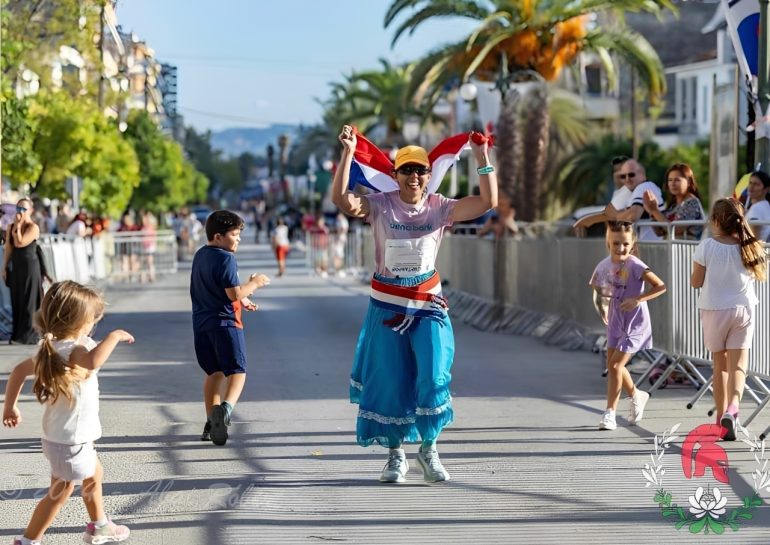

Meet Karina Molinas, the 45-year-old Paraguayan ultramarathon runner who completed the 2026 Spartathlon in Greece. The exhausting race covers 246 kilometres between Athens and Sparta, challenging athletes to pass successive checkpoints within a maximum of 35 hours.
Since her first participation in 2018, Molinas has competed in the Spartathlon seven times, successfully finishing six editions despite challenging conditions. For her, the race represents more than an athletic achievement. The ultramarathon is also an opportunity to showcase Paraguay’s endurance and determination on the international stage.
Discovering ultramarathon
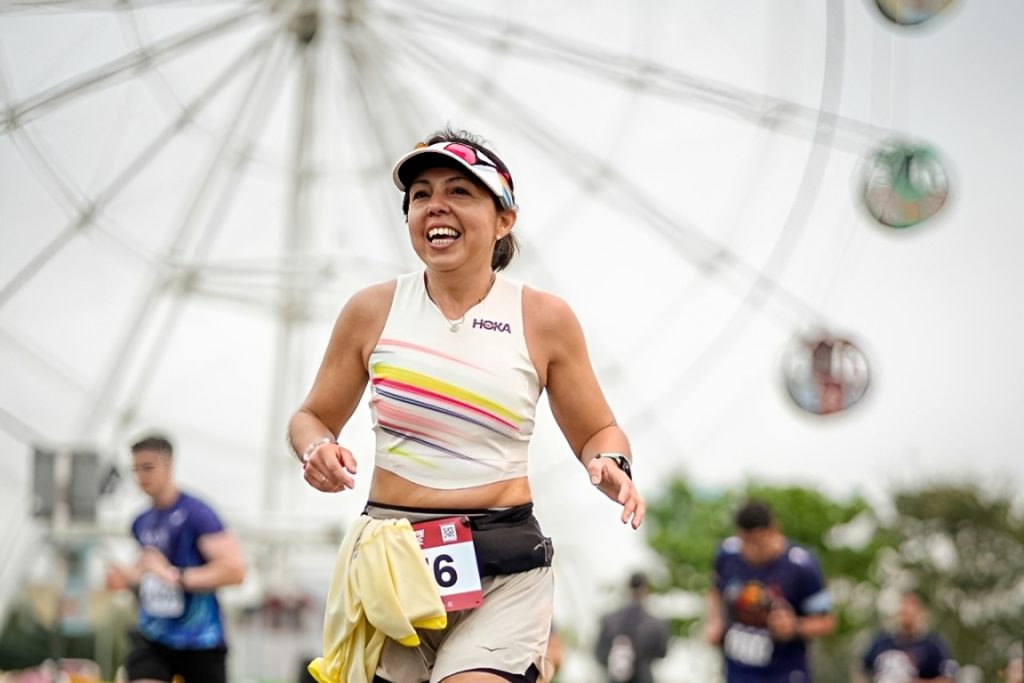
Molinas discovered ultramarathon running through Argentinian ultra-distance runner Fabián Duarte, who was also in several editions of the Spartathlon. After competing in a 24-hour race in Buenos Aires in 2017, she covered 172 kilometres, won the event and secured the qualifying distance.
“At first, I thought it was inhuman”, Molinas recalls in an engaging conversation with The Asunción Times. “Fabián helped me train, and I began preparing for the competition.”
For Karina Molinas, the race combines physical exhaustion with mental and emotional demands that become more difficult during the night. “This is not only physical. It is also very emotional, very spiritual, and requires enormous mental strength.”
The route also offers memorable encounters with local communities, whose residents welcome runners through small villages, offering encouragement and water. “The children are waiting for you. They welcome you, tell you to keep going and offer you water.”
Fighting through the hardest kilometres
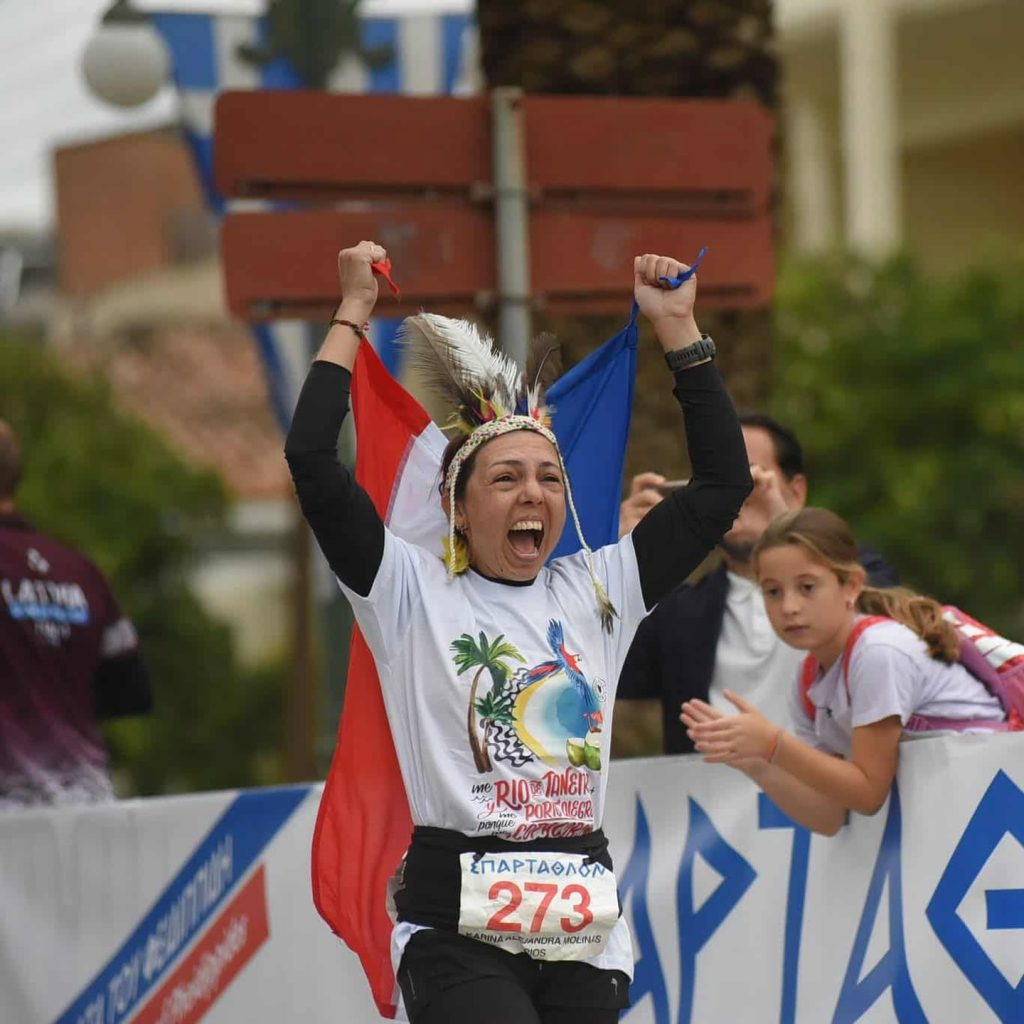
The 2026 Spartathlon edition became particularly difficult when rain arrived earlier than forecast, complicating the course overnight. From approximately kilometre 120 to kilometre 170, Karina struggled with steep climbs and worsening weather.
“I started questioning myself: you trained for this, so why is it so difficult? As I approached the mountain section, I became concerned that I might not finish within the required time.”
Her shin also began swelling, although she had completed her training without injury. Rather than surrender, she concentrated on reaching individual landmarks, running between trees and columns before allowing herself short walking breaks.
“I told myself that there was no secret. I had to run. My partner, Diego Piris, also played an essential role, providing food, clothing, hydration, and encouragement at designated checkpoints.”
Molinas explains that their preparation involves a detailed plan. “Diego monitors my progress and reminds me when to accelerate. We are a team.”
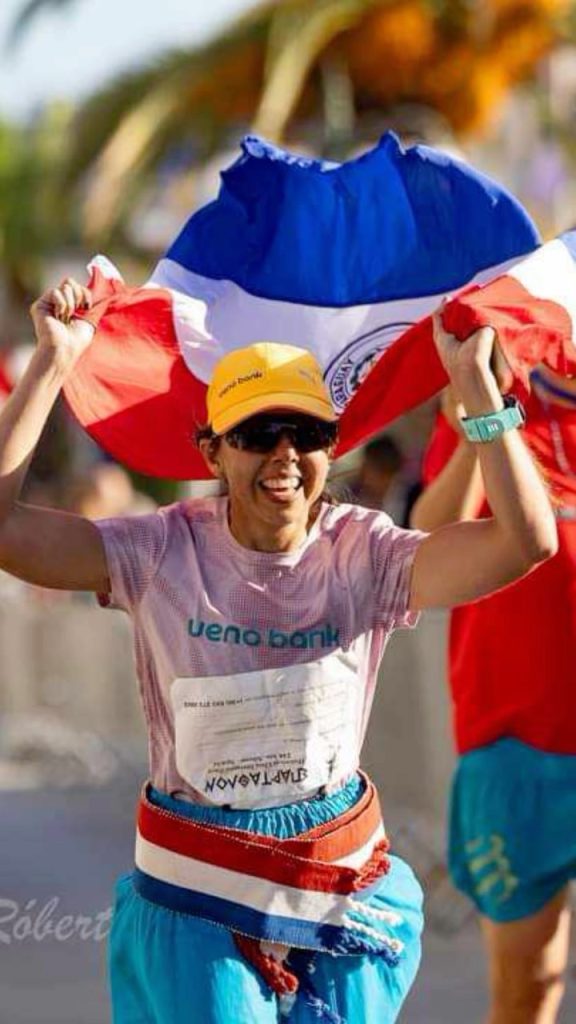
Representing Paraguay
One of Molinas’ most emotional experiences came when a Greek volunteer discovered she was Paraguayan and began singing the traditional Paraguayan song “Galopera”. The unexpected moment reminded her that her participation was helping introduce Paraguay and its culture to people abroad. “I realised I had achieved what I wanted, for Paraguay to be known.”
She also remembers her difficult first finish in 2018, when severe weather and technical problems briefly made it appear that she had missed a checkpoint. Despite the uncertainty, she continued and completed the race, challenging assumptions about Paraguayan athletes’ ability to compete at this level.
“My heart does not give up. You face thousands of obstacles, just as you do in life, but you must not give up”.
The power of encouragement
Her most difficult previous edition came in 2022, when cramps began around kilometre 70, and she repeatedly approached checkpoints with only minutes remaining. “I eventually finished in 35 hours and 59 minutes, just seconds before the 36-hour deadline.”
More recently, she has been able to enjoy the villages and spectators because she has reached checkpoints with greater time margins. She also recognises the importance of encouragement during training, especially when completing long distances alone.
“Sometimes I call my friends and tell them I need a few words of encouragement”, she explains, describing how a simple message can change her mindset. When friends or colleagues join her for part of a long training run, their company makes the remaining kilometres feel less lonely.
Looking ahead to the next Spartathlon
Despite the physical and mental demand of the race, Karina Molinas hopes to return to Greece next year and face the Spartathlon challenge again. “Every edition brings a different challenge and an unpredictable experience, but I hope to continue representing Paraguay.”
To follow her journey, find Karina Molinas on Instagram.