
Paraguay’s home-loan portfolio has doubled in four years to ₲10.87 trillion (about US$1.84 billion), yet most young adults in Greater Asunción still cannot afford a first home. The Central Bank of Paraguay(BCP) reported that the banking system’s housing portfolio stood at that level at the end of August 2026, up from ₲5.03 trillion in August 2022. A state-backed first-home loan programme, Che Róga Porã, has helped drive Paraguay’s housing market expansion.
Yet a bigger credit supply does not automatically widen access to the housing market in Paraguay. In Greater Asunción (the capital and its surrounding cities), 273,316 singles and couples aged 25 to 40 could in theory buy a first home. Only 9,599 of them could afford a median two-bedroom apartment under construction after saving for up to five years.
Marcelo Wagner, a finance professor at the Catholic University Nuestra Señora de la Asunción (UCA), reached that conclusion. The obstacle, he writes, is the deposit rather than the monthly repayment.
Lending more than doubled since 2022
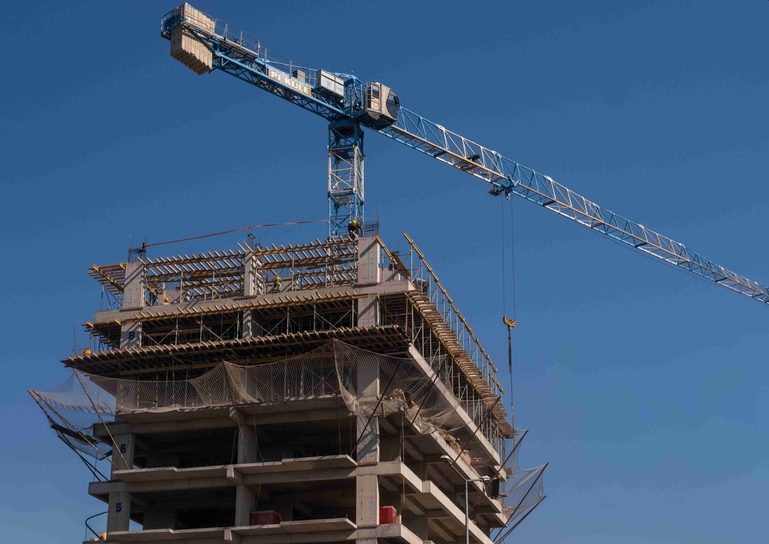
The BCP’s banking bulletin shows the housing portfolio growing every year. In August 2026 the portfolio was 25.5% above a year earlier. Credit to the private sector as a whole grew 16.59% over the same period, the BCP’s August indicators show, though the two measures cover different segments. The wider economy grew 5.7% in the first half of 2026, the BCP reports. Construction is also expanding, with record municipal income from building approvals in April.
How Che Róga Porã works
Paraguay Ministry of Urban Planning, Housing and Habitat runs Che Róga Porã, meaning “my beautiful home” in Guaraní language, now in its third version. The Financial Development Agency (AFD), a state-owned second-tier bank, provides the funds. As a second-tier bank, it does not lend to the public. It supplies banks, finance companies and co-operatives, which approve and issue the loans.
Applicants must not own a built property, and neither may their spouse or partner. Paraguay’s minimum wage is ₲3,044,000 per month, about US$510 at ₲5,973 per US$. Household income must fall between one and nine minimum wages, roughly ₲3 million to ₲27 million. Borrowers must be aged 18 to 75 and show verifiable income. Paraguayans living abroad can also apply if they earn up to US$7,000 a month, using a trust-based (fiduciary) guarantee.
Loans are in guaraníes (₲), Paraguay’s national currency, and run for up to 30 years. The rate is up to 6.5% for households earning one to six minimum wages, and up to 9.9% for those earning six to nine. Monthly repayments cannot exceed 40% of household income. By comparison, the average rate on guaraní loans from banks and finance companies was 15.96% in August, the BCP reports. In Asunción and the area around it, a loan can reach ₲837.1 million (about US$140,000) for a property worth up to about ₲1.16 billion (about US$194,000).
AFD president Stella Guillén calls Che Róga Porã the agency’s flagship first-home programme in interviews with local media. AFD first-home loans approved between January and July 2026 reached 3,734 beneficiaries, more than in any full year since 2022. A single lender approved 1,290 of them in January.
Where Paraguay’s housing market gap opens
Wagner’s analysis uses the 2025 household survey of the National Institute of Statistics. It also draws on September asking prices from 14 apartment developments. These are list prices, not final sale prices, because Paraguay has no public register of apartment transactions. A median one-bedroom apartment of about 42 m² is listed at US$65,750. A median two-bedroom of 72 m² is listed at US$105,600, or about ₲631 million.
Consider a couple earning ₲5.6 million (about US$940) per month together, exactly in the middle of couples who rent in Greater Asunción. Repaying 40% of that income over 24 years at 6.5% supports a loan of ₲326 million. That leaves ₲304 million (about US$51,000), or 48% of the price, to be saved. Putting aside 20% of income, the couple would need 22.7 years.
The calculation assumes their savings only keep their value, without investment returns. The programme finances up to 80% of a price, but income caps this couple’s loan far below that. Longer terms do not help: stretching the loan from 20 to 24.3 years added no two-bedroom buyers, according to the analysis. Those who can save the shortfall within five years already earn enough to cover the repayments.
What average loans can buy
Average loan figures point the same way. Between January and July, Che Róga Porã approved 3,512 beneficiaries nationwide, with an average loan of ₲301 million (about US$50,400). That nearly covers the ₲314 million a median one-bedroom requires after a 20% deposit. It covers only about 60% of the ₲505 million a two-bedroom needs. The average includes houses as well as apartments.
Many buyers are filtered out earlier. About 42% of potential buyers earn less than one minimum wage, the programme’s floor. Of those within its income band, three in ten cannot document their earnings.
Currency also matters. Most new apartments are priced in US dollars, while buyers earn in guaraníes. The guaraní has strengthened this year, from ₲6,228 per US$ at the start of 2026 to ₲5,962 in early August, which eases that exposure. A reversal would widen the gap.
Smaller apartments outside the capital fit best
Prices vary sharply by location. A median one-bedroom costs US$57,000 in cities such as Luque, San Lorenzo and Lambaré. In Asunción this median one-bedroom cost is US$95,210.
At the lower one-bedroom price, 49,716 singles and couples could save the deposit within five years. That is 18.2% of potential buyers, more than five times the number for a median two-bedroom. The average Che Róga Porã loan covers 110% of the loan such an apartment requires.
What could narrow the gap
The analysis suggests lenders could assess the income of self-employed workers who do not contribute to a pension fund. For policymakers, interest rates, apartment prices and income documentation matter more than loan terms, it concludes.
For now, the housing market in Paraguay works best for smaller, lower-priced apartments outside the capital. There, income, savings and programme loans already line up.