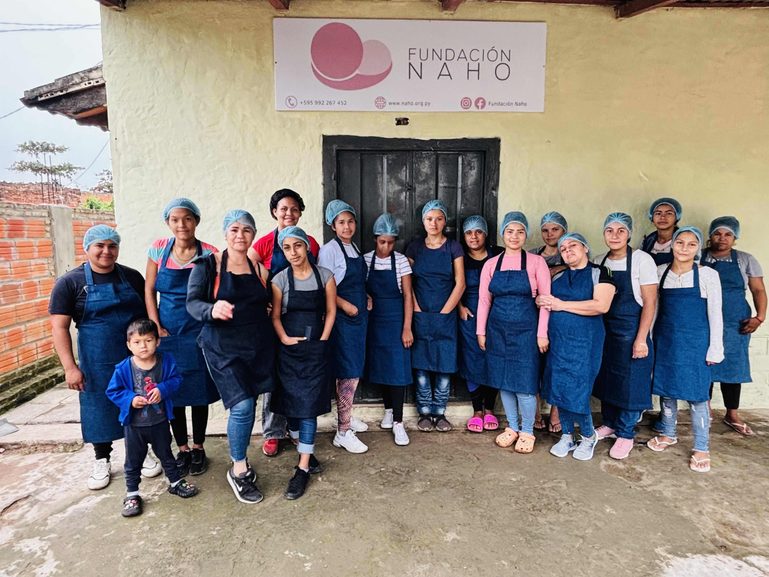

Paraguay has the highest adolescent fertility rate in the Southern Cone, with 72 births per 1,000 women aged 15 to 19. Behind those numbers are stories of school dropout, exclusion from the labour market and cycles of poverty that can repeat across generations. It is within this context that Fundación Naho was born.
Working from the Bañado Sur neighbourhood of Asunción, the organisation supports adolescent mothers in vulnerable situations through education, personal development, technical training, psychological support and entrepreneurship.
Since its creation in 2017, Fundación Naho has accompanied more than 1,100 women. Sixty-four have completed its full programme and 24 have secured formal employment. For founder Rebeca Mendoza, however, the impact goes beyond those figures. “We work with her, but the impact multiplies indirectly. Because she can access a decent wage. Because her child does not have to live through what she lived through. That, to me, is an enormous impact.”
Breaking the cycle
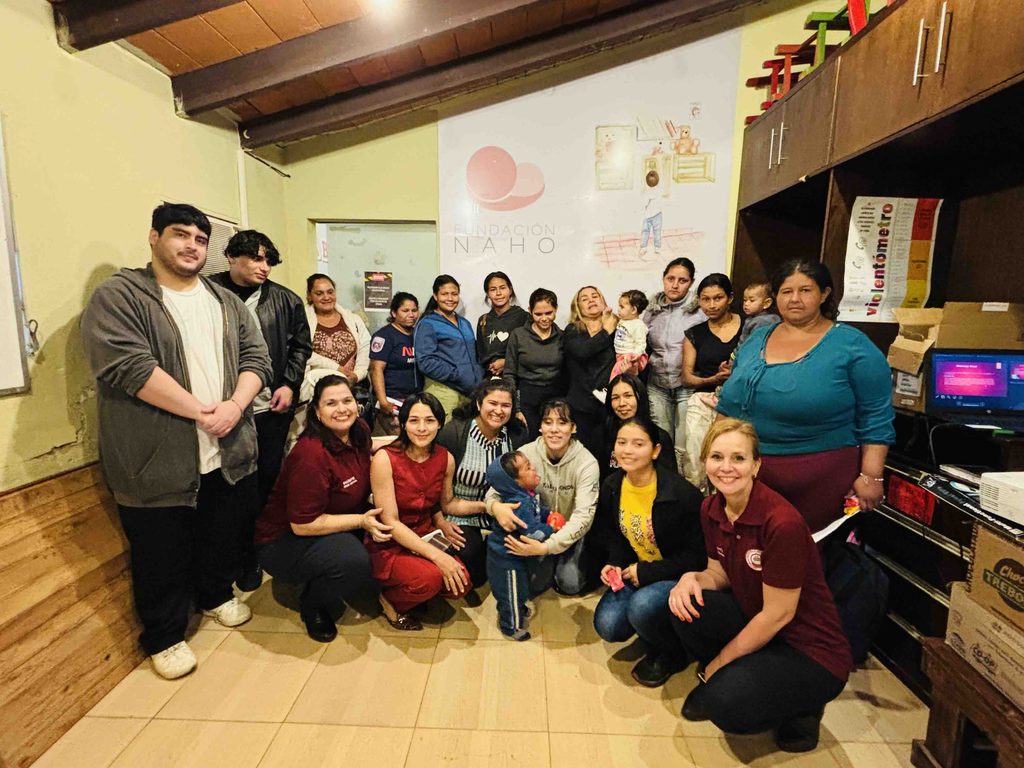
The idea for the foundation emerged while Rebeca was involved with a home for children in situations of abandonment. She noticed a pattern among its young residents: when they turned 18, they had to leave without an education, adequate tools or, in many cases, sexual health guidance. “They leave and fall pregnant, and the cycle starts again,” she tells The Asunción Times.
Rebeca had already gained experience working with vulnerable populations at Fundación Paraguaya. Before establishing Naho, she made a point of getting to know the community she wanted to support, building the project from the inside out.
Cateura, a neighbourhood of Asunción, became the starting point because of its high levels of vulnerability. Rebeca’s first beneficiary came through María, a local woman who took her door to door to meet families. “When I arrived in Cateura, I met a woman called María, who was the one who knew the neighbourhood. She came with me door to door. That is how we invited the first beneficiary. Then they started calling their friends.”
A programme that grew with its community
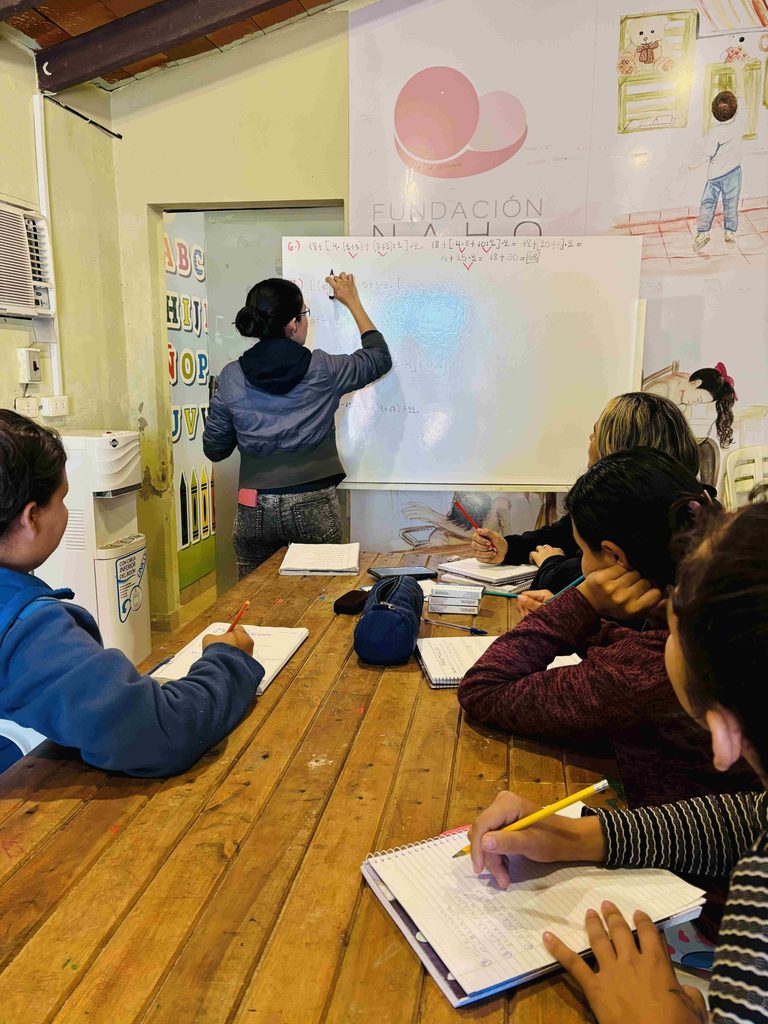
Fundación Naho initially focused on entrepreneurship, but the needs of participants quickly showed that more was required. When Rebeca discovered that some women could not read or write, academic support became a central part of the programme. Today, the programme runs from February to December and combines educational reintegration, personal development, technical training and psychological support.
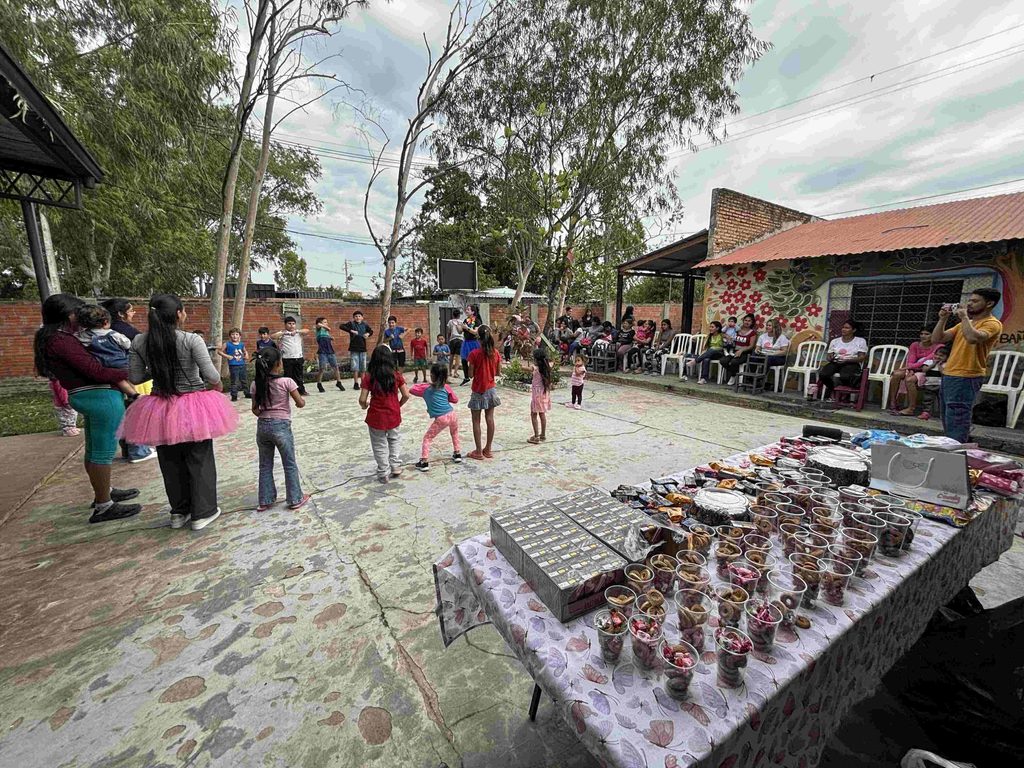
The foundation also provides a space within a community centre where participants can leave their children while attending activities. This removes one of the most common barriers to participation. The work also addresses family planning and sexual health. Rebeca says this remains particularly challenging in a deeply patriarchal environment.
Many of the women come from families spanning three generations of adolescent mothers. “When an adolescent mother has one child, it is still possible to get ahead. With two children it becomes harder. With three children it is practically impossible.”
For Rebeca, education is therefore central to breaking the cycle. “Finishing school is already an enormous achievement. Because that guarantees that if she wants to go out and find work, she can access a decent wage. And the chance to progress is so much greater.”
A name with a story
The foundation’s name comes from Nahomi, a girl Rebeca and her then husband met while sponsoring the children’s home. Nahomi was two years old but had the development of a six-month-old baby. She had been born to an adolescent mother living with HIV and had survived several serious health crises. “On two or three occasions she almost died, either from health complications or malnutrition,” Rebeca recalls.
They began visiting her on weekends and arranging her medical appointments. Over time, the bond became so strong that they decided to adopt her. Today, Nahomi is 13 and learning to read, an achievement Rebeca sees as a battle won against the odds. Although Rebeca has largely kept the story private, that experience became part of the driving force behind nearly a decade of work.
Keeping the work going
Sustaining the foundation remains its greatest challenge. “It is a day-to-day, month-to-month challenge.” Without a fixed source of income, Fundación Naho depends on fundraising activities, private donations and support from companies and international organisations. Strategic partnerships help cover costly services such as medical check-ups and technical training.
“There were times we had to go out and knock on doors ourselves, but there were also times when companies came knocking on ours.” Nearly a decade into the work, Rebeca has also changed how she understands success. “Once you understand that the change lies within her and not within you, your frustration fades.”
For her, the ultimate goal is not simply to support one woman, but to help prevent the same circumstances from being passed to the next generation. “The greatest thing you can do for a person is not to share your wealth, but to help them find their own.” For more information or to support the work of the foundation you can check out Fundación Naho’s website.