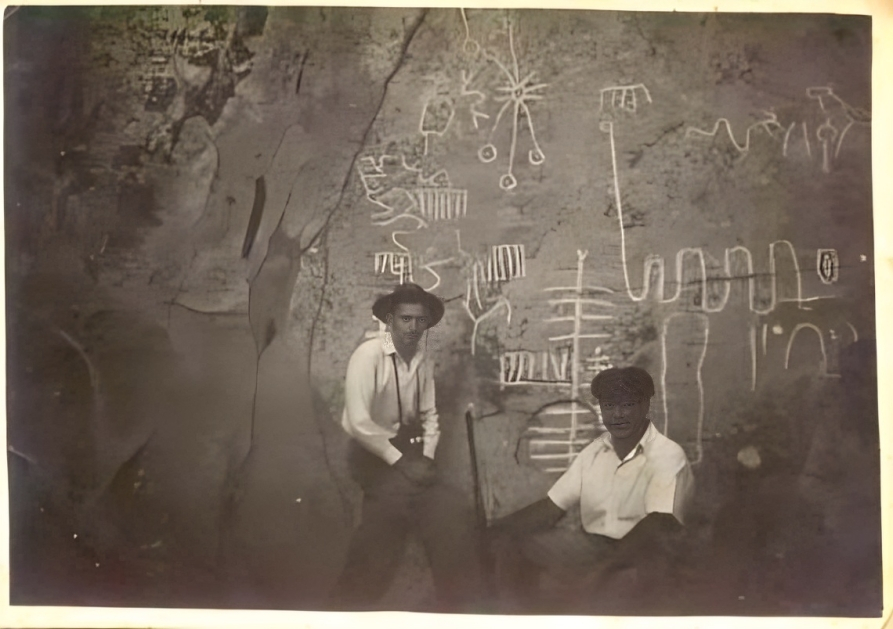

Long before Paraguay existed as a nation, people carved jaguar tracks into the rocks of the Yvytyrusu hills. The name of the site, Ita Letra, is Jopara (a mix of Spanish and Paraguay’s native language Guaraní) for “stone with letters.” Yet no letters appear there at all, only tracks and geometric figures nobody has deciphered. That gap between name and reality is the first thing worth knowing about Paraguay’s most important rock art site.
What and where is Ita Letra?
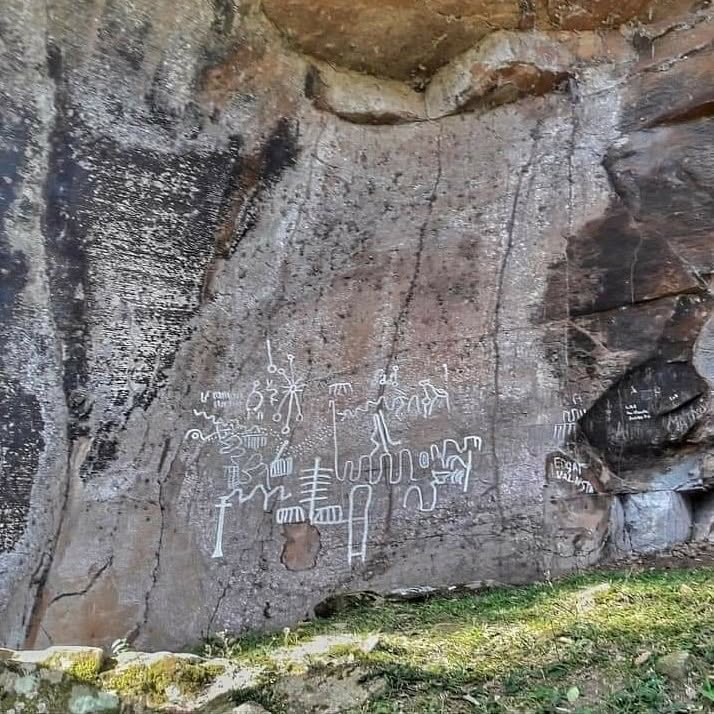
Ita Letra lies near Cerro Tororó, close to Villarrica, the capital of Paraguay’s Guairá Department, approximately 180 km from Asunción by road, roughly 2.5-3 hours’ drive. The site is proposed for UNESCO World Heritage recognition and forms part of a wider network of rock art across the Yvytyrusu and Amambay ranges.
The Paĩ Tavyterã people, an indigenous tribe of the area, consider several nearby sites sacred ancestral places.
The footprint style
Most Paraguayan rock art consists of petroglyphs carved directly into sandstone. Archaeologists call this tradition the “footprint style,” a term coined by Austrian archaeologist Oswalt Menghin in 1957. Carvers depicted jaguar, deer, and rhea tracks, snakes, parallel lines, and abstract geometric figures. Human footprints appear less often. Makers struck harder rocks against the softer sandstone, producing the deep, wide grooves that distinguish these engravings.
Researchers have documented the same style across the Río de la Plata Basin, in Argentina and Brazil, pointing to shared cultural roots among prehistoric populations.
Discovery, and a debunked myth
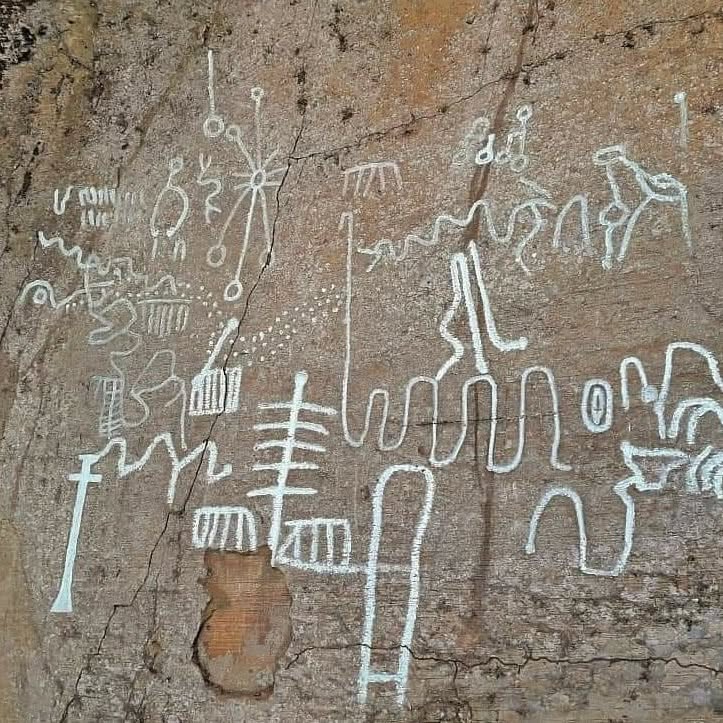
Formal study began in 1973, when a Ministry of Public Works delegation surveyed engraved sites in the Amambay range. Some early writers attributed the carvings to Viking visitors. Later archaeological research rejected that theory outright: the petroglyphs are the work of Indigenous populations who occupied the region long before Europeans arrived.
Archaeologists José Antonio Perasso and Rosa Villamayor surveyed sites within Cerro Corá National Park through the 1980s and 1990s. In 1984, Perasso and Luciana Pallestrini documented the Cerro Tororó site, originally named Fernandez Site, later renamed Ita Letra. Paraguay now counts thirteen catalogued footprint-style sites: eleven in caves or rock shelters, two in the open air.
Conservation under threat
Ita Letra is the best known of these sites, thanks to easy access and cooperative landowners. That accessibility has a cost. Visitors have carved their own names over existing petroglyphs, and unsupervised attempts to “enhance” the carvings have damaged archaeological evidence.
Ita Letra and nearby Cerro Polilla now sit within the Yvytyrusu Managed Resources Reserve, established in 2001. Paraguay formally recognised both sites as National Cultural Heritage in 2018.
A rare convergence
Research continues into the origins and spread of the footprint style, and its links to similar traditions elsewhere in South America. Some researchers hypothesise that the Amambay and Yvytyrusu ranges played a central role in spreading the style across the Río de la Plata Basin. Comparable sites, such as Cueva de las Manos in Argentine Patagonia, share the same era and region, though Ita Letra’s status remains uniquely tied to Paraguay’s own Indigenous heritage.
Ita Letra is open for public viewing daily, from 08:30 to 17:00. Find more day trips around the region at The Asunción Times.