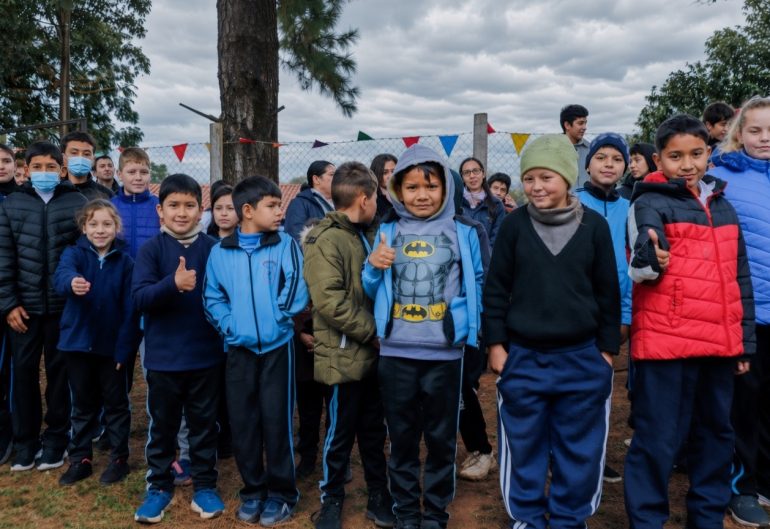

Approximately 1.8 million children and adolescents aged 0 to 17 reside in Paraguay, representing 30% of the country’s total population. This data comes from the 2025 Annual Permanent Continuous Household Survey (EPHC), with key sociodemographic indicators released by the National Institute of Statistics (INE) surrounding Paraguay’s Day Of The Child on 16 August.
The survey provides a detailed overview of the living conditions for the nation’s youth. The findings are based on updated population projections from the 2025 revision, which incorporates data from the most recent national census to ensure accuracy.
High rates of identification and school attendance
According to the INE’s report, a vast majority of the youth population is officially registered. The data shows that 94.3% of individuals aged 0 to 17 possess a national identity card. This is a crucial factor for accessing state services and education.
In the educational sphere, 96% of children and adolescents between the ages of 5 and 17 attend a formal teaching institution. The highest rate of attendance is found in the 10 to 14 age group, at 98.4%. This is closely followed by the 5 to 9 age group, with a 97.7% attendance rate. However, for older adolescents aged 15 to 17, this figure drops to 89.1%.
Disparities in health and internet access
The survey also highlights significant gaps in access to essential services, particularly between urban and rural areas. Nationally, only 27.3% of the population under 18 has health insurance. The disparity is pronounced when comparing residential areas, with 33% coverage in urban zones compared to just 15.3% in rural parts of the country.
A similar divide is evident in digital connectivity. Seven out of every ten households with children and adolescents aged 10 to 17 have an internet connection nationwide. Yet, this figure masks a significant urban-rural gap. In urban areas, internet access reaches 83.5% of these households, while in rural regions, the number falls to 40.6%.
Informing public policy
The INE stated that these indicators are a vital resource for the development, monitoring, and evaluation of public policies. The goal is to guarantee the rights of children and adolescents and to address the existing inequalities between different regions of the country.
It is important to note that the results of the EPHC 2025 Annual survey do not include the populations of the Boquerón and Alto Paraguay departments. These two Paraguayan departments, located in the vast and sparsely populated Chaco region, were omitted from the survey. Furthermore, the data does not cover indigenous communities or individuals living in collective housing.