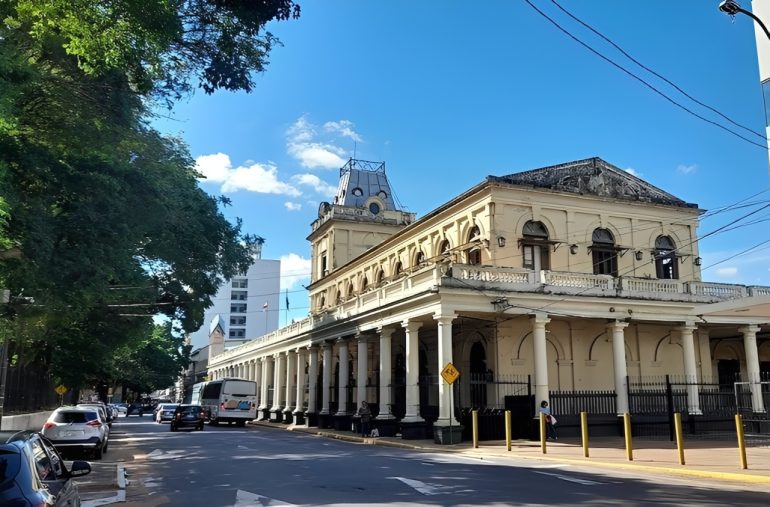

Walking through the historic centre of Asunción means moving through a city where different periods of history exist side by side. Between busy streets, local businesses and modern developments, there are still buildings that preserve the memories of Paraguay’s most important transformations: the modernisation efforts of the nineteenth century, the reconstruction after the War of the Triple Alliance, and the gradual evolution of Asunción’s architecture into the city that it is today.
Yet many of these are hidden buildings, which remain unnoticed by those who pass them every day. Behind old facades, inner courtyards and architectural details are stories that reveal how Asunción was shaped over time.
A city shaped by nineteenth-century modernisation
Asunción’s architecture reflects the different political and social changes Paraguay experienced throughout its history. During the government of Carlos Antonio López in the mid-nineteenth century, the country began an ambitious process of modernisation. This period included infrastructure projects, technical education and the introduction of new technologies. During this time, public buildings and private residences began incorporating European architectural influences. Particularly, through the arrival of foreign professionals who brought new technical knowledge and design ideas.
Although the War of the Triple Alliance (1864–1870) caused widespread destruction and changed the country’s trajectory, Asunción was gradually rebuilt with new influences. The result is a capital where colonial structures, neoclassical buildings, art nouveau details and art déco designs exist within the same urban landscape.
Central Railway Station: A symbol of a modern Paraguay
One of the most significant reminders of this era is the Central Railway Station of Asunción, officially known as the Carlos Antonio López Railway Station. Opened in the nineteenth century, the station formed part of one of South America’s earliest railway systems and became a symbol of Paraguay’s modernisation project. For decades, it connected the capital with other parts of the country, transporting passengers and goods while supporting economic development.
The station’s design reflects the European influences common during the period, combining practical functions with decorative elements. More than a transport building, the venue represented Paraguay’s aspirations for technological progress and greater connection with the outside world. Although trains are no longer part of everyday life in the capital, the station remains an important reminder of a period when railways represented the future of the nation.
Manzana de la Rivera: houses preserving the city’s memory
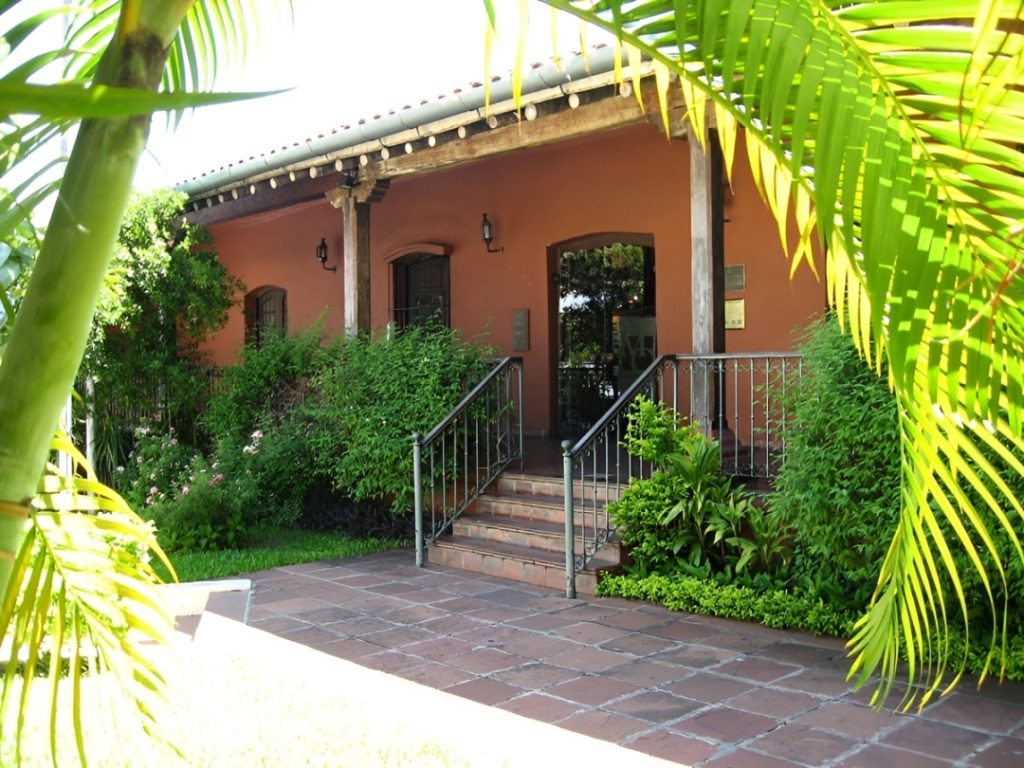
Among Asunción’s most valuable historic areas is Manzana de la Rivera, a restored group of traditional houses located opposite the Government Palace.
The complex includes buildings from different periods, including Casa Viola, considered one of the oldest preserved houses in the city. Its rooms, corridors and internal courtyards offer a glimpse into domestic life in Asunción during the eighteenth and nineteenth centuries.
Today, Manzana de la Rivera operates as a cultural centre, demonstrating how heritage buildings can be preserved while continuing to serve the community.
Casa de la Independencia: a small building with a major history
Just a short walk away is Casa de la Independencia, one of Paraguay’s most important historical landmarks.
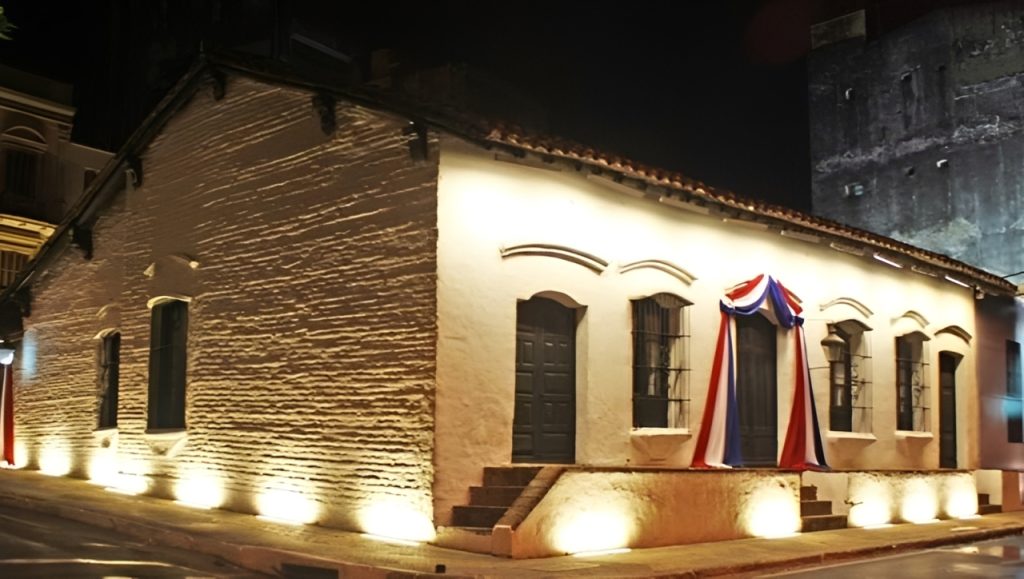
Built during the colonial period, the house became the meeting place of Paraguayan patriots who planned the movement that led to independence in 1811. Its modest appearance contrasts with the importance of the events that took place within its walls.
Today, the building operates as a museum. There, one can find objects, documents, and furniture connected to the early years of Paraguay as an independent nation. Casa de la Independencia shows that the importance of a historic building is not always measured by its size or grandeur, but by the stories and memories it carries.
Hidden buildings and art déco traces across Asunción
When people think about Asunción’s historic architecture, colonial houses and nineteenth-century landmarks often receive the most attention. However, the city also preserves notable examples of art déco architecture, particularly from the first decades of the twentieth century. Known for its geometric shapes, symmetrical designs and association with modern urban life, art déco arrived in Paraguay during a period of expansion and transformation.
Several buildings in the city centre still display art déco features through their façades, balconies and decorative details. Although many now serve different purposes, their designs reflect a time when Asunción sought to present itself as a modern capital influenced by international trends. These hidden buildings reveal another layer of the city’s history, one connected to changing lifestyles and a growing urban identity.
The challenge of preserving a historic city
Asunción’s architectural heritage faces several challenges. Urban growth, limited maintenance and changes in land use have placed some historic buildings at risk. However, recent restoration projects and cultural initiatives have highlighted the importance of protecting these spaces and giving them new roles within the city. Preserving historic buildings does not only protect the past; it can also support cultural activities, tourism and the revitalisation of neighbourhoods.
Across Latin America, many capitals have successfully transformed historic districts by combining conservation with new uses. Asunción has similar potential thanks to the variety and richness of its architectural heritage.
Behind the facades
Exploring Asunción’s hidden buildings and forgotten architecture means discovering a different side of the city. Each building tells part of Paraguay’s story: the ambitions of nineteenth-century modernisation, the consequences of war, the search for national identity and the continuous transformation of the capital. For visitors and residents alike, walking through the historic centre with a more attentive eye can reveal a version of Asunción that often remains unnoticed. These buildings are not simply old structures; they are living records of the people, decisions and events that shaped modern Paraguay.