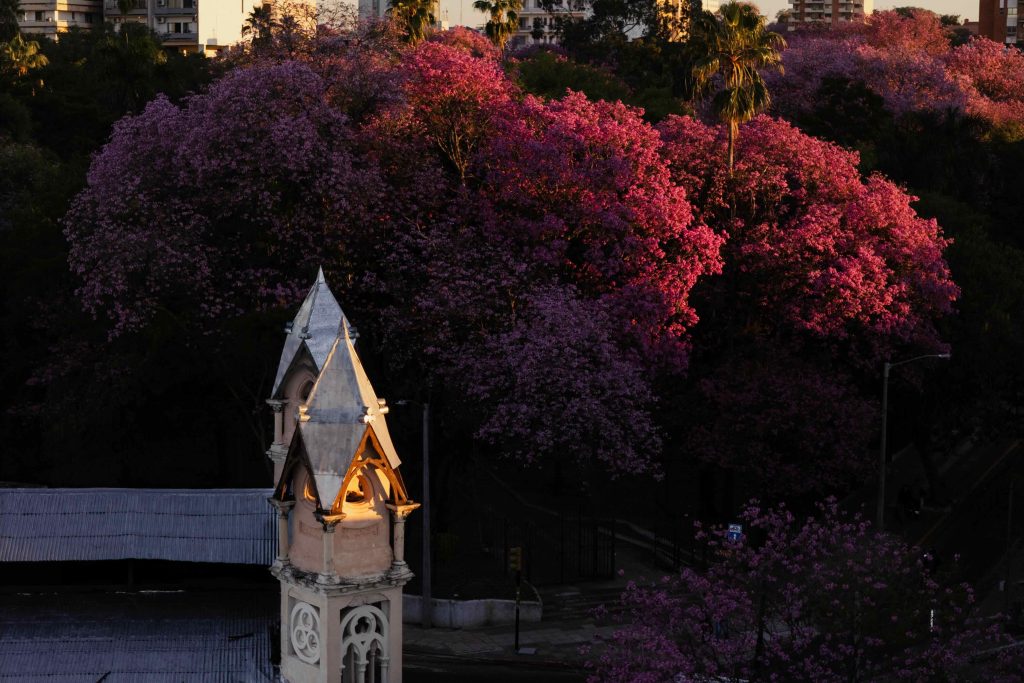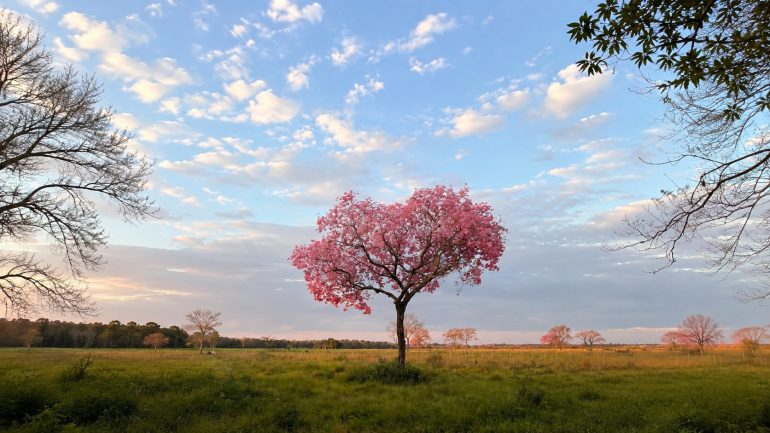

There is a moment each winter when Paraguay seems to remember to look up. The lapacho, tajy, the country’s national tree, begins to bloom, covering otherwise bare branches in pink, yellow and white. For a few weeks, streets, gardens and rural roads are transformed. The season is brief, but for many in Paraguay, it is something they actively wait for.
Last year, The Asunción Times looked at the history, mythology and ecological importance of the lapacho. This year, two people who spend their free time photographing Paraguay’s beauty offered a different perspective: what happens when we stop to actually look at it? Meet Clara Jara and Matías Barrios.
Clara Jara: One tree, then another

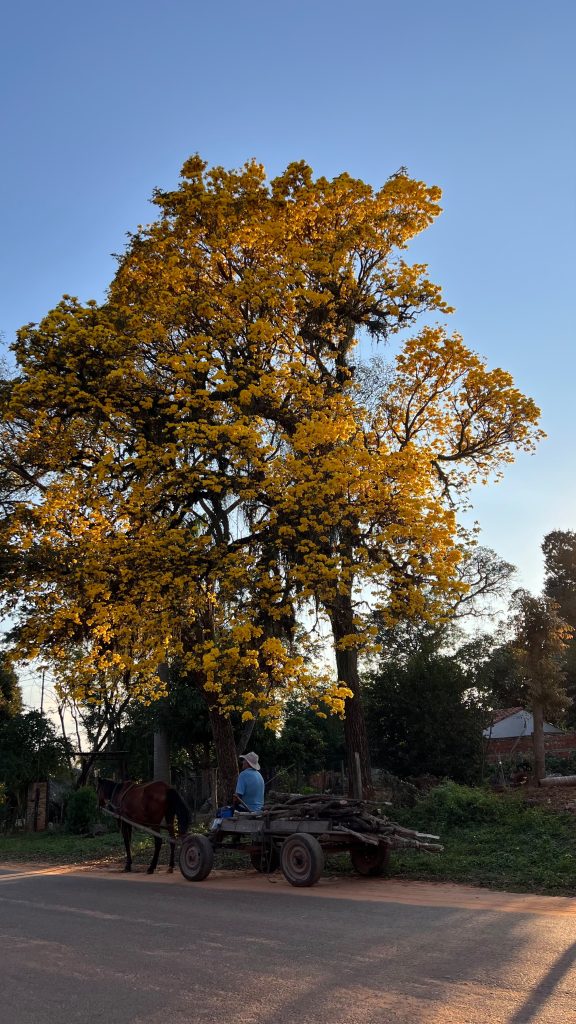
For Clara Jara, 28, it started with a lapacho she happened to spot on an ordinary day. A psychology graduate with a passion for photography and audiovisual work, she was heading out for breakfast with her partner in San Pedro when a pink lapacho in full bloom caught her eye.
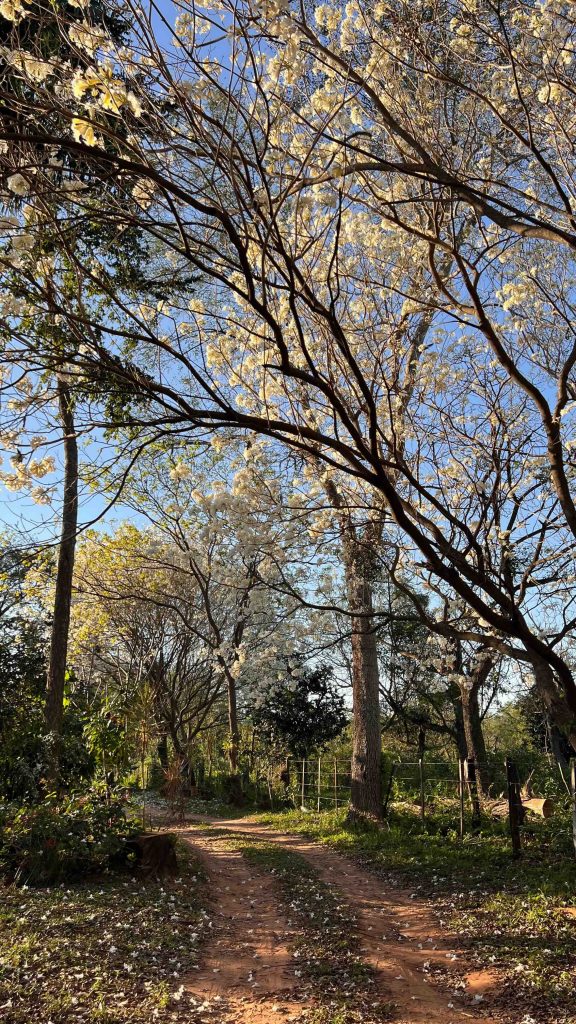
One photograph became a video. One tree became several. Soon, the couple were riding around on a motorcycle looking for more, travelling through San Pedro and nearby communities in search of the three colours.
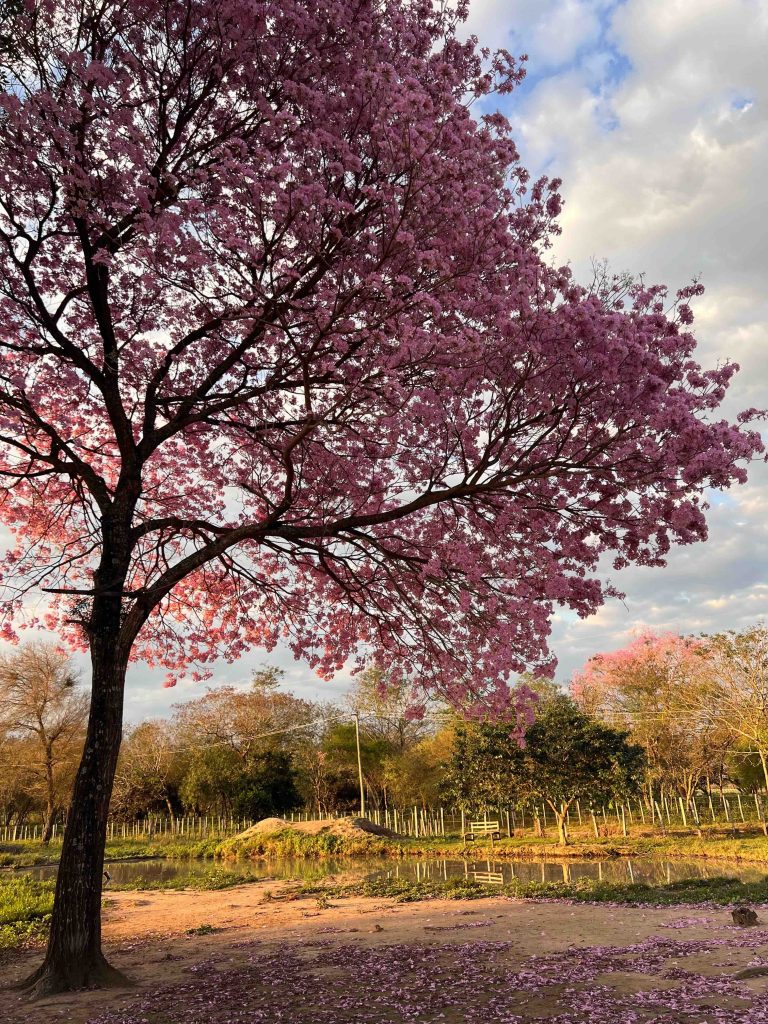
“I realised that the magic was right there in front of us,” Clara says. “We have to leave what we are doing for a moment and look around.” The experience changed the way she saw the season. She began researching lapachos, photographing them and sharing what she found.
“It feels like the beauty of the lapacho is fragile, with a simple storm, everything ends. You have to appreciate it in that moment. Standing beneath one is like “walking on a carpet of flowers.”
A tree planted for the future
Clara lives in a wooden cabin her father built with the help of carpenters, and says the lapacho wood is already part of her everyday life. Her father has now started his own project: planting a stretch of lapachos in the city of San Pedro, where the family’s farm is located.
San Pedro de Ycuamandiyú, around 330 kilometres from Asunción by road, is far from the capital, but Clara’s videos have carried the beauty she found there much further. People began sharing her videos and contacting her. Some Paraguayans living abroad told her that seeing the lapachos made them emotional and nostalgic.
“I am taking those people with me in my heart”. She manifests the season has become a reminder to appreciate something that is both magnificent and temporary.
Matías Barrios: Seeing the city differently

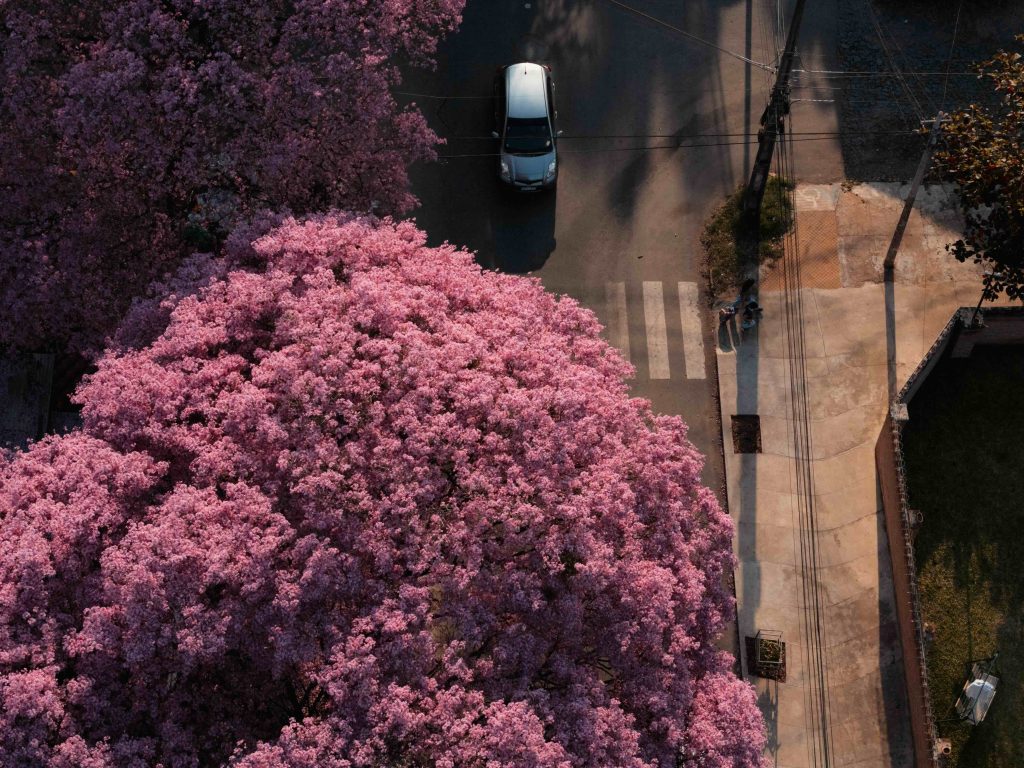
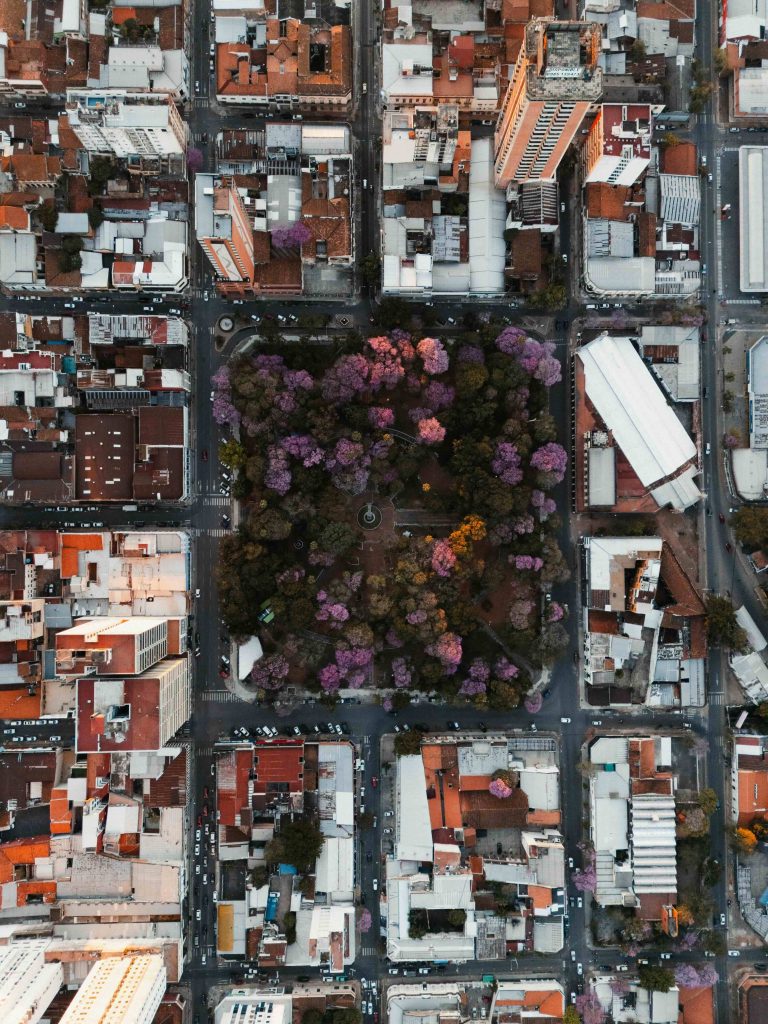
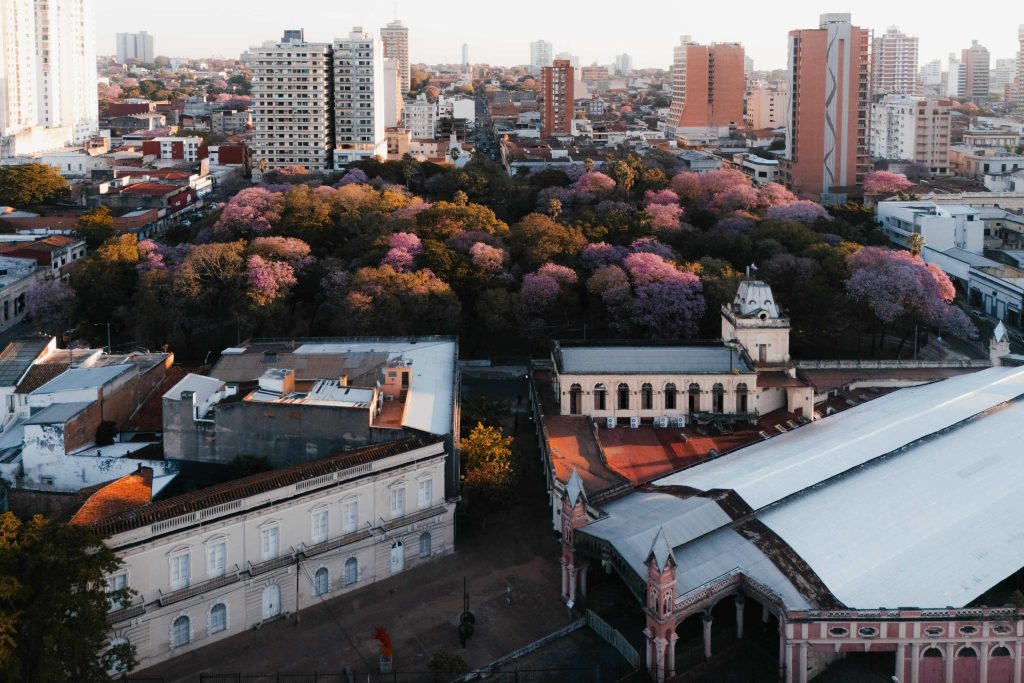
In Asunción, architect and photographer Matías Barrios, 30, has been looking at the lapacho from another angle. He searches for public spaces where the trees can be appreciated, photographing them in places such as the Cerro Lambaré and the Plaza Uruguaya. He has noticed that people do not only photograph the trees as they pass them. Some deliberately go to sit beneath them and contemplate them. “I think we should all be doing that,” he says.
For Matías, the lapacho represents “alegría colectiva”, or, in English: collective joy. “During the whole year we do not realise it is there and suddenly it explodes in colour.”
But his architectural eye also makes him notice what happens around those trees. He points to lapachos that have been heavily cut back so cables can pass through, and to the scarcity of public spaces where trees can simply be enjoyed.
He remembers travelling to Japan and seeing how cherry blossoms are incorporated into public spaces, creating places specifically designed for people to gather beneath the trees. Paraguay, he believes, could think more deliberately about its own relationship with the lapacho.
Learning to enjoy what is already ours
His interest in the lapacho is part of a larger project about how people in Paraguay experience the spaces around them. “We do not have much of a culture of taking ownership of public spaces. We do not need to go too far to live something beautiful. Beautiful things happen here.”
Clara and Matías approach the lapacho from different directions: one through psychology and an emotional response to fleeting beauty, the other through architecture and questions about how cities make room for that beauty. But both have ended up doing something remarkably similar.
They stopped. They looked. And then they picked up a camera. From San Pedro to Asunción, they have been sharing their own views of Paraguay at a time when its winter landscape offers something increasingly precious: a reason to pause and appreciate what is already here.
Maybe we do not need to stop and smell the roses. We just need to stop for the lapachos. What does the lapacho mean to you? Have you captured a moment during lapacho season that you are especially proud of? Share your photographs with us through The Asunción Times Instagram account, or email us at editor@asunciontimes.com, We would love to see Paraguay through your eyes.