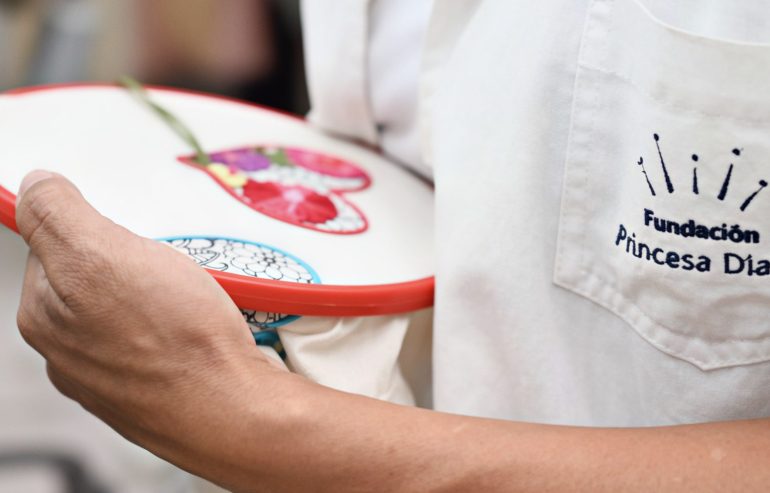

The Princesa Diana de Francia Foundation employs fashion to combat the social inequities affecting Paraguayan women in vulnerable situations. Since 2015, creative director and project coordinator Marcela Abriola has helped lead a holistic approach promoting family sustainability by empowering women through social integration.
Princesa Diana de Francia Foundation history
The foundation traces its origins to 2009. Diana of Württemberg, a visual artist married to a German duke, became acquainted with Paraguay through Paraguay’s ambassador to Germany. When she visited Paraguay, she was struck by the large number of children living on the streets.
Initially, the foundation focused on supporting children through artistic education in choir, ceramics, embroidery, glass fusion, and more. By 2015, organisers recognised lasting social change required alternative avenues. Abriola says, “The foundation realised that it was necessary to work with mothers. Why with mothers? Because in Paraguay, the vast majority of mothers are heads of household.”
A collaboration with the Casa del Buen Pastor prison
The foundation expanded to Casa del Buen Pastor prison in Asunción. “We began working there in 2015 with incarcerated women who had issues or conflicts related to substance use and addiction, and we developed a recycling project.”
Partnering with the Ministry of Justice, they utilised a sewing area to create penitentiary brand Muã (firefly in Guaraní). The initiative gained international recognition in 2017 when organisers invited it to participate in World Fashion Week Malaysia. Furthermore, Princesa Diana de Francia’s own brand came to life as D.Diane, prioritising “fashion with purpose,” producing two collections per year.
Adapting is crucial to the organisation. In 2019, Abriola saw formerly incarcerated women needing assistance in reconstructing their lives. So, they created a learning center outside the penitentiary.
Learning by doing and earning
At the centre of the foundation’s work is removing barriers. “These women we work with, who are so wounded, so broken, do not have the opportunity to study or learn something. Being able to learn is a luxury, unfortunately. Many live in very precarious conditions, and many still experience violence.” Abriola explains “We are also talking about issues like substance use, human trafficking, and trans women. So we are dealing with very deep social problems.”
Addressing these problems starts with reintroduction to society. ”We created a system where they are paid to learn, and where after a period of 600 hours of training, they begin to be paid for being in the foundation, and also for producing. That’s why we say learning by doing and earning.”
This comprehensive approach includes providing a psychologist and social worker alongside technical training in sewing, embroidery, screen printing, sublimation, and handicrafts.
A metaphorical transformation through fashion and art
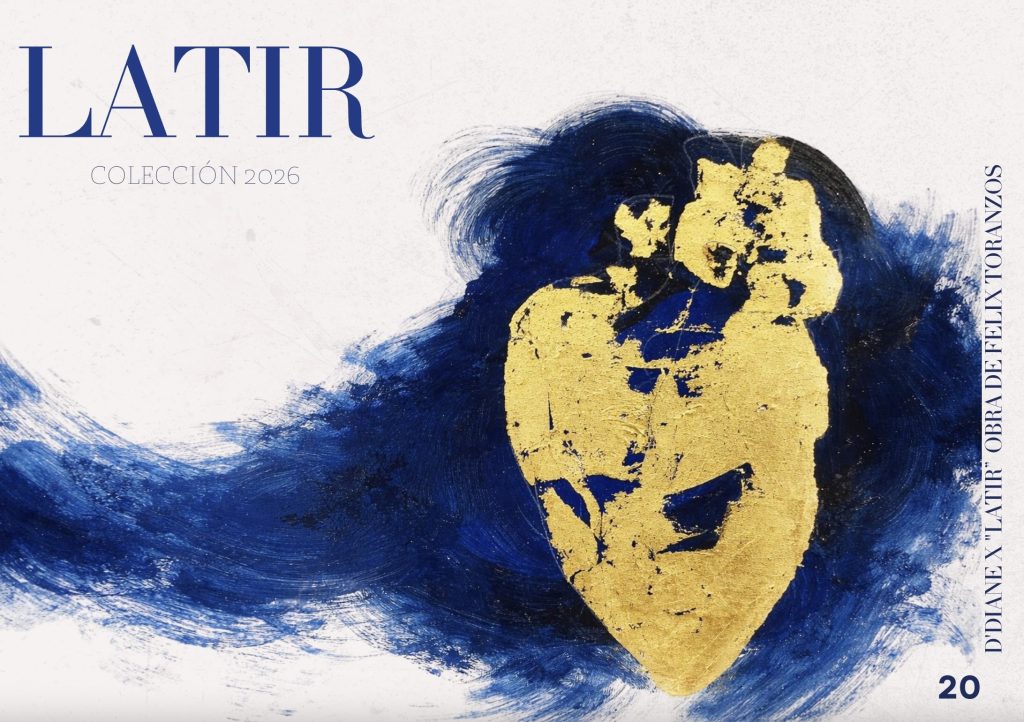
Each collection begins with concepts intended to resonate with participants’ personal journeys. The foundation incorporated Félix Toranzo’s Latir collection; “It has a white background, blue brushstrokes, and an anatomical golden heart.”
For Abriola, the symbolism is significant. “We found it perfect because it reflects what happens to these women: they arrive like a blank canvas, then are colored by deep blues, and finally shine with that golden heart when they regain their self-esteem.”
Textile waste into consistent opportunity
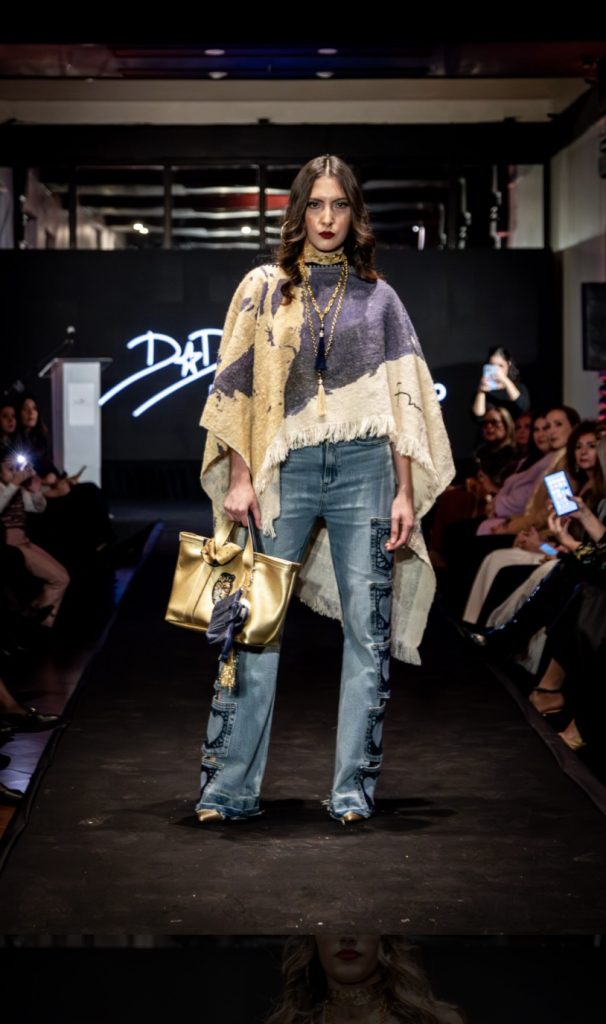
A circular economy model promotes environmental sustainability. “We have a patented technique here in Paraguay where we create fabric from textile waste, we call them “telar” fabrics.”
The initiative expanded through partnerships with private-sector companies. Included are jean factories, Yaguareté, LATAM Airlines, Toyotoshi, and Automac. The foundation repurposes unused uniforms, airline attire, and other discarded materials into new product lines. Companies can purchase the finished products for merchandising or resale, creating income-generating opportunities for participants while diverting waste from landfill.
Healing: rebuilding lives on the runway
For Abriola, most rewarding is “Without a doubt, the collections. It’s a magical time. There is room for play, surprises, and the women constantly amaze you. There is a beautiful energy and magic.”
Months of work are celebrated. “At the end of each collection, everything is shown in a fashion show with about 25–28 collaborative models. And the women who created the garments are the ones who walk the runway at the end. Seeing the result there, seeing them reconstructed, standing tall, smiling, proud of their work—that is the most beautiful part.”
From novices to entrepreneurs
Abriola shares, “Last week we completed a project with Spanish cooperation. Two women over 60 years old entered the program. They didn’t know how to sew at all. They completed the program and graduated in a ceremony where they received certificates and medals.”
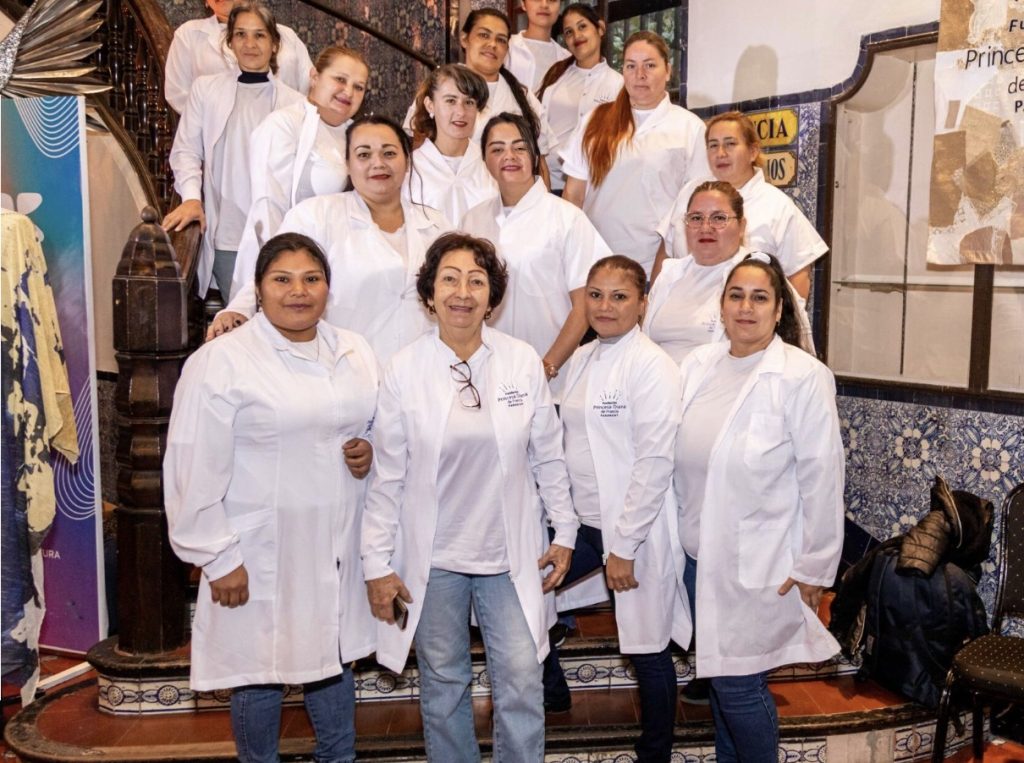
What followed moved beyond acquiring new skills. “The most beautiful thing is that they felt young again; they regained purpose, energy, and motivation. They started an entrepreneurial project. They became entrepreneurs with dreams and goals, and brought their families to see their achievement. We also surprised them by giving each of them an industrial sewing machine.”
These stories embody the purpose behind the foundation’s work. “That is success for us: a woman who arrives broken and, through sewing and fashion, regains emotional and technical skills to build a project, at any age.”
“It is a process, but wonderful”
Abriola says the greatest outcome is not measured in garments produced or collections presented. “They gain happiness. And they do it, step by step.”
Focus turns to strengthening the commercial side. Currently, the foundation works with about 60-80 women on average. As expansion continues to new work areas and seminars, the foundation endeavors to ensure sustainability of the programme. “In short, we are in a process of growth and opening new paths.”
To support their efforts, purchases can be made on The Princesa Diana de Francia Foundation website.