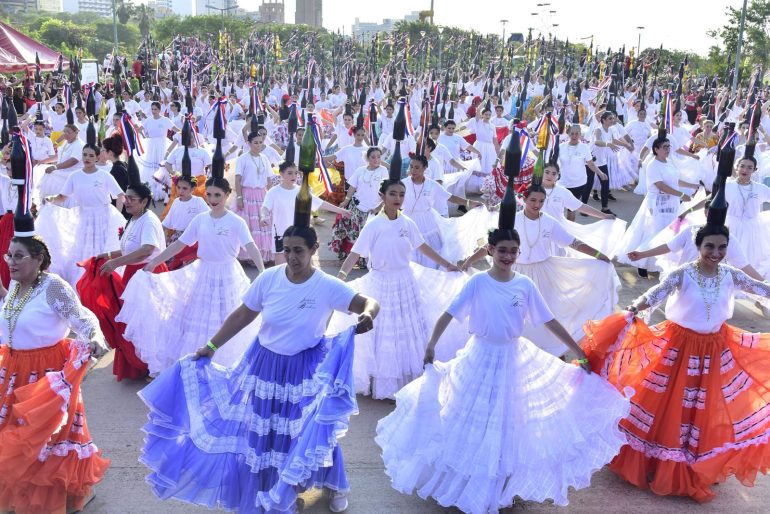

In Paraguay, a remarkable dance endures as a living legacy of past customs, where women in flowing skirts perform while balancing up to fifteen glass bottles upon their heads. This striking display of control and elegance reflects not only technical mastery but also a deep cultural tradition passed down through generations. Every year on 29 April the world celebrates International Dance Day. On this day, The Asunción Times dives into the story of Paraguay’s botelleras and their legendary bottle dance.
A dance defined by precision and control
Known as the bottle dance, this practice stands out for the precision and discipline it demands from its performers, referred to as botelleras. The choreographer shapes each choreography according to the dancer’s ability and their own creativity. It is typically performed to polkas, a lively musical genre that contrasts with the intense concentration required. Even if a bottle falls, the performer must continue until the end with composure and a smile.
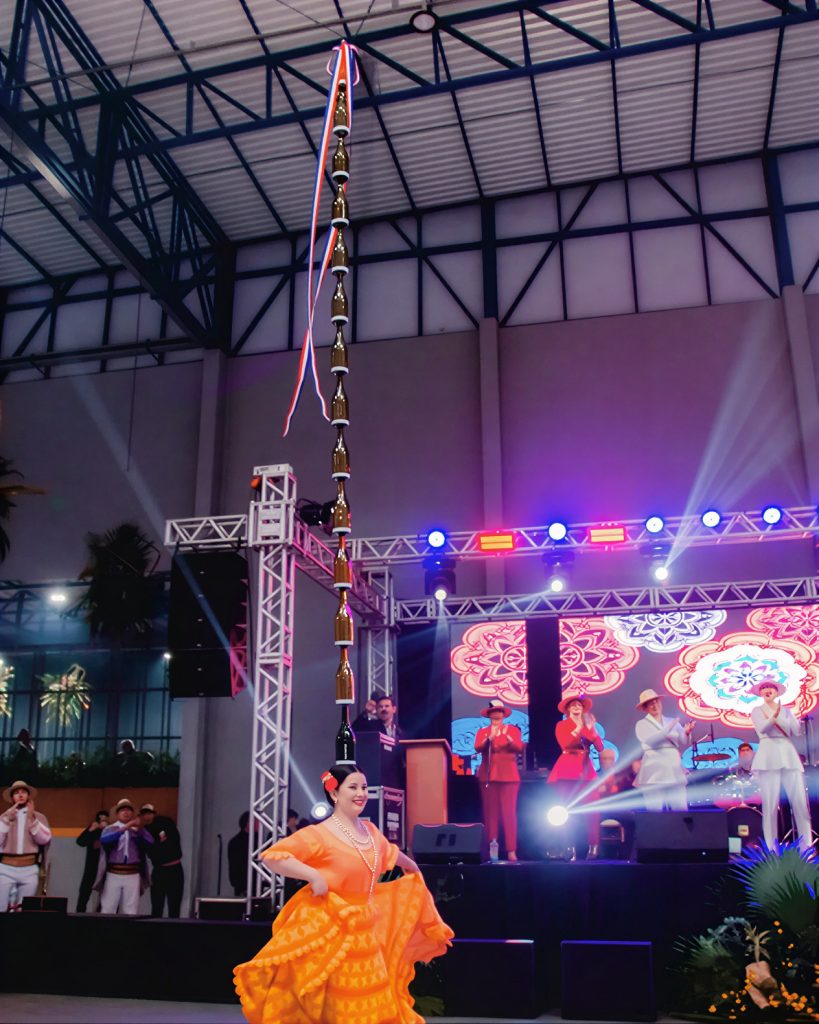
According to dance teacher Milva Castellani, the technique involves controlled and deliberate movements. Dancers bend their knees, walk in circles, squat, lie down, and turn upon themselves while maintaining an upright head and torso. Such movements require a high degree of focus and physical control.
The dance is also considered an academic discipline. Training often begins in childhood, first with balancing baskets, then jugs, and finally bottles. This gradual progression is necessary, as the practice can place strain on the neck and spine. Most dancers begin with a single bottle, increasing the number over time depending on their skill and confidence.
Performers deliberately make the first bottle heavier to improve stability, usually by filling it with sand. They carefully stack and fit the remaining bottles together. They often adorn the final bottle with a tricolour ribbon, marking the highest level achieved.
From everyday practice to cultural expression
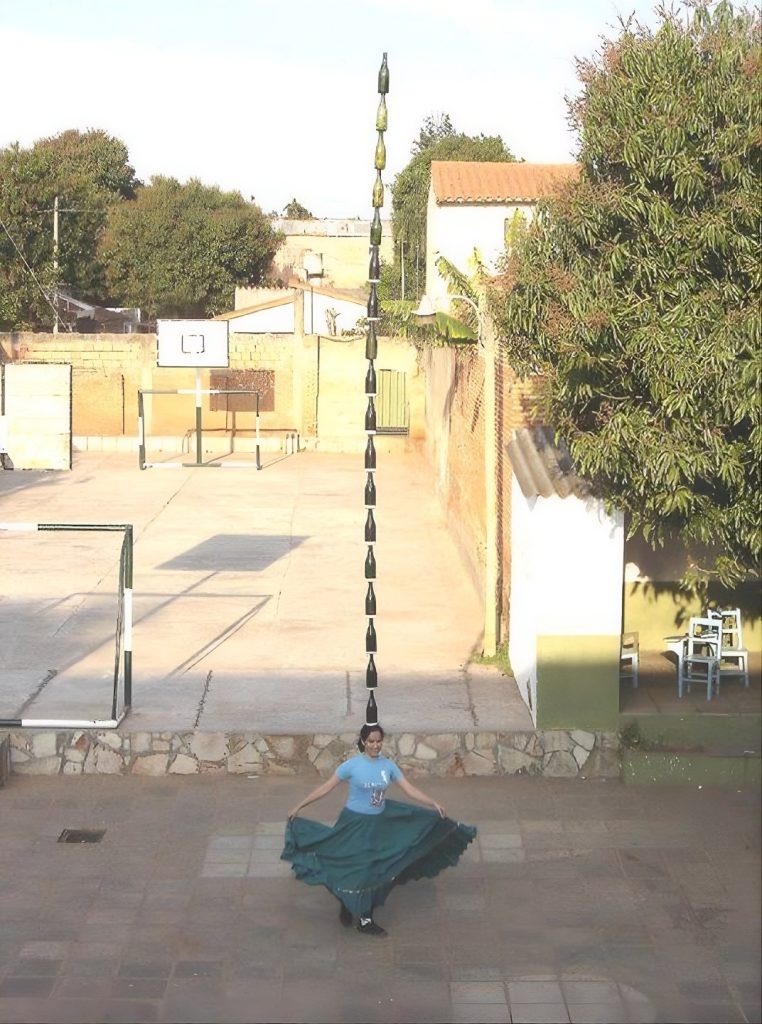
Everyday life likely shaped the origins of this dance. Historically, women carried loads on their heads, a practice that required balance and strength. Another possible influence is the galopera dance, in which a devout woman would offer water from a jug balanced on her head to pilgrims during religious festivities.
The traditional costume further reinforces its cultural identity. Dancers typically wear a typói, a light cotton blouse, and pair it with a long ñandutí skirt resembling a spider’s web. They often perform barefoot, known as py nandí, although some choose to wear shoes. They carefully arrange their hairstyles and accessories to keep the crown of the head clear, ensuring that they can balance the bottles securely.
A record that showcases cultural identity
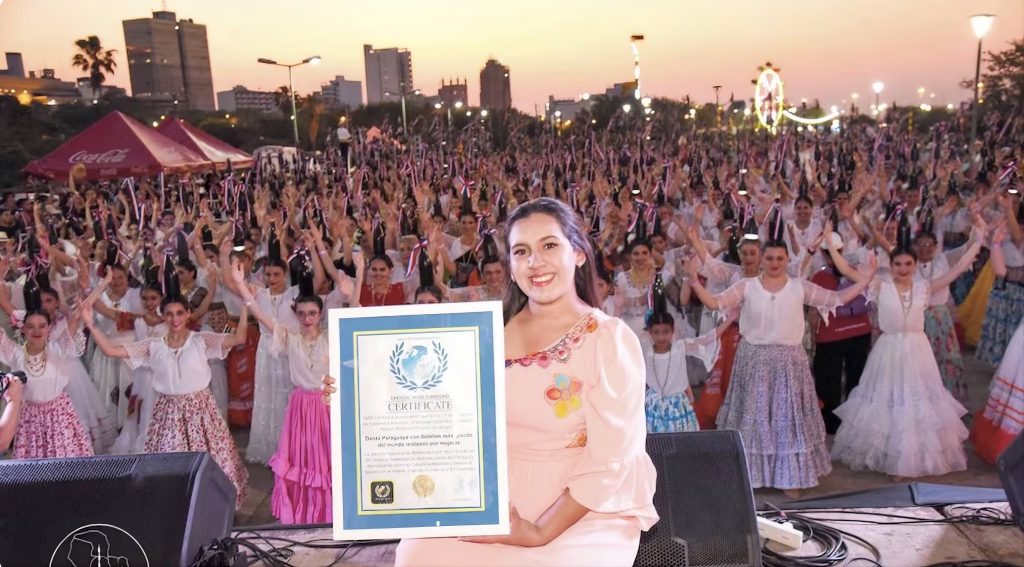
In 2023, the significance of Paraguay’s botelleras reached an international stage. An event titled “The Botellera Woman as Cultural Identity of Paraguay before the World” gathered nearly 600 dancers. This achievement was recognised as the largest Paraguayan bottle dance performed by women in the Official World Record.
That year, Senator Silvio Ovelar honoured teacher Luna Franco with a plaque and Declaration No. 45. This recognition honoured the dedication and cultural importance of the botelleras.
Paraguay’s Botelleras: A living cultural legacy
This dance has transformed a practice rooted in daily life into a refined artistic expression. It preserves and honours the traditions of Paraguayan women of the past, who demonstrated strength, balance, and creativity in their everyday routines. Today, the botelleras continue to embody these qualities, turning a simple act into a symbol of cultural identity and artistic excellence. This has become both their greatest achievement and a mark of undeniable cultural value for Paraguay.