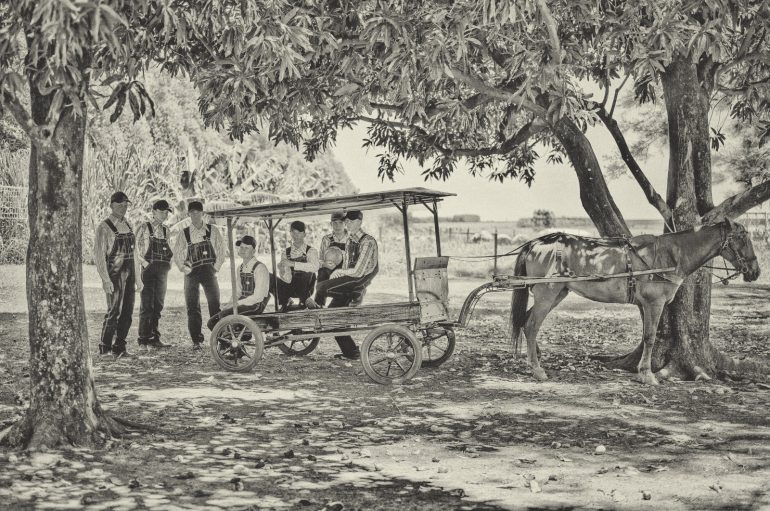

A new photographic exhibition in Asunción is inviting visitors into a world rarely seen, yet deeply rooted in Paraguay’s history. Menonitas: Al sur de Durango, by Dutch artist Henk Bleeker, opens on 16 April 2026 at BGN/ARTE, offering a striking visual exploration of Mennonite life in the Paraguayan Chaco.
A journey into an isolated world
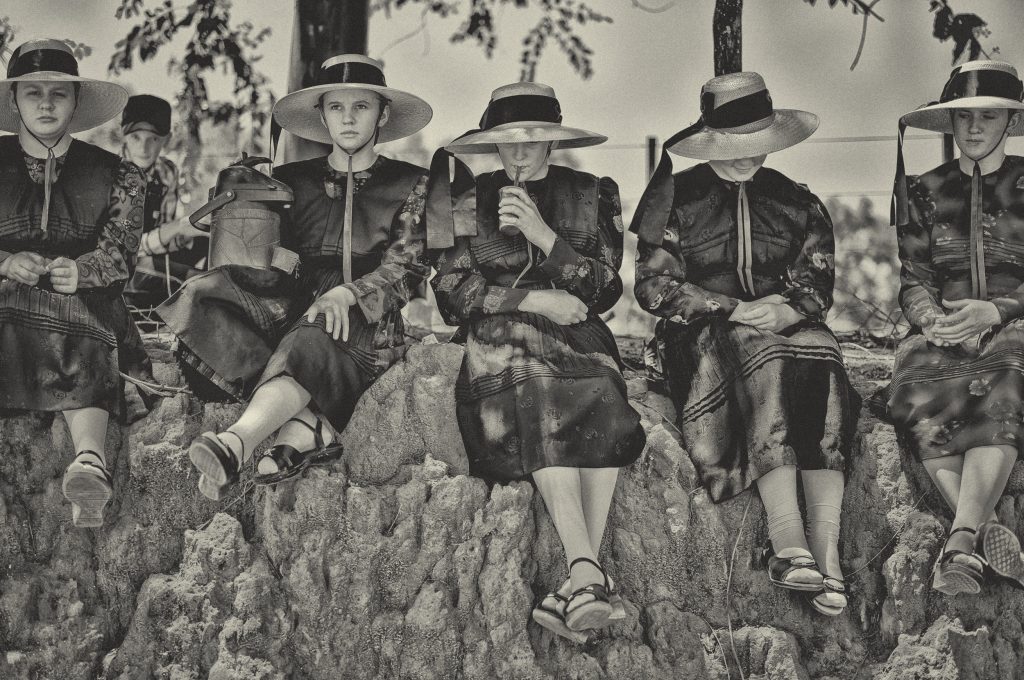
Henk Bleeker’s work captures the quiet intensity of Mennonite communities, whose traditions have remained largely unchanged since their arrival in Paraguay nearly a century ago. Settling after the upheaval of the First World War, these communities sought a place to practise their faith freely, far from external pressures. Today, they continue to live in relatively isolated colonies, maintaining customs that contrast sharply with modern Paraguayan society.
The exhibition features around twenty photographs taken in Nuevo Durango and Colonia Madelón, remote settlements located roughly 250 kilometres from Filadelfia in the Chaco. Through his lens, Bleeker documents a way of life defined by simplicity: horse-drawn carriages instead of cars, traditional clothing, and a deep sense of communal identity.
Yet, the images go beyond surface observation. They reflect a deeper cultural and historical connection between Paraguay and Europe. The Mennonites portrayed in the series descend from communities originally established in Durango, Mexico, and trace their roots further back to the teachings of Menno Simons, a 16th-century Anabaptist reformer from the Netherlands.
Heritage as a bridge
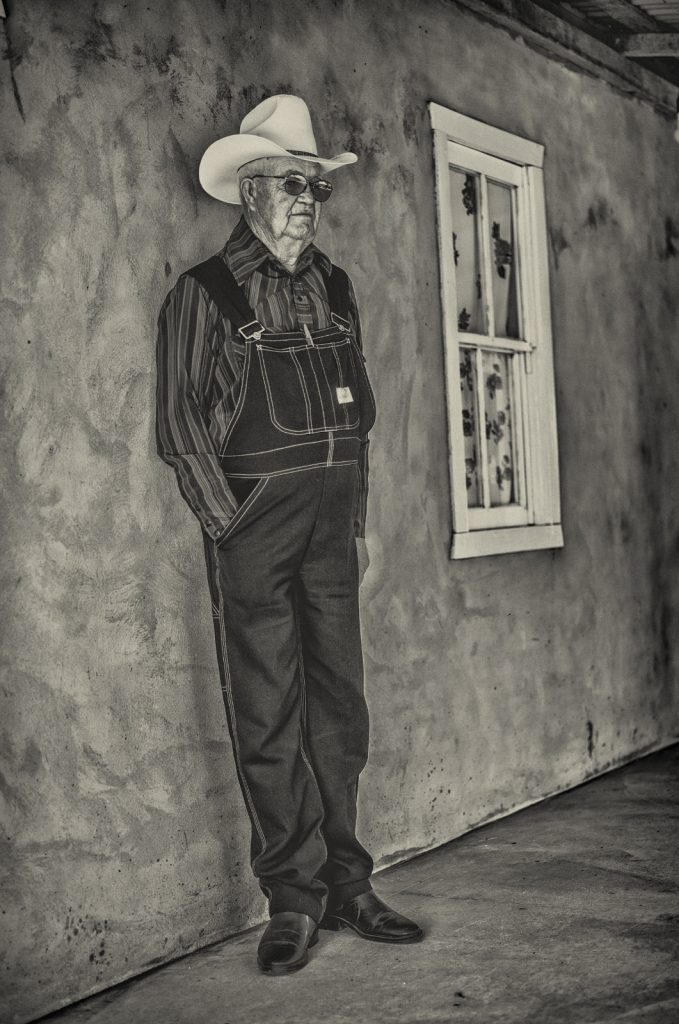
Henk Bleeker’s own Frisian heritage played a crucial role in gaining access to these otherwise closed communities. Sharing linguistic and cultural ties helped him build trust, allowing for a rare level of intimacy in his portraits. He notes that speaking a few words of Frisian or German often helped “break the ice”, opening doors that might otherwise have remained closed.
This connection is central to the exhibition’s narrative. Rather than presenting the Mennonites as distant or exotic, Henk Bleeker frames them as part of a shared historical continuum. His photographs become a bridge between continents, linking the Paraguayan Chaco with the Dutch region of Frisia.
Tradition under pressure
While the images suggest a world frozen in time, Bleeker’s work also reveals subtle signs of change. The exhibition explores a growing tension within Mennonite communities, particularly among younger generations. Some photographs capture this duality with quiet precision: a teenager dressed in traditional attire but wearing modern trainers, or a rural household powered by an improvised solar panel. These details hint at the influence of globalisation, technology, and shifting aspirations.
Henk Bleeker describes this not as a loss, but as a moment of transformation. “It is not just nostalgia,” he explains. “It is a testimony of resilience.” The photographs raise an important question: how long can such traditions endure in an increasingly connected world?
More than aesthetics
Beyond their visual beauty, the photographs encourage reflection. Visitors are invited to consider the complexities of cultural preservation, identity, and change. For Paraguayan audiences, the exhibition offers a chance to engage with a community that is both part of the national fabric and yet often remains distant. Running in Asunción until 4 May 2026, Menonitas: Al sur de Durango stands as both a visual archive and a cultural dialogue. The contrast within the images is striking: blond hair against the red dust of the Chaco, European features under a harsh tropical sun. This juxtaposition reinforces the idea of Paraguay as a crossroads of histories and cultures.
The exhibition in Asunción is only the beginning of Henk Bleeker’s project. Plans are already in place to take the series to the Netherlands, where it will be displayed in galleries in Leeuwarden and Witmarsum. In doing so, the work will complete a symbolic journey, bringing the story of Paraguay’s Mennonites back to their ancestral origins.