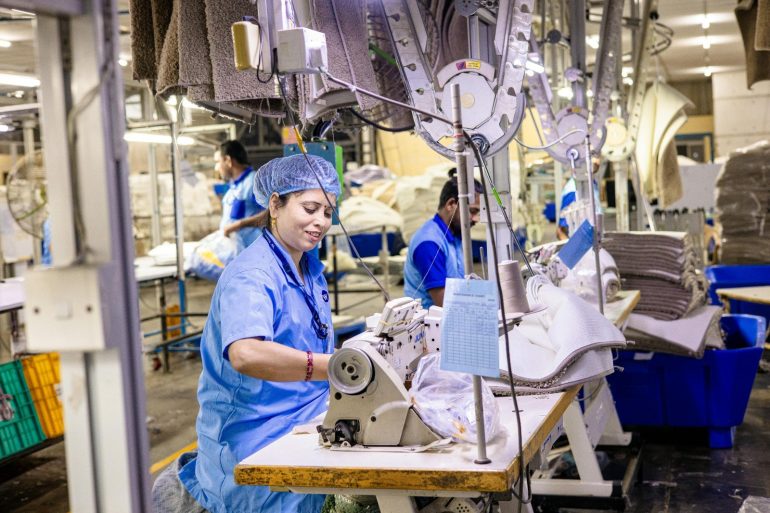

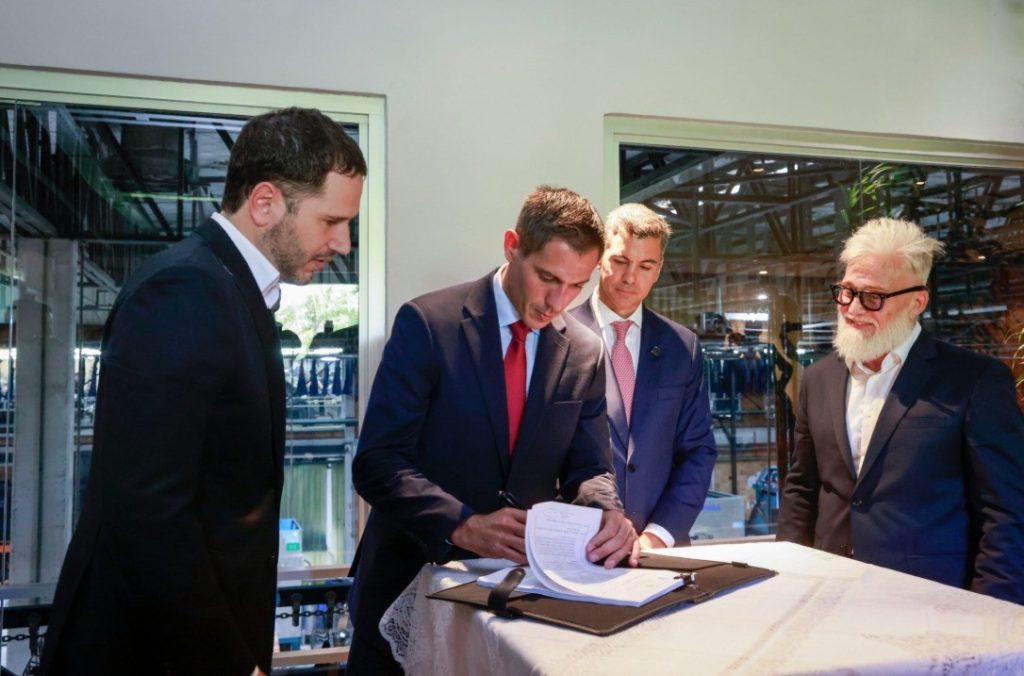
Paraguay has overhauled the legal framework that governs its most important export industry. In April 2026, President Santiago Peña signed a decree formally regulating Law No. 7,547/2025, the new Maquila Law, in a ceremony held at the Blue Design América factory in San Lorenzo, a city on the outskirts of the capital, Asunción. The reform expands a 30-year-old system allowing foreign companies to manufacture goods in Paraguay for export. It adds service exports like technology, software development, and business process outsourcing, reshaping the country’s economic identity.
What is the Paraguay maquila regime?
Enacted in 1997, the maquila law offers foreign companies a simple deal: set up operations in Paraguay, use the country’s competitive costs and fiscal incentives, and export the finished goods. Companies pay a 1% tax on local value added and are exempt from import duties on materials and equipment. By 2025, the sector generated more than US$ 1.3 billion in annual exports, employed over 35,000 people and accounted for 69% of all Paraguayan industrial exports.
The reform: what has changed
The central change is the formal inclusion of services for export. Companies can now export IT, software development, BPO, administrative services, and consultancy as offshore services for international clients. The reform also simplifies administrative procedures, aligns the regime with international standards and provides greater regulatory predictability.
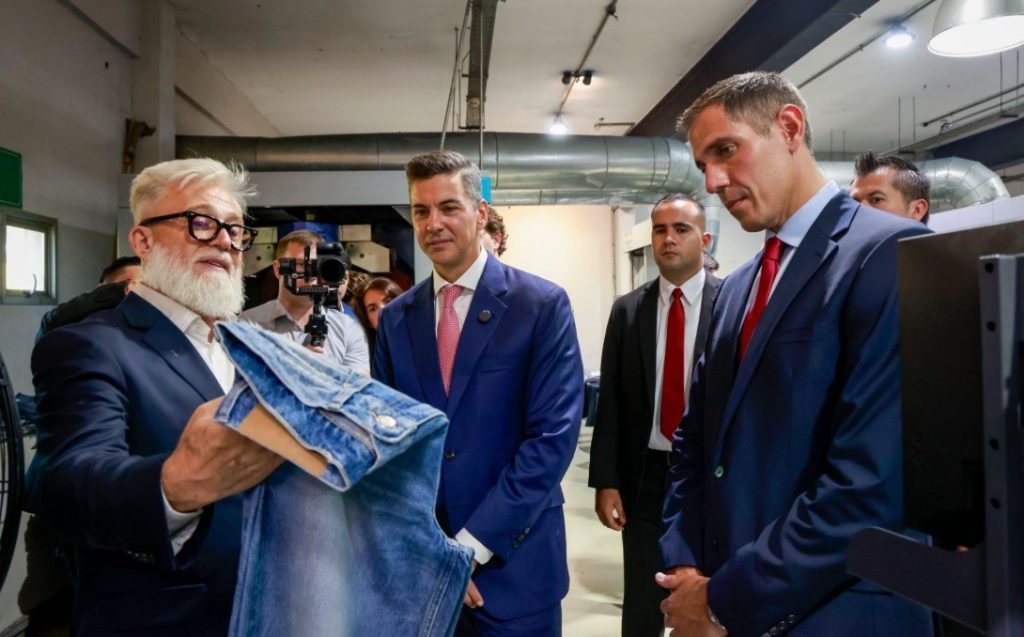
Vice-Minister of Industry Javier Viveros identified predictability as critical. The previous law, he said, had left investors without the certainty they needed to commit capital. Around US$ 50 million in investments is now ready to move forward, with more than 1,600 new jobs and approximately 25 projects expected to be approved in April alone. For full-year 2026, the government projects around 100 new projects and a sector workforce exceeding 40,000 people.
“What brought us here is not what will take us forward”
The signing ceremony at Blue Design América was more than an administrative event. The company is an early success under Paraguay’s maquila regime, exporting garments to London, Paris, Tokyo, and New York. Its trajectory is a government model for replication.
Industry and Commerce Minister Marco Riquelme framed the shift plainly: “This is a more modern law that will take us to where we want to be, because what brought us to where we are is not necessarily what will take us to where we want to go.”
Jorge Bunchicoff, president of Blue Design and CEMAP, called the decree a “before-and-after” moment. “This decree is not a formality,” he said. “For me it is a clear signal, a clear policy, a signal of trust and direction.” President Peña is equally direct: “We are not here to administer what has already been achieved.” We are here to take the next step.”
Competing in the global services market
The services expansion places Paraguay alongside established outsourcing destinations such as Colombia, Costa Rica and Uruguay. Its principal advantage is cost: operating expenses are significantly lower than in those markets, and the services model requires no large physical infrastructure, a characteristic that, according to industry observers, makes it faster to set up and easier to scale.
Several global companies already operate in Paraguay under this framework, including Alorica and Apex América, two international BPO providers. In 2025, the services category generated US$ 47 million in exports and 4,000 jobs, figures the government expects to grow substantially under the reformed law.
The road to exporting Paraguay’s own brands
Structural challenges remain. Ninety-one percent of companies in the sector operate in just four of Paraguay’s 17 departments: Alto Paraná, Central, Asunción, and Amambay. Unlike manufacturing, the services sector depends primarily on human capital, a challenge Viveros acknowledged when calling for investment in education and training to sustain the ambition.
Viveros acknowledged the reform is a step in a longer journey. The ultimate goal, he said, is for Paraguay to export its own brands, to move beyond assembling other companies’ goods and servicing their back offices, and to begin selling its own intellectual property to the world. The reformed Paraguay maquila framework is, for the first time, a legal structure that makes that ambition possible.