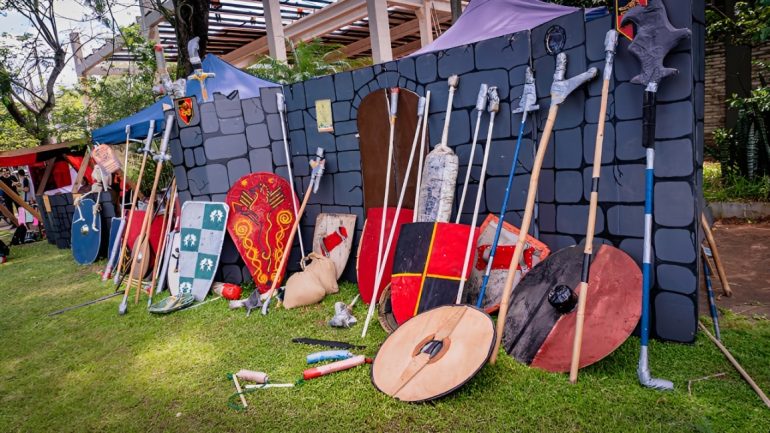

The Medieval Fest is something uncommon in Paraguay’s cultural landscape. The country is not usually associated with the medieval era, as Paraguay experienced very different historical processes. However, this does not diminish the passion some people feel for this particular historical period, with its legends and stories. That enthusiasm has found expression in the Medieval Fest community in Asunción.
One of the main figures behind this initiative is Bruno Bedoya. In addition to coordinating activities, he is also a fencing instructor. The Asunción Times speaks with him to learn more about the origins of the Medieval Fest and its upcoming events.
Origins of the Medieval Fest
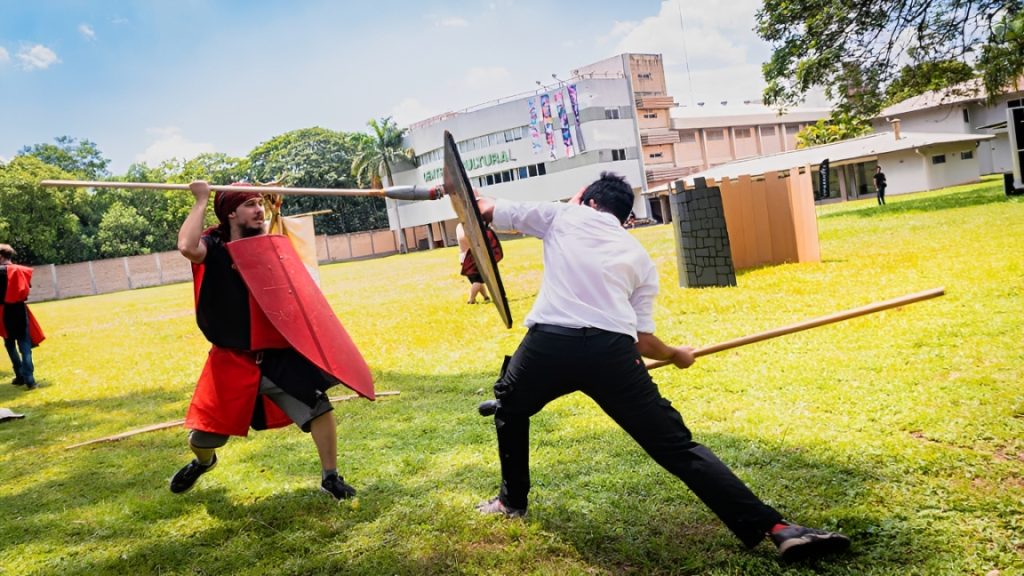
“I am part of a medieval fencing and archery group. One day, between activities, we thought about organising a medieval feast during our exam period, simply to make it more interesting. Then our friends began inviting their friends. We all contributed some money and I did the cooking. After that, everything started growing little by little,” Bruno explains.
The organisers then decided to open the feast to the public. The events were scheduled around the solstices, both winter and summer. This initiative began in 2022. “Thanks to those medieval feasts, the Medieval Fest was born. During them we organise presentations, fencing exhibitions and we also intend to include dances.”
“Our medieval feasts include Viking games. At the table, sweet wine and beer are essential. In the first editions, we even had mead, although later it became difficult to obtain in Paraguay. The meals also follow historical inspiration. For example, on the winter solstice, we serve a traditional Russian soup. One of our signature dishes is potage, because we research what people actually ate during the medieval period and try to eat the same.”
“We were not very prepared at the beginning, but we did the best we could. From that experience, we learned a lot, and people started asking how they could help. During those feasts, the captains of the fencing group also took their oaths, which added a sense of knighthood to the event.”
A medieval community in Paraguay
“In 2014, when I was still in school, I participated in a medieval board game event and attended dressed as a knight. That was when I discovered medieval combat in Argentina. I wanted to experience something similar in Paraguay, but I could not find anything like it here. A friend suggested that I start it myself, and that is exactly what I did.”
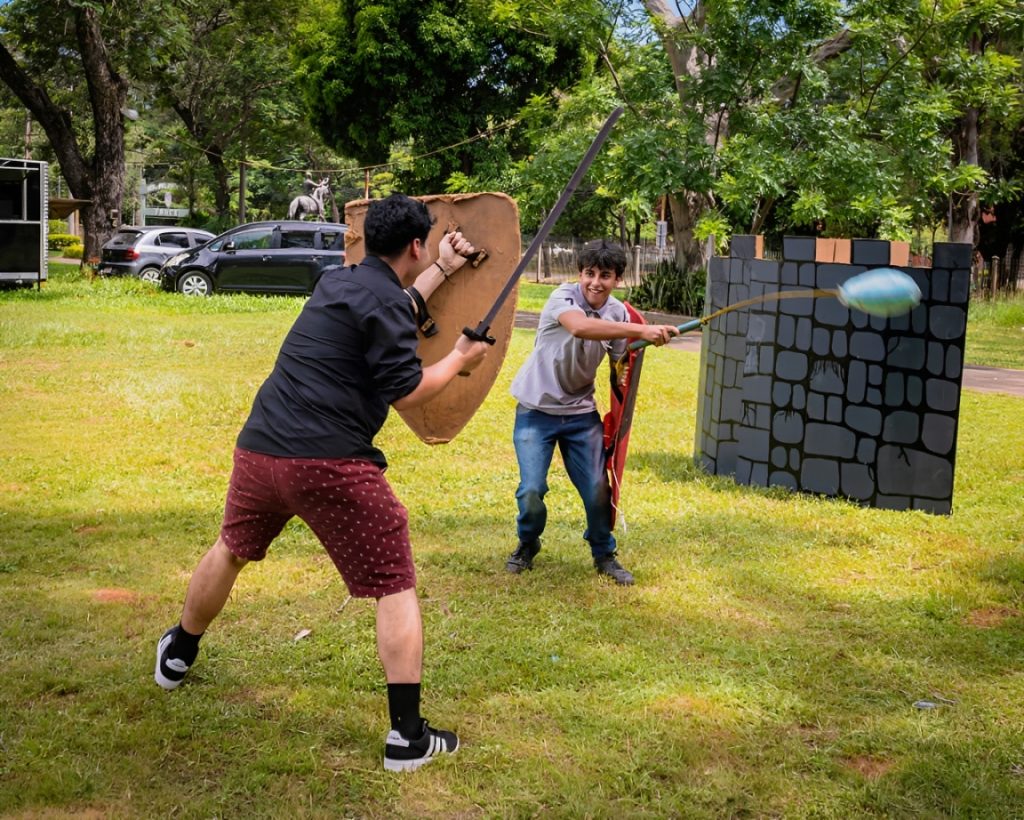
He began inviting people to participate in informal duels using basic equipment and simple rules. Later, a family friend from Germany introduced him to medieval fencing techniques. From there, Bruno gradually developed the community through what is known as soft combat. This activity uses foam-padded replicas of swords, maces, or axes to simulate medieval or fantasy battles without the risk of injury. Soft combat often serves as an introduction to more formal fencing disciplines.
“Our goal with Medieval Fest is to bring together this medieval community that exists here. Fortunately, many people help me with different aspects of organising these events. Helena works on the role-playing side of things. Manuel helps with the soft combat activities. Gabriela supports the organisation, and Alan takes excellent photographs.”
The battle of 29 March
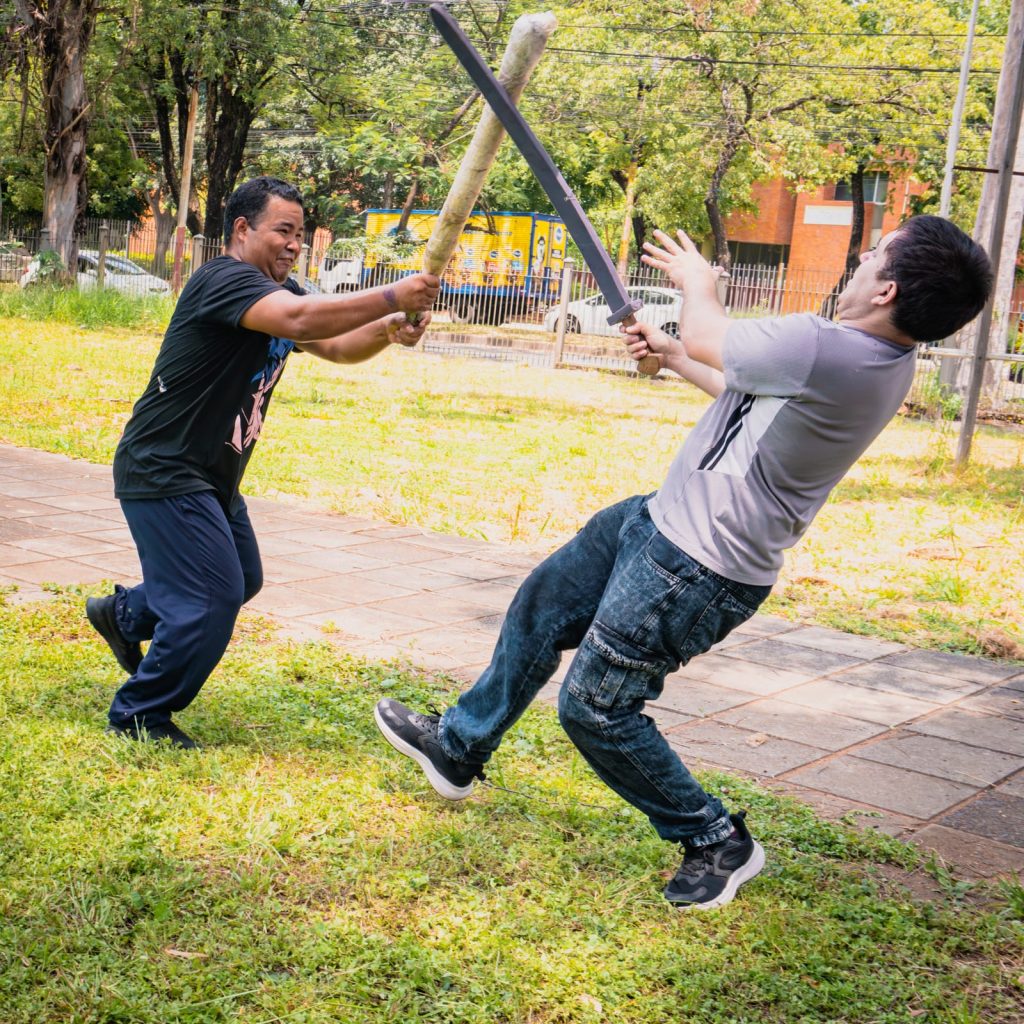
One of the most anticipated activities is a large soft combat event scheduled for 29 March at the Asunción Botanical Garden. “This will be the biggest event of this kind that we have organised so far. The entrance fee is ₲20,000. We provide the weapons and guide participants through the experience. The event will also include elements of LARP.”
LARP is a form of role-playing in which participants physically portray their characters in real time, interacting with each other in a shared environment while improvising scenes and narratives. Participants often wear costumes and use safe replica weapons. “You can see this as a kind of improvised live theatre performance,” Bruno adds.
Growing interest suggests that attendance may be higher than expected. “We are planning a large battle scenario where two sides face each other. What excites me the most is seeing how creative people become with their costumes”.
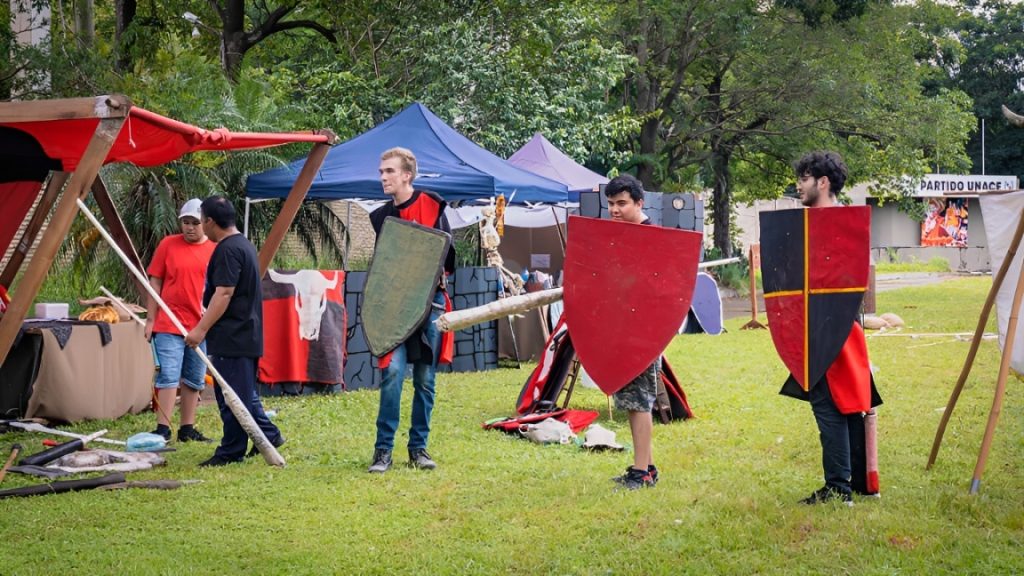
Costumes are optional, although they are encouraged. “Costumes should ideally relate to the medieval era, but creativity is welcome. Even robots are allowed,” Bruno says jokingly. “Sometimes a simple cape or hood is enough. Seeing people dressed according to the atmosphere really makes the event more immersive.”
Players will also be divided into different classes, including warriors, tanks, rogues, and archers. Healers will act as spectators who support participants but do not fight. Teams will also be distinguished by colours. “If you enjoy Game of Thrones or The Lord of the Rings and want to feel like one of those characters, you are more than welcome to join.”
What the future holds for the Medieval Fest
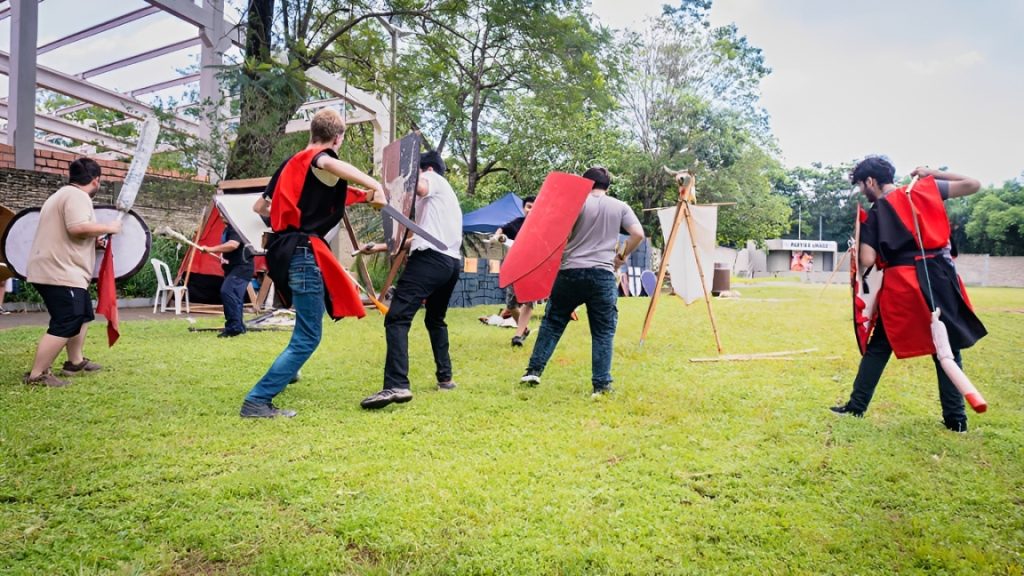
Looking ahead, the organisers are preparing another major feast at the winter solstice. “We want to organise a medieval fair before the feast. There, people will be able to buy swords, masks, and other medieval-themed items.”
The event will resemble a traditional Paraguayan San Juan celebration, with games and food. “The date is not a coincidence. The winter solstice takes place on 21 June, and the San Juan festival is celebrated on 23 June. The easiest way to explain our solstice events is to describe them as medieval San Juan celebrations.”
The Medieval Fest team is also planning additional activities later in the year, including a Halloween-themed event with games and costume contests. You can find them on Instagram to learn more about their upcoming events.
“I am very grateful to everyone in the team who helps with the Medieval Fest. Every event attracts more people, and the community keeps growing. Hopefully, in the future, when someone like me searches for a medieval group in Paraguay, Medieval Fest will be the answer.”