
Paraguay continues to advance in the modernisation of its public transport system with the incorporation of electric mobility solutions. A new step in this process is the introduction of electric bus line E2, which connects the cities of Asunción and San Lorenzo through one of the metropolitan area’s main corridors.
The project is developed and led by the Ministry of Public Works and Communications (MOPC) via the Viceministry of Transport. The plan begins with a pilot phase aimed at evaluating operational performance and user experience. The electric buses were a donation of the Republic of Taiwan. This reinforces bilateral cooperation and sustainable mobility initiatives.
Pilot operation along Mariscal López Avenue
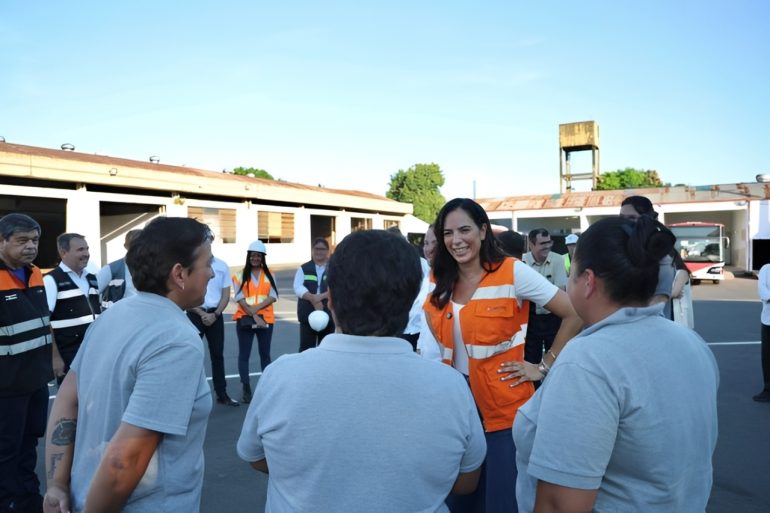
According to MOPC Minister Claudia Centurión, the E2 electric bus line operates under a transitional scheme. This transitional scheme connects San Lorenzo with downtown Asunción along the Mariscal López corridor. This new electric bus line provides additional transport capacity for commuters.
The route begins at the MOPC workshops in San Lorenzo and ends at the Government Offices in Asunción using the East Access axis and route D027 as its primary corridor. During the trial period, the service operates thanks to a private consortium. The electric bus line runs daily from 04:00 until 01:45.
In the San Lorenzo–Asunción direction, buses travel through PY02/Julia Miranda Cueto, Saturio Ríos and route D027. From there, it continues along Mariscal López Avenue, Perú, Azara, General Díaz, Hernandarias and Garibaldi, reaching the former Port of Asunción area. The return route includes Colón, Oliva and Cerro Corá, continuing again through Perú, Avenida Mariscal López, route D027 and Avenida Rodríguez de Francia. Then it reconnects with PY02 to the charging station at the MOPC workshops.
Building on the experience of electric bus line E1
The new route complements electric bus line E1, which has been operating since December along the Eusebio Ayala corridor. To date, the E1 line has recorded more than 51,000 validations and over 22,000 passengers. This reflects growing interest in electric mobility among commuters.
Users have highlighted the comfort and service quality of the electric units. These electric units are equipped with air conditioning, accessibility ramps and dedicated wheelchair spaces with foldable seats. The buses also feature USB charging ports and onboard security systems with surveillance cameras.
Fixed stops and improved operational efficiency
The E2 electric bus line operates with fixed and clearly marked stops along its entire route. Authorities indicate that this system is intended to organise passenger boarding and alighting. This improves travel speed and contribute to overall operational efficiency.
The deployment of electric buses also requires specialised infrastructure. This includes charging stations and operational adjustments that support the gradual transformation of Paraguay’s transport model.
Electric buses lines, towards a sustainable transport future
The introduction of electric bus line E2 represents another milestone in Paraguay’s efforts to modernise urban mobility while reducing environmental impact. By integrating electric buses, authorities aim to improve commuter experience, optimise operational efficiency. Also, gradually transitioning towards a cleaner public transport network.
As the pilot phase progresses, transport authorities will evaluate performance indicators and user feedback. This in order to determine future expansions and adjustments, reinforcing electric mobility as a central component of Paraguay’s transport reform agenda.