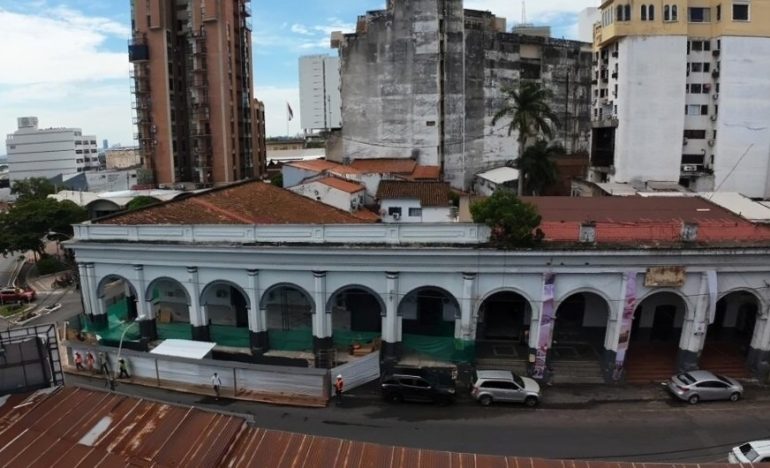

Paraguay has launched a significant project to restore and enhance the historic La Recova building, located in the old port area of Asunción’s city centre. The restoration marks a major milestone in the capital’s preparations for the commemoration of the 500th anniversary of its founding, aiming to revitalise a key piece of the nation’s architectural heritage.
Originally known as the “Nueva Aduana de la Rivera” (New Riverside Customs House), construction on the building began in 1861. The La Recova building stands as one of the most significant public works undertaken during the presidency of Carlos Antonio López. Its strategic location on the old port front made it a pivotal centre for entry into the city, commercial exchange, and urban development for many decades. The building’s function was intrinsically linked to the growth of both the port and the nation’s railway system.
Primary La Recova building reconstruction focus
The primary focus of the intervention will be on the building’s distinctive gallery, also known as the covered walkway. The initiative is managed by Paraguay’s National Secretariat of Culture (SNC) through its Tekorenda Programme, with crucial financial support provided by Itaipú. According to architect Ana Paniagua, one of the officials responsible for the SNC’s Tekorenda Programme, the works are scheduled to be completed within a 12-month timeframe.
Paniagua highlighted the unique composition of the property, which includes both a public section housing the Naval Prefecture and a private section composed of various commercial premises. This dual-use structure presents a unique challenge that the project is carefully designed to address.
A plan for conservation and commerce
A key aspect of the project involves a temporary relocation plan for the businesses currently operating within La Recova. To ensure they can continue their activities with minimal disruption, the tenants will be moved to a local cultural centre. This strategy was developed following consultations with the business owners, reflecting an effort to balance the urgent need for structural preservation with the economic well-being of the long-standing merchants who contribute to the building’s character.
The revitalisation work is being led by the Italian architect, Lucia Marino. She explained that the initial phase is centred on detailed archaeological excavation. This crucial preliminary step allows the restoration team to determine the exact type of materials originally used in the building’s construction in the 19th century.
The ultimate goal is to achieve a faithful recovery of the site’s original façade, galleries, patios, and defining architectural elements, ensuring the building’s historical integrity is respected throughout the process.
Respecting an architectural legacy
Marino expressed her personal enthusiasm for leading the project, noting a special connection to the building’s history. La Recova was originally designed by her compatriot, the celebrated Italian architect Alejandro Ravizza, who was also responsible for other iconic Asunción landmarks, including the National Pantheon of the Heroes. This connection adds a layer of personal commitment to preserving the vision of one of the key figures in Paraguayan architectural history.
Support for the project has been strong among the local business community. Anna Annicchiárico, one of the merchants whose shop is located in La Recova, affirmed that the planned improvements are timely and necessary. She acknowledged the building had been deteriorating and that the intervention was essential for its survival.
She stated that she is very happy, even though it will cause some setbacks, but a prior consultation was made precisely to avoid harm to the commercial premises, she said.
A witness to history
Throughout its long history, La Recova has been a silent witness to the most important historical events and transformations that have shaped Asunción. Following its privatisation in the late 19th century, the building maintained a predominantly commercial use. It gradually evolved to become a traditional and beloved space for the sale of handicrafts and typical local products, cementing its place as an essential part of the urban and tourist identity of the capital.