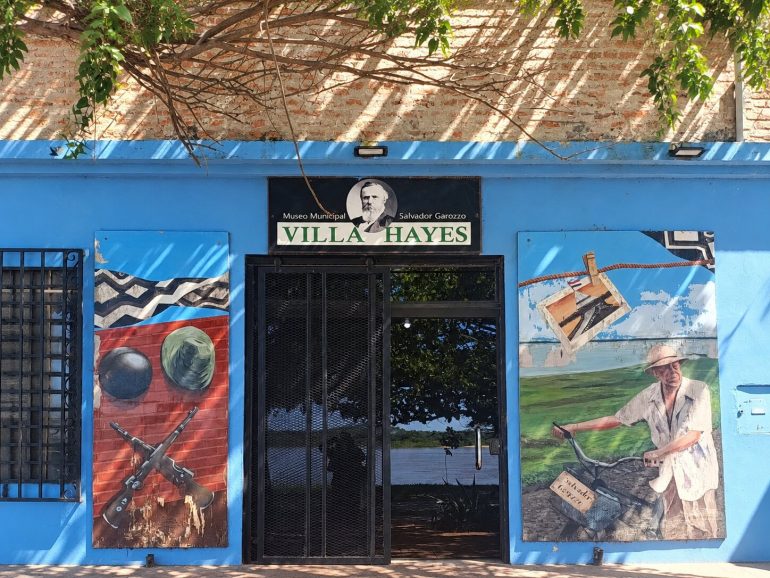

The Salvador Garozzo Municipal Museum, located on Avenida Costanera between Curupayty and Rudecindo Meza in Villa Hayes, is loacated about 35 kilometres from Asunción. Inside the museum, around 3,000 objects tell stories of war, migration and everyday life in one of Paraguay’s Chaco cities. Visitors can reach the city by crossing either the Remanso Bridge or the Héroes del Chaco Bridge.
Founded in 1997 by local journalist and historian Salvador Garozzo Simón Bouvier, the museum was created to preserve the history of Villa Hayes. Today, its collection brings together military objects, photographs, documents, household items and family belongings, offering visitors a way to understand Paraguay through the history of one community.
A collection built from one man’s initiative
Garozzo began collecting objects and stories long before the museum had a formal structure. He gathered photographs, documents and everyday objects because he wanted to preserve memories that could otherwise disappear. Following his death in 2011, the museum was named after him. The collection also continued to grow through donations from families connected to the city’s early inhabitants.
The building was refurbished between 2016 and 2017. Today, its four sections bring together objects from different periods and aspects of Villa Hayes history. The exhibition also covers significant periods of Paraguayan history, including the War of the Triple Alliance and the Chaco War.
From the Chaco War to everyday life
The museum’s Chaco War collection takes on particular relevance around 29 September, the anniversary of the Battle of Boquerón. The Chaco War between Paraguay and Bolivia lasted from 1932 to 1935. However, the conflict is not presented only through dates and military history. Uniforms, weapons and original ammunition sit alongside photographs and documents from the period. Soldiers’ canteens also offer a more personal glimpse of life in the Chaco, where extreme heat was part of everyday reality.
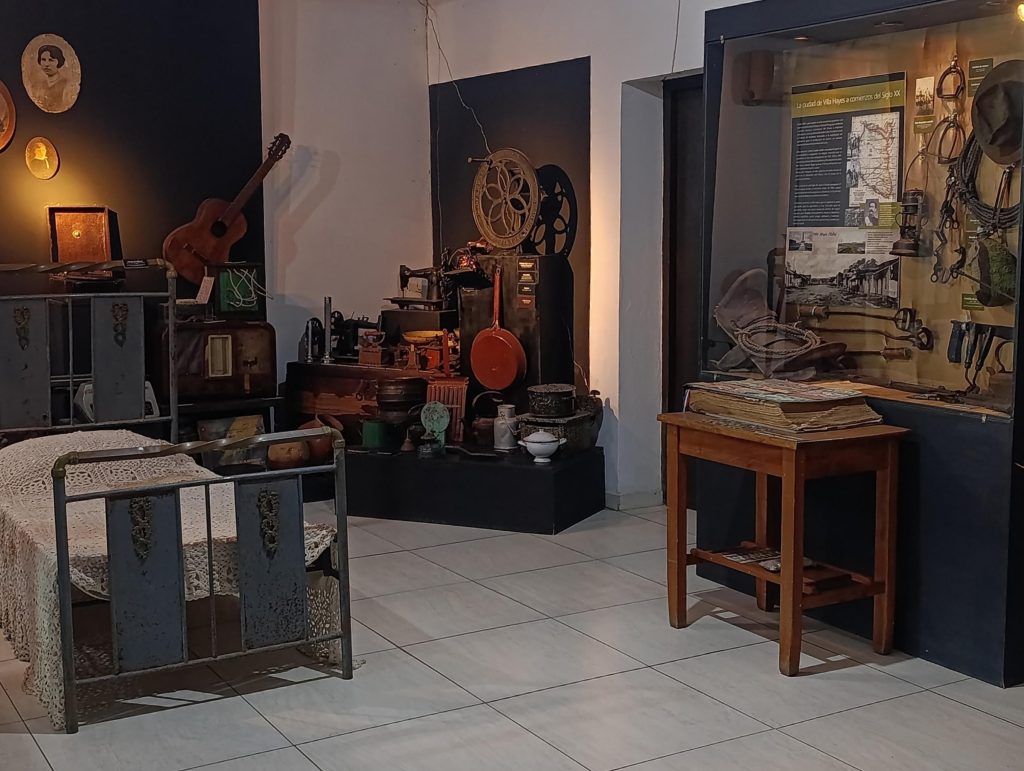
The collection also recognises the role of nurses during the war, while original newspapers show how people at home followed the latest developments from the front. In other parts of the building, visitors can find school desks from the 1940s, crystal lamps, old crockery, clocks and other household objects. Among them is “La Centralita”, the first telephone switchboard used in Villa Hayes. An old radio and a 1930s gramophone offer another glimpse into everyday life for earlier generations.
Understanding Paraguay through Villa Hayes
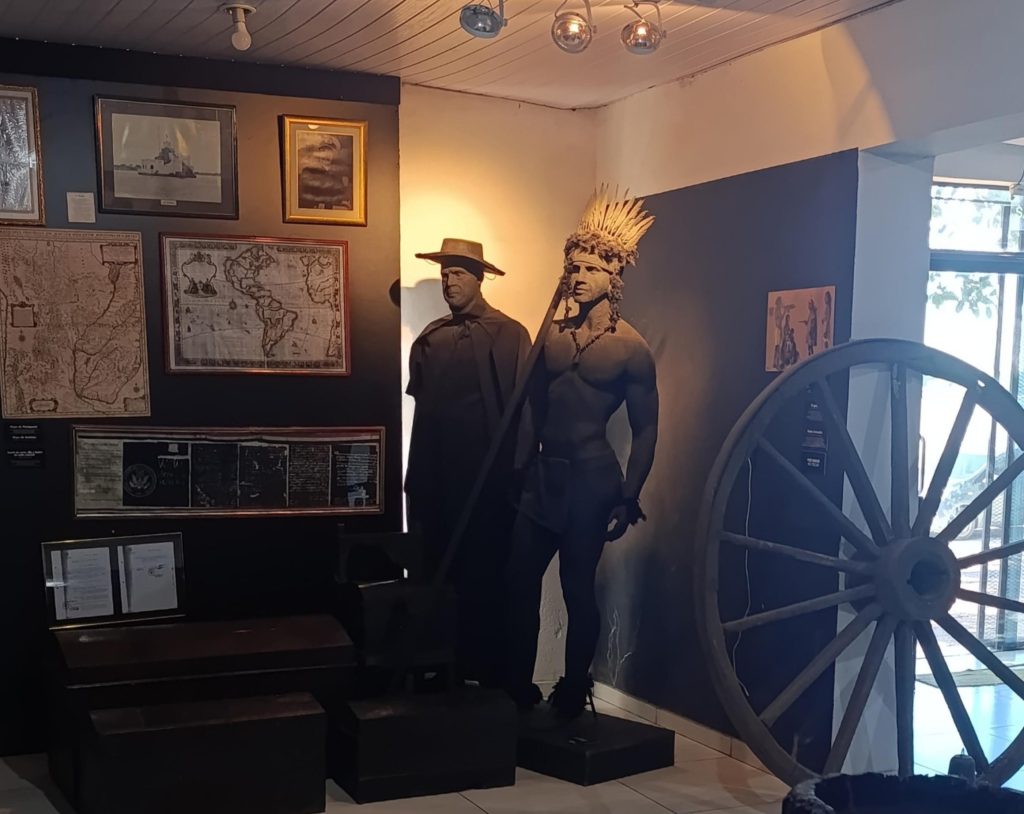
Beyond war and daily life, the collection also reflects the people who shaped the region. Objects belonging to early European settlers sit alongside pieces connected to Indigenous communities that inhabited the area. The museum also includes a representation of Rutherford B. Hayes, the United States president who served from 1877 to 1881. His name became connected to the city after he acted as an arbitrator in the territorial dispute between Paraguay and Argentina following the War of the Triple Alliance.
Another section focuses on Garozzo himself. His publications and typewriter remain part of the collection, showing how his personal interest in local history eventually developed into a public museum. Through its objects, photographs and personal stories, the Salvador Garozzo Museum offers more than a record of Villa Hayes. It provides a small but revealing window into Paraguay’s past.
How to get there?
Visitors travelling from Asunción can also reach Villa Hayes by public transport. Bus Line 5, La Chaqueña, and Line 44, operated by Ximex S.A., connect the city with the capital. Admission to the museum is free, and it opens from Monday to Friday, from 07:00 to 14:00.
Visitors can also arrange appointments outside regular opening hours by contacting Laura Ruiz Díaz at +595 994 791 327 or Emilia Caballero at +595 986 197 933.