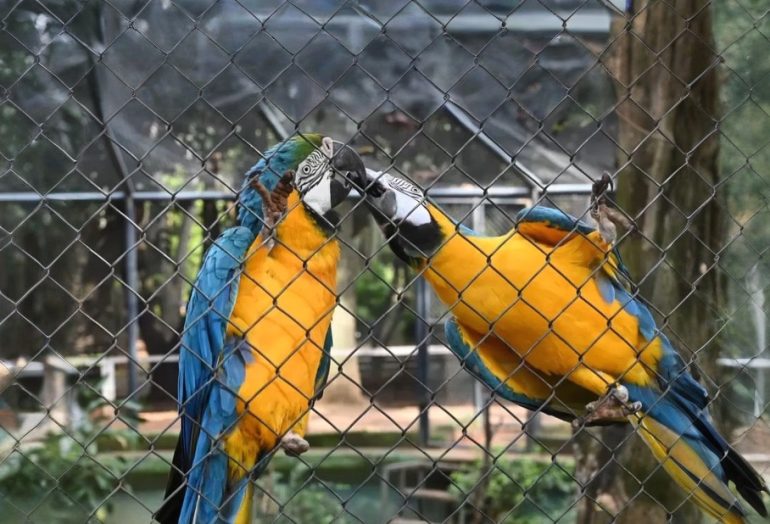

Visitors to Asunción Zoo can now see its blue-and-yellow macaws in a larger living space. The recent move forms part of ongoing efforts to improve macaw conservation, wellbeing and encourage future breeding. Alongside the new habitat, veterinary teams continue monitoring 22 macaws, all native to South America and cared for inside the Zoo.
Native birds in the heart of Asunción
The Asunción Zoo currently cares for 16 blue-and-yellow macaws and six red macaws. Veterinarian Dr Stella Espínola told local media that the birds represent native South American wildlife rather than exotic species. Four macaws were born at the Zoo around five years ago, while others arrived after wildlife authorities confiscated them.
Their striking appearance makes them popular with visitors, yet their role extends beyond attraction. Macaws belong to the Psittaciformes order and the Psittacidae family. Their curved beaks, bright plumage and ability to imitate sounds also make them valuable for environmental education.
Macaw conservation: creating better conditions for breeding
The blue-and-yellow macaws recently moved into a larger habitat designed around their needs. More space can support natural behaviours and improve macaw conservation while giving the birds improved living conditions. Meanwhile, Zoo staff are preparing new nesting boxes ahead of the upcoming breeding season.
“New nests are being placed again so they can reproduce,” Espínola explains. Macaws generally reproduce once each year, with breeding commonly taking place during spring. Pairs can also remain together throughout their lives, creating strong bonds between breeding partners. A typical breeding season produces around two eggs per pair. However, both chicks do not always survive. Consequently, veterinary observation remains essential throughout nesting and breeding.
A carefully managed daily routine
Macaws can live for approximately 50 to 60 years, with some reaching older ages under controlled care. At Asunción Zoo, veterinary staff observe the birds throughout different periods of the day. Night guards also monitor the animals, helping identify behavioural changes or other concerns.
Food plays another important role in maintaining their health. The macaws mainly eat seasonal fruits, including apples, pears, kiwis, watermelon and bananas. Meanwhile, staff limit seeds to roughly once a week because captive birds use less energy than wild counterparts.
Turning encounters into education
The Zoo regularly welcomes schoolchildren and university students interested in animal care and wildlife. Veterinary students also visit for research, academic projects, theses and volunteering opportunities. These encounters allow visitors to observe native species while learning about their protection.
For Espínola, the experience offers a chance to understand wildlife beyond the colourful display. Some species face challenges surviving in natural environments. Therefore, caring for the macaws also creates an opportunity to encourage greater appreciation for South American biodiversity.
Through daily veterinary care, improved habitats and environmental education, Asunción Zoo continues supporting these birds. Their presence offers visitors a colourful reminder of the wildlife native to the region.
Also read: Colourful Macaws Soar Again Over Greater Asunción Thanks To Asora Paraguay.