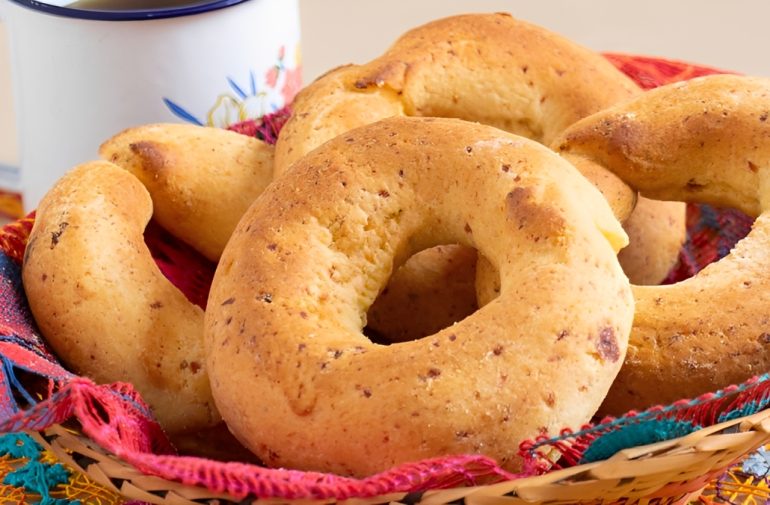

Traditional? Asador? Or chipa mestizo? Whichever you choose, they are all among Paraguay’s most recognisable foods. Made primarily with cassava starch and cheese, the traditional chipa snack has become deeply connected to Paraguayan identity and everyday life. Chipa is enjoyed throughout the country and at different times of the day. It is commonly served for breakfast alongside mate cocido. Another popular tradition is to eat it for tereré rupa, literally a “bed” or base for tereré, referring to the food eaten before drinking the traditional cold infusion.
Its preparation and consumption have been passed down through generations, ensuring that chipa remains a familiar part of Paraguayan cuisine. Its cultural importance was formally recognised through Law No. 5267/2014, which declared chipa a traditional Paraguayan food and established the second Friday of August as National Chipa Day.
More than one kind of Chipa
Although the classic image of chipa is often a small, cheese-filled ring, Paraguayan gastronomy includes a wide variety of preparations. Among the many varieties are chipa aramirõ, made primarily with cassava starch and cheese, and chipa mestizo, which also incorporates corn flour. Chipa avati is made with corn, while chipa avati mandi’o combines corn and cassava. Chipa pirú, or chipita, is smaller and crispier, while chipa so’o contains a savoury meat filling. Other varieties include chipa guazú, a soft corn-based preparation, and chipa asador, which is shaped around a stick and cooked over an open fire.
The diversity of these preparations reflects how the recipe has evolved across Paraguay, with different ingredients, shapes and cooking methods giving each variety its own character. Chipa can also be prepared in several ways. It can be baked in a conventional oven, grilled beside a fire, or cooked inside a tatakua, the traditional Paraguayan clay oven. The tatakua is particularly associated with traditional chipa-making. The oven is heated until it reaches a high temperature, the embers are removed and the chipa is placed inside to bake for a short period.
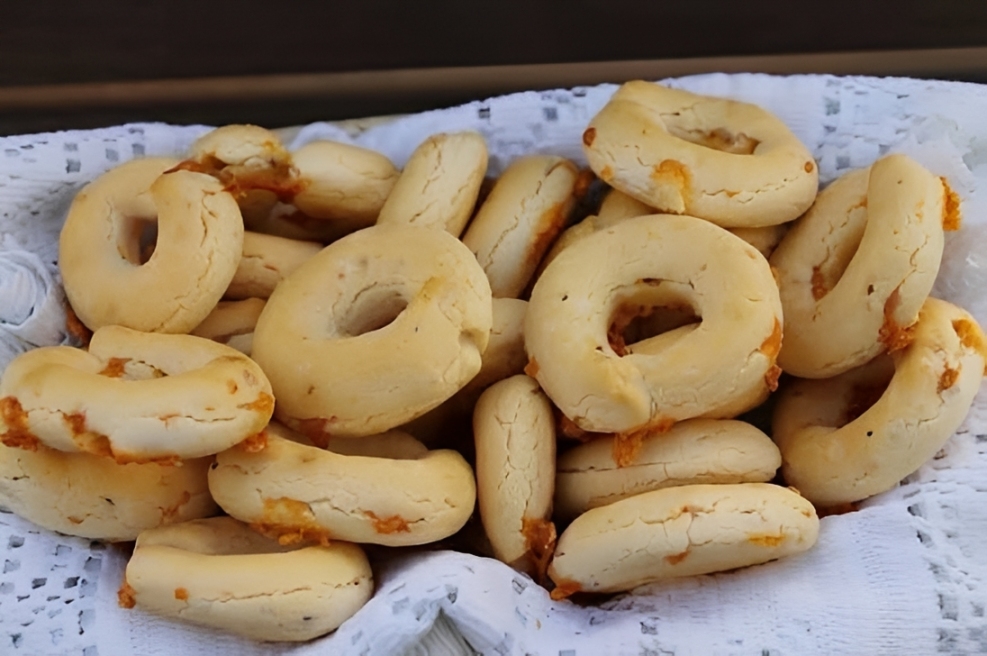
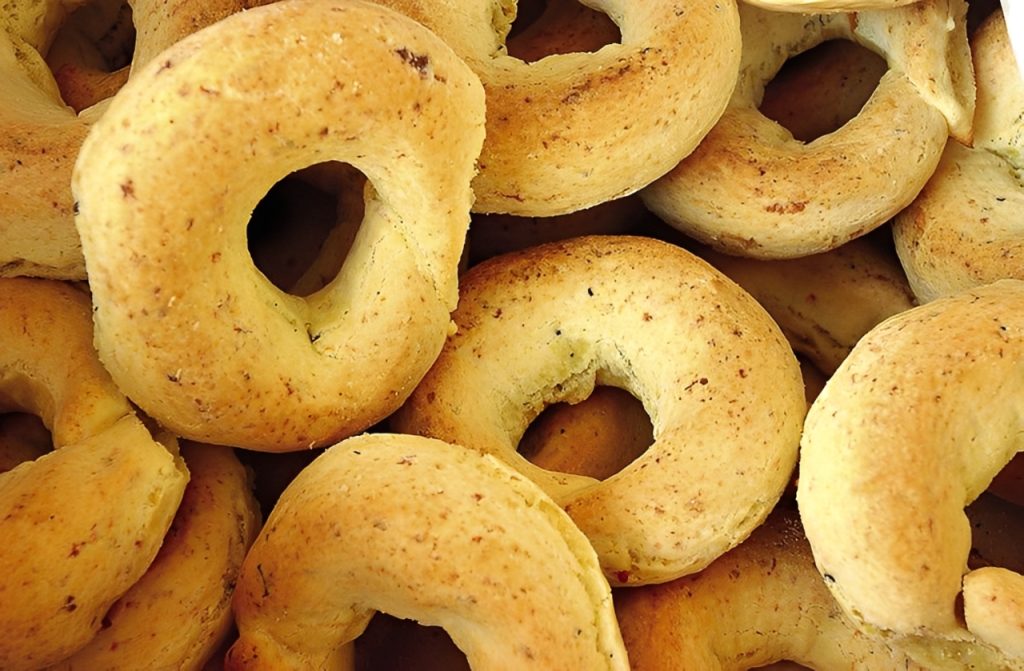
How to make Chipa Mestizo
One of the varieties that can be prepared at home is chipa mestizo, which combines cassava starch and corn flour with Paraguay cheese. The following recipe makes approximately 29 chipas of 50 grams each, with an estimated 150 calories per serving.
Ingredients
- 500 g cassava starch
- 250 g Paraguay cheese
- 150 g corn flour
- 150 ml vegetable oil
- 3 medium eggs, approximately 150 g
- 50 ml skimmed milk
- 10 g anise seeds
- 1 teaspoon of salt, approximately 5 g
Method
- Begin by placing the eggs in a mixing bowl and gradually adding the oil. Add the anise seeds and crumbled cheese, then mix well.
- Dissolve the salt in a small amount of milk before incorporating it into the mixture. In a separate bowl, combine the corn flour and cassava starch.
- Gradually add the dry ingredients to the egg, oil and cheese mixture until a homogeneous dough forms. Add the remaining milk as necessary. The dough should remain soft enough to knead and should not become excessively firm.
- Cover the dough with a clean cloth and allow it to rest while the tatakua heats. If using a conventional oven, preheat it to its maximum temperature.
- Once the dough has rested, take portions and knead them on a clean work surface until they become compact and smooth. Form the dough into logs and cut them into equal-sized pieces.
- The pieces can then be shaped into rings, known as pa’i akã, as well as diamonds, karapã or half-moon shapes, puku’i or elongated shapes, braids and other forms.
- Place the shaped chipa on banana leaves or parchment paper, and cover them with a clean kitchen cloth while the remaining dough is prepared. This helps prevent the pieces from drying out.
- When the tatakua is sufficiently hot, clean the oven and remove the embers. Using a shovel, place the trays of chipa inside, working quickly to prevent the oven from losing too much heat.
- Bake for approximately 10 to 15 minutes, then carefully remove the chipa and serve.
Using a Conventional Oven
If a tatakua is not available, chipa can be prepared in a conventional oven. Preheat the oven to its maximum temperature and avoid leaving the door open for extended periods. Bake the chipa for approximately 15 to 20 minutes, or until properly cooked.
Keeping Chipa soft
For softer chipa, place the freshly baked pieces in a container lined with banana leaves after removing them from the oven or tatakua. Most importantly, avoid overcooking, as this can cause the chipa to become hard. Around 15 to 20 minutes is generally sufficient.